

Circulation: Population Health and Outcomes, an American Heart Association journal. RT/follows do not imply endorsement.
Joined September 2013
- Tweets9.3K
- Following5.2K
- Followers14.6K
- Likes3.6K



Pinned Tweet
For years, Circulation: Population Health and Outcomes has published research that helps shape cardiovascular health across communities and health systems. We're excited to announce Dhruv S. Kazi, MD, MSc, MS, (@kardiologykazi) as the next Editor-In-Chief.

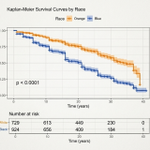
Reweighting to national demographics barely changed K-M survival curves → data are nationally representative
K-M curves largely matched an independent referral center BCH → data are externally valid
🔗ahajournals.org/doi/10.1161/…
📝Article by @KidsHeartHealth et al
@AHAScience


Circ: PHO retweeted

🚨ICYMI: Advanced HF Fellows & Early-Career attendings are encouraged to register for the @CircHF Educational Webinar Series
📌 See the full list of webinar topics here: ahajournals.org/circheartfai…
📅Start Date: November 18, 2026
@AHAScience #AHFTC #CardioTwitter #HeartFailure

📣Calling all #AHFTC Fellows!📣
@CircHF is proud to launch the 2nd year of the journal's free educational webinar series for current & past AHFTC fellows
📌9 live virtual sessions
📌New topic each session
📅Start Date: November 18, 2026
🔗Learn More: ahajournals.org/circheartfai…

⬇️odds for oac: dementia, prior bleed, renal disease
⬆️odds for oac: HF (though HF in CHA₂DS₂-VASc)
Bleeding risk/frailty seem to drive prescribing > stroke risk itself
🔗ahajournals.org/doi/10.1161/…
📝Article by @p_gouda1 & @manesh_patelMD et al

After full adjustment, Black women still ~2.7x more likely to develop HTN
The other unexplained ~75%? Likely unmeasured structural and systemic factors, including structural racism
🔗ahajournals.org/doi/10.1161/…
📝Article by @JD_Borrowman & @MCarnethon et al.
@AHAScience

Circ: PHO retweeted
📣Calling all #AHFTC Fellows!📣
@CircHF is proud to launch the 2nd year of the journal's free educational webinar series for current & past AHFTC fellows
📌9 live virtual sessions
📌New topic each session
📅Start Date: November 18, 2026
🔗Learn More: ahajournals.org/circheartfai…
These real-world data may help refine future pediatric CPR guidelines & improve survival as less than half of children survive in-hospital cardiac arrest
🔗ahajournals.org/doi/10.1161/…
@ryan_w_morgan @AHAScience
(3/3)


EVT moved closer to patients but does broader local access outweigh the potential benefits of concentrating complex stroke care at fewer, high-volume centers?
ahajournals.org/doi/10.1161/…
@AHAScience

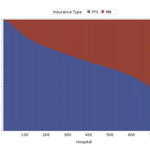
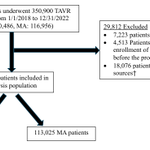
MA patients had better outcomes despite greater socioeconomic disadvantage but why? Differences in patient selection, unmeasured TAVR risk, coding intensity, & underlying AS prevalence may contribute.
ahajournals.org/doi/10.1161/… @AHAScience

Does Medicare coverage type influence outcomes after #TAVR?
Using Medicare claims, paper compares MA vs FFS:
🔹 TAVR utilization
🔹 Patient & hospital characteristics
🔹30–150-day & 1-year outcomes
Read More⬇️
@AHAScience @ChristinaLalani @rwyeh @rkwadhera @djc795 @JMKimMD


Circ: PHO retweeted

📣 #Stroke Bridge Seminar: Advancing Stroke Intervention: From Device Innovation to Clinical Practice
🗓️ Tuesday, October 6, 2026, 12:00-1:00 PM PDT | 19:00-20:00 UTC
🌟 Speakers: @JeremyHeitMDPHD & Matthew J. Gounis
🌟 Hosted by @Chenhsbbb
📎Register: ahajrnls.org/47p4Izo

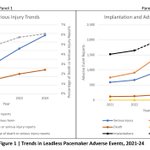
Reported leadless pacemaker adverse events rose faster than implantations raising safety concerns @deviceevents @rfredberg
ahajrnls.org/4rxjJbU

Circ: PHO retweeted
📢Just Published in @CircHF: Special issue dedicated to cardiogenic shock Guest Edited by Dr. David Morrow, MD, MPH.
📖Read the issue here: 🔗ahajournals.org/toc/circhear…
@DrNancySweitzer @AHAScience

2/ BP control highest-yield target in subset with high 30-year risk: PAR 57.8% women/28.9% men.
@MohanSatishMD @sbradley_heart @iamritu
@AHAScience @kardiologykazi @bnallamo
@lcolantonio @uabsoph @nyphospital @WeillCornell
1/ Analysis of REGARDS proposes adding a 30-year CV risk estimate to standard 10-year risk to ID subset of 45–59 year-olds for earlier prevention, suggesting a 3-tier risk stratification approach bit.ly/3SZjx8o
(Read More...🧵)
