

Join millions who use CliftonStrengths to thrive at work and everywhere else. #CliftonStrengths
Joined May 2013
- Tweets10.7K
- Following34
- Followers27.7K
- Likes2.1K





Pinned Tweet
Ready to dive deeper into your strengths? Follow CliftonStrengths on LinkedIn and Instagram for insights to help you excel in work and life.
When people stop trying to fix how others work and start focusing on how they already work best, strengths-based leadership moves from theory to practice.
Strengths development is a practical discipline for aligning people, expectations and work. Gallup’s strengths-based framework shows how individuals and teams can move from awareness to performance.
Learn more about the science of teams:
on.gallup.com/4bYODE7

What changes when strengths shape how managers lead every day?
After three decades of studying employee feedback, performance and organizational outcomes across more than 183,000 teams, Gallup sees the same pattern: Manager behavior drives team performance.
Learn more about the science of high-performing teams: on.gallup.com/3Zz9Bly

Gallup research shows that employees who have a best friend at work are more engaged, do higher quality work and have better wellbeing. But leaders who stop there miss the real insight: Great partnerships are not universal. They’re driven by strengths.
Examine how your strengths shape different partnerships: on.gallup.com/4pWddcf

Team performance improves when people understand not just what they do, but how their talents support the work of others.
See how your talents work alongside others:
on.gallup.com/4bzFuld

Teams don’t underperform because they lack the right strengths. They underperform when they don’t apply their strengths with purpose. When teams build strengths awareness into how they plan, decide and partner, collaboration moves faster and performance becomes more consistent.
Explore tools that translate decades of research into instant, actionable insights in Gallup Access: on.gallup.com/4puUAf3

What turns a goal from an intention into reality?
Aligning an individual’s goals with their natural patterns of thinking, feeling and behaving accelerates progress. Gallup research shows that people who use their strengths every day are three times more likely to report an excellent quality of life and six times more engaged at work — conditions that support success and sustained performance.
Download Gallup’s goal-setting worksheet to turn this year’s goals into a strengths-aligned plan. on.gallup.com/3YYRghv

The best leaders know that meaningful growth comes from investing in strengths, not weaknesses.
Across industries, Gallup finds the same result: Organizations get better performance and more engaged employees when they focus roles and development on what people do best.
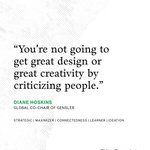
Diane Hoskins, global co-chair of Gensler, highlights what this looks like in practice in Gallup’s Leading With Strengths series: on.gallup.com/4qaPCF5

Futureproofing an organization starts with developing leaders long before they move into leadership roles.
In Gallup’s latest Leading With Strengths interview, Diane Hoskins, global co-chair of Gensler, one of the world’s most influential architecture and design firms, discusses why developing the next generation has always been central to Gensler’s leadership model.
Watch the full conversation here: on.gallup.com/3MD6E0e

How do managers adapt when organizational structures flatten, teams go hybrid and priorities shift faster than ever?
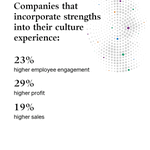
Amid constant change, one thing remains clear: Performance improves when people can do what they do best. Strengths-based cultures see 23% higher employee engagement, 29% higher profit and 72% lower turnover.
Read one of the year’s most-read CliftonStrengths stories: Accelerate Through Leadership Challenges With Strengths. on.gallup.com/491qF8g

As the new year approaches, many leaders are focused on setting goals with their teams. The most effective plans begin with a clear view of what each person does best.
When goals are aligned with natural talents, they become more attainable, more energizing and more sustainable throughout the year.

When individuals engage with their CliftonStrengths in the language they’re most comfortable using, understanding deepens and potential is maximized.
CliftonStrengths assessments and reports are now available in 40 languages, with additional language offerings actively underway as the strengths-based movement continues to grow globally.

As the year comes to a close, many leaders are navigating the possibilities, priorities and pressures for the year ahead.
In this episode of Leading With Strengths, No. 1 New York Times bestselling author, Harvard professor and happiness expert Arthur Brooks shares how he leans into his Ideation by intentionally building teams with people who can evaluate ideas, bring structure to execution, and keep the work grounded and practical.
Watch the full conversation here: on.gallup.com/4pgHySB

Most development programs start with this flawed assumption: The best way for people to grow is by fixing what’s wrong. But decades of Gallup research prove that’s not how people truly develop. Fixing weaknesses may prevent failure, but it doesn’t lead to excellence.
Real growth happens when people build on what they naturally do best. Someone who struggles with numbers is unlikely to be a great statistician, and someone without natural empathy isn’t going to suddenly become deeply compassionate. But both can excel when they identify, understand and apply their unique talents.
Great managers don’t focus on what’s missing. They invest in what’s strong.
Learn more about strengths-based development: on.gallup.com/4aUjlO5

When leaders operate from their strengths, followers get what they need. Teams become more confident, more resilient and more aligned on the work ahead. Learn more about strengths-based leadership:
Learn more about strengths-based leadership: on.gallup.com/44hf9Ea

How do strengths shape daily performance at work?
@Gallup’s global workplace data finds that employees who use their strengths daily are six times as likely to be engaged — one of the strongest indicators that strengths influence performance.
But that experience is far from universal. As of May 2025, just one in three U.S. employees say they get to do what they do best every day.
Discover how to use strengths as a measurable driver of engagement and performance. on.gallup.com/4iGmWRR

Don Clifton, inventor of CliftonStrengths, said, “Our strengths develop best in response to another human being.”
Employees with just one collaborative relationship are 29% more likely to stay with their company for another year and 43% more likely to stay for their entire career.
Learn more about building powerful partnerships: on.gallup.com/43NEpBH

Who’s your most powerful partner at work: the colleague who makes the hard days easier and great days even better?
Gallup research shows that having a best friend at work doesn't look the same for everyone. The definition may differ, but the outcomes are consistent. Employees with a best friend at work are more engaged, safer and more innovative.
Learn more about these powerful partnerships. on.gallup.com/47t1GuS

What does it really mean to have a best friend at work?
Across strengths domains, Gallup found one word that stands out: trust. Not passive trust, but active trust expressed through loyalty, consistency, honesty and care.
Explore Gallup’s latest insights on strengths and workplace connections. on.gallup.com/4hfv5fb

For many job seekers, talent isn’t the issue — confidence is.
StreetWise Partners uses CliftonStrengths to help job seekers uncover their top five strengths, build confidence and land jobs. Seventy percent secure employment within a year, and average incomes increase fivefold.
Read more: on.gallup.com/4pUxrEg

Knowing your strengths isn’t only about what you do well. It’s the key to self-awareness, engagement and success.
At @UTKnoxville, a strengths-based approach helped boost retention rates to 92% and raise graduation rates by 10 points.
Vice Provost Amber Williams shares how on Leading With Strengths: on.gallup.com/4mQB7Ep
