

J1-FGC1713
Gough Cave
Joined December 2024
- Tweets192
- Following97
- Followers33
- Likes311





Cheddar Man retweeted

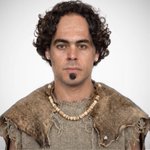
Facial reconstruction of La Braña 1, an 8,000-year-old WHG from León, Spain
In late November 2006, mountaineers discovered ancient bones in La Braña-Arintero Cave, located on the southern slopes of the Cantabrian Mountains at an altitude of 1,489 metres. The remains belonged to two individuals, La Braña 1 and La Braña 2.
Radiocarbon dating showed that both individuals lived approximately 8,000 years ago. Despite being found in different locations within the cave, their remains were nearly contemporaneous and may have been placed there at the same time.
The first skeleton was lying on its side in a flexed position at the end of a narrow passage, almost at the edge of a ledge, surrounded by limestone blocks. Numerous fragments of charred wood and reddish clay were found among and around the human bones.
The skeleton was exceptionally well preserved and almost completely articulated. Even the hyoid bone survived. However, several leg bones were missing and were later discovered alongside the second skeleton, which lay at the bottom of a pit four metres below the first. Researchers believe that some of La Braña 1's bones fell into the pit after the body decomposed. The skeleton was covered by a carbonate crust, and one of its ribs had become embedded in a stalagmite, requiring a chisel for its extraction. Based on the body's position, researchers suggested that the individual had been bound or wrapped during burial, a practice typical of Mesolithic burials.
At the time of death, the man was approximately 35–40 years old and stood around 170 cm tall. His teeth were healthy and showed no signs of cavities, although his upper incisors were heavily worn, possibly from being used as tools.
The skull showed evidence of trauma, including fractures of the mandible and left zygomatic arch, consistent with a blow. Signs of healing indicate that the man survived these injuries. He also had a healed injury to a lumbar vertebra.
The characteristics of his leg bones suggest that he frequently knelt or squatted.
The second individual, also a man, was buried with 24 pierced red deer canines, which were apparently sewn onto clothing that once covered his body. He stood approximately 166 cm tall. La Braña 2 suffered from osteoarthritis in his left arm and spinal problems. He died at around 40 years of age.
La Braña 1 carried a Y-DNA haplogroup, C1a2, which is less typical of WHGs. His mtDNA haplogroup, U5b2c1, was characteristic of WHGs.


Cheddar Man retweeted

Wow

You’re unable to view this Post because this account owner limits who can view their Posts. Learn more


