
Father, Husband, Entrepreneur, High Performance Director, trying to make the world better...one athlete, one coach, one business at a time
Redondo Beach, CA
Joined March 2011
- Tweets4K
- Following1.3K
- Followers2.2K
- Likes50.4K



Pinned Tweet
Athletic strength is more than just the weight on the barbell.
We need to see strength training in;
- lifting weights
- throwing med balls
- jumping / landing
- sprinting
- agility / change of direction
- collision
- isometrics
Expand your perspective, help your athletes.
Agree we need all athletes training elasticity (adults too)
But first step we have to changing the common outlook that“elasticity” is only reactive strength & rapid drop jump type plyos.

Elasticity is optional for youthletes.
Regardless of experience level, elasticity plays a critical role in how youthletes learn to move, perform, & manage physical demands.
Before high speed sprinting. Before sharp cuts. Before explosive outputs. Individuals need opportunities to develop the ability to store & release energy.
& that doesn’t magically appear once they reach a certain strength number.
It’s developed through progressive exposure.
At #uofstrength, we strategically manipulate the environment to encourage different elastic solutions.
We’re not waiting for a 2.5x BW squat!
We’re developing the qualities that help make higher outputs possible.
Here are 3 design tactics we use across experience levels:
1️⃣Elevated Surfaces — Guide 🦶shapes, stiffness & pretensioning.
2️⃣Obstacles (Hurdles) — Influence force directionality & encourage greater outputs.
3️⃣Crash Mat — Manage eccentric demands during the final landing.
The Goal?
Expose youthletes to different elastic demands while respecting their individual capabilities.
A lesson every coach needs to learn.
Yes there’s a time for special methods.
But the most important is to accumulate work on the basics and do them with the right intent.

Tell me you haven’t worked in a private setting…
A coach told an intern that things like windmills & DNS stars were too complicated in his program.
Said it was too hard in a D1 college setting 🤨
A setting where you have better athletes, fixed schedule, more time, etc…
🤣
Was asked twice this week about hobbies and what I do to relax
Cooking over fire is a big one.
I like the alchemy and creativity of cooking in general but fire just makes it an entirely different journey.
These are the questions that aren’t asked enough.
It’s what great coaches understand intuitively or explicitly.
In so many movements the preceding eccentric action either creates an advantage or can cause damage.
Shift to this thinking to help your athletes more!


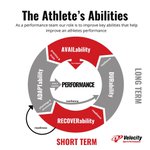
Availability is the most important ability.
Because all others are irrelevant when gone.


Availability is one of the greatest assets an athlete can posses
From @BenYoungASCC
Read the full article here ➡️ sportsmith.co/articles/why-i…

Expand your framework of eccentric training.
If your only tools are tempo eccentrics and snap downs you’re leaving a lot on the table.
Change your lens, expand your tool box.


Don’t limit your thinking on eccentrics actions to the lower body.
Both potentiating (springs) and attenuating (shocks) actions occur.
Are you preparing your athletes for them?
Eccentric actions can create an advantage or cause damage.
Why are kettlebell swings a fitness staple but virtually ignored in the performance setting?
When one of my former Soviet wrestlers introduced me to KB I thought it was kinda meh 🫤
But there is so much value in these posterior and rotational SSCs.

Very underrated KB swing.
I absolutely love what we call step back side swings (thinking about calling them pocket swings 🤔)
The internal rotation, the thoracic rotation, single leg drive…
Big rock for me for a lot of athletes.


👇🏼 “Always good to step outside your sport bubble. Pick an action, find the sport that does it best, visit and learn.”
This.
Too many performance coaches have spent almost all their career in sport.
They could gain so many things if they expand the perspective.

Football could learn a few things from baseball.
Throw-ins and goalkeeper overhead throws are two massively undertrained actions. Simple improvements to throwing mechanics and upper-body work could go a long way.
Always good to step outside your sport bubble. Pick an action, find the sport that does it best, visit and learn.


UNPOPULAR OPINION: You probably should be doing more eccentric training in season.
With;
-precise control on devices like @1080motion
-proper offseason preparation
- micro-dosing strategy
You can reap benefits without undue cost. Across a season you will maintain more strength