A new relationship with your health. Agent-native · Science-first
Joined February 2026
- Tweets92
- Following44
- Followers7.2K
- Likes60
Statins work because we solved blood-based risk stratification for cardiovascular disease decades ago. Measure LDL, treat if it's high, prevent the event. Cancer prevention has never had that kind of molecular handle.
A 14-protein plasma signature, trained on 48,000+ UK Biobank participants and validated across eight independent cohorts, now predicts lung cancer more than five years before diagnosis. The proteins are not shed by a tumor. They reflect an inflammatory pre-disease state in lung tissue, upstream of cancer itself.
When Swanton's team re-analyzed the CANTOS trial, identifying high-signature individuals for anti-inflammatory treatment cut the number needed to treat to 55. That is statin-level precision applied to cancer prevention.
The pattern keeps repeating across disease categories: blood-based molecular surveillance, applied early enough, turns detection into prevention. The measurement science is arriving. The system to deliver it to individuals is not.
Pandya, Zagorulya et al. Cell, 2026. 🧬

1
62
Most people treat sleep as a habit to discipline. You chase more hours and a better score in the morning, and you grade yourself on whether you hit them. The frontier of sleep science has quietly moved somewhere else. Sleep is not a behavior to fix. It is one of the highest-resolution biological signals your body produces, every night, for free, and most people read it at the shallowest possible layer.
Here is what the research actually says.
Start with the one metric everyone optimizes, the number of hours. In UK Biobank data, that is not even the number that best predicts mortality. The regularity of your sleep timing predicts how long you live better than its duration does (Windred et al., 2024). The thing most people track turns out not to be the thing that matters most.
The reason is that sleep carries far more information than a single number. The Human Phenotype Project recorded 448 distinct sleep parameters from more than 16,000 nights of home monitoring across 6,366 adults, and from them predicted body measures spanning 15 of the 16 organ systems they examined, with visceral fat the single strongest correlate. At the data level, a night of sleep is a readout of how your whole body is doing.
There is real biology underneath this. During deep sleep the brain runs a clearance system that flushes metabolic waste, including the proteins implicated in neurodegeneration. Work in Cell mapped how that clearance is driven, though the clearest mechanistic evidence is still in animal models (Hauglund et al., 2025). Deep sleep is doing measurable biological work even while everything looks switched off.
The relationship also has an optimum. In large UK Biobank analyses, cognitive and mental health outcomes peak around seven hours, with both short and long sleep doing worse (Li et al., 2022). A signal with an optimum is exactly the kind of thing a single dashboard number fails to capture.
And the baseline you measure against is not universal. Across 220,000 wearable users in 35 countries, East Asians slept shorter, later, and with lower efficiency than people in Western Europe and North America (Willoughby et al., 2023). The familiar advice to get eight regular hours was calibrated to a different population than the one a lot of people in this region actually live in.
Put it together. The hours you track are not the metric that matters most. The signal is dense with information, it does measurable biological work, it has a sweet spot rather than a maximum, and its baseline shifts with where you live. So the useful question stops being whether you slept enough last night. It becomes what your sleep is telling you about where your metabolism and your heart are heading, and whether anything is reading it continuously. The shift from a score to a signal is the whole game. 🧬

4
2
90
Most high-performers run on a simple assumption, that more inputs mean better outputs. More sleep, more protein, more cold plunges, more NAD+. Biology doesn't read its inputs that way. Almost every variable has a window, not a slope.
Nature this week added sleep to a long list. The MULTI Consortium analyzed 23 biological ageing clocks across imaging, plasma proteomics, and metabolomics in the UK Biobank. A consistent U-shape emerged across nine organ systems. The lowest biological age gaps land between 6.4 and 7.8 hours of sleep, with the optimum shifting by organ and by sex. Below 6 hours and above 8 hours both track to higher disease incidence and higher all-cause mortality.
The interesting question is no longer how much sleep. It's where your window is. Self-reported sleep is the methodological limitation here, so the 6.4-7.8 range is directional rather than prescriptive. The bigger pattern is robust. Your biology runs on dose-response. What's missing is the infrastructure to find your individual window. 🧬

The most oxygen-deprived tissue in your body ages the slowest. That is not a typo.
Your intervertebral disc lives in permanent hypoxia from birth. Most organs only run into low oxygen locally as they age, and when they do, a protein called HIF-1α builds up and accelerates cellular aging. The disc faces the same low-oxygen environment its entire life, yet keeps HIF-1α levels low and stable at every age. A team at Naval Medical University (Nature Aging, yesterday) showed why: the disc runs a selective autophagy pathway that continuously clears HIF-1α before it can accumulate. It solved a problem other organs never had to deal with until they started getting old.
The interesting part is what they did next. They built a small molecule called HATC that mimics the disc's clearing trick, gave it to aged mice weekly, and watched HIF-1α drop across multiple organs within two weeks. Median lifespan went up about 14 percent, maximum lifespan about 12 percent. These are mouse numbers. HIF-1α also does essential work in wound healing and blood vessel formation, so turning it down body-wide in humans is not straightforward. But the logic of the approach is what stays with you: find the tissue that ages slowest, reverse-engineer the mechanism, and export it outward. That is not how most drug discovery works. Maybe it should be.

Thousands of people take rapamycin to live longer. Most of them also exercise. A new randomized controlled trial just showed that combining the two might be worse than exercise alone.
The RAPA-EX-01 trial, published in the Journal of Cachexia, Sarcopenia and Muscle, put 40 adults aged 65 to 85 through a 13-week resistance and endurance program. Half received 6mg of weekly rapamycin, half received placebo. The researchers expected the drug to enhance exercise adaptations based on promising animal data. It did the opposite. The rapamycin group gained fewer chair-stand repetitions and showed trends toward reduced walking distance and grip strength compared to placebo. The drug arm also carried nearly 60 percent more adverse events.
The mechanism is straightforward. Exercise builds muscle by activating a pathway called mTORC1. Rapamycin extends lifespan in animal models by suppressing that exact same pathway. When you stack both interventions, they pull in opposite directions at the same molecular switch, and in this trial, combining them gave back less than exercise alone. This is what treating longevity as a collection of independent supplements and protocols looks like when two of them share a biological bottleneck that no one modeled.
Important context: this was an exploratory trial with 40 participants over 13 weeks, using one specific dose and timing protocol. It is not the final word. But the structural lesson holds regardless of where the dose-response curve eventually lands. If your two strongest longevity tools can fight each other because no one mapped the interaction, the problem is not the tools. The problem is that no one is managing the system. 🧬

76
The average American lives to 79 but loses their health at 64. That is fifteen years where your body is still here but your healthspan has already ended.
@EricTopol 's team at Scripps sequenced the genomes of people over 80 who never developed a major chronic disease. They published the results in Cell. The finding was not that genetics are irrelevant. They identified protective factors for Alzheimer's and heart disease. But the known longevity gene variants explained almost nothing. What separated these healthy agers was a cluster of familiar, modifiable variables: exercise patterns, sleep architecture, inflammatory load, immune function, social connection. Every one of these is measurable today. Not a single one is being managed with any real infrastructure.
Topol told last week that AI's most important contribution to medicine will be prevention. He is right about the direction. But the harder question is who builds the layer between what science already knows about these variables and what any individual can actually do with them on a Tuesday morning. That layer does not exist yet. The fifteen-year gap is what it costs to keep waiting.

Your annual checkup tests roughly 20 blood markers. It looks for what is already broken.
Stanford's Wyss-Coray lab took a different approach. Using plasma proteomics across 5,676 adults, they measured organ-specific aging in 11 systems. Among older adults in the cohort, one in five had at least one organ aging significantly faster than the rest of their body. Those with accelerated heart aging faced 250% higher heart failure risk. The models are strongest in middle-aged and older populations; extending them to younger adults is an active area of research.
None of this shows up on a standard panel. Not because the science doesn't exist. Because the infrastructure to deliver it at the individual level doesn't.
The checkup was built for a world where you wait for symptoms. The science has moved on. The question is whether your health system has.
(Oh et al., Nature 2023)

90
Omega-3 is probably the most studied and most argued-about molecule in nutrition science. In 2018, REDUCE-IT showed that pure EPA cut cardiovascular events by 25%. Two years later, STRENGTH tested EPA+DHA and found zero benefit. The field split into camps arguing about formulations, doses, and whether the mineral oil placebo in REDUCE-IT had inflated the result.
But there is a more fundamental problem that none of these trials addressed: they measured what people swallowed, not what ended up in their tissues. In VITAL, giving 840mg of EPA+DHA per day only raised plasma levels by about 55%. If someone's baseline was already decent from diet, the supplement barely changed their biology. When a trial comes back negative, we genuinely cannot tell whether the molecule failed or whether the intervention was too small to matter.
A consortium called FORCE took a different approach. Instead of running another supplement trial, they pooled individual-level blood measurements from 17 prospective cohorts across 10 countries. Among 42,466 people followed for a median of 16 years, those with the highest circulating EPA+DHA had 15 to 18% lower risk of dying from any cause (Harris et al., Nature Communications 2021). Last year, the same group extended this with UK Biobank data, bringing the total to over 160,000 individuals and 24,000 deaths. The association held and got stronger: 17% lower all-cause mortality, 21% lower cardiovascular mortality, 19% lower cancer mortality (O'Keefe, Harris et al., Mayo Clinic Proceedings 2024). Plant-derived omega-3 from flaxseed and walnuts showed no association in either analysis. Only marine-derived long-chain omega-3s carried the signal.
What makes this more than an epidemiological number is the mechanism story converging from multiple directions. In coronary disease patients, higher EPA+DHA blood levels tracked with significantly slower telomere shortening over five years (Farzaneh-Far et al., JAMA 2010). In animal models, these fatty acids inhibit mTOR signaling, the same nutrient-sensing pathway targeted by rapamycin. They produce specialized pro-resolving mediators (resolvins, protectins) that actively resolve inflammation rather than just suppressing it. The omega-3 story was never really a supplement story. It was a tissue-level aging biology story that we kept trying to answer with pill-counting trials.

Psilocybin extended survival in aged mice by 30% last year. Since then, it has been widely called a longevity therapy.
A new correspondence in npj Aging (Lerer, 2026) just asked what should have been the first follow-up. Is there any signal, at the population level, that people who use psychedelics actually live longer?
The short answer is that we cannot tell yet. Lerer compared lifespans of 11 psychedelic advocates with 12 cancer researchers and 5 aging researchers. All three groups outlived population averages, which is exactly what you would expect from highly educated, high-income professionals. Psychedelic users did not outlive the others.
The study is small and observational, so it proves nothing definitive. But it points to something worth noticing: between the rodent data and the early individual self-experiments that have followed, nobody has checked whether a human population signal even exists.
The mouse data is genuinely interesting, and the self-experiments tracking short-term biomarker responses are adding real observations. But it is worth being clear about where the evidence actually stands. There is a plausible biological mechanism from rodent studies.
There are short-term biomarker snapshots from a handful of individuals. What does not exist yet is any controlled human evidence on whether psilocybin affects lifespan or long-term healthspan.
That gap should not be filled with conclusions. It should be filled with studies.

Cell published a framework this week that reframes how we think about cancer risk. The argument: "age at diagnosis" is the wrong metric. It tells you when disease appeared. It says nothing about when it started building.
Risk is not an event. It's a trajectory. One that begins accumulating years before any symptom shows.
Past exposures, including inflammation, metabolic stress, environmental insults, get encoded through epigenetic and metabolic reprogramming. They don't clear when the exposure ends. Plasma proteomics can now read those signatures. Organ-specific aging markers appear in blood before clinical disease does. The aging clock is ticking in your tissues before your doctor has anything to measure.
And there's a window. Before tissue damage consolidates into what the authors call a functional "point of no return," targeted interception can shift the trajectory. After that point, the same interventions accomplish far less.
We don't need to wait for a diagnosis to act. We need to know our biological state. Continuously. Before the window closes.

Two people. Same gym. Same program. Six months later, completely different results.
The usual explanations don't hold. Same discipline, similar genetics. The difference may be more specific than anyone assumed: one set of mitochondria is still sending a signal. The other has gone quiet.
The discovery
In 2015, Lee and Cohen at USC found peptides encoded in regions of the mitochondrial genome long assumed to be noncoding. The one of the first characterized: MOTS-c. Sixteen amino acids. Its job is activating AMPK, the same metabolic switch triggered by exercise, caloric restriction, and metformin. MOTS-c circulates like a hormone. Its levels fall measurably with age.
The evidence
Lee et al. first showed that restoring MOTS-c reversed age-related insulin resistance. Building on this, Reynolds et al. gave aged mice MOTS-c and measured physical performance. Exercise capacity restored. Metabolic flexibility returned. The animals weren't physically different. The signal had simply come back.
What this means
Your response to the same workout changes with age, not necessarily because you're working less hard, but because the downstream signal is quieter. The body still knows what to do. It's waiting for instructions that arrive less often than they used to.
Sources: Lee et al., Cell Metabolism 21 (2015) · Reynolds et al., Nat Commun 12 (2021)

Aging research spent decades cataloguing what breaks down.
The more interesting question turned out to be: what stops being made.
Your body produces peptides, short amino acid chains that tell cells to repair, energize, and hold off decline. Their levels fall across adulthood, measurably and consistently. The last decade of longevity science has been figuring out which signals those are, what disappears with age, and whether restoring them changes anything.
What peptides do?
Peptides are signaling molecules. Too short to fold into stable protein structures, they work as molecular messengers: binding to receptors, activating pathways, instructing cells. The body produces thousands of them. Many are well characterized. Many are still being found.
What changed in the last ten years: researchers started identifying peptides whose job appears to be regulating aging itself.
The discovery that rewrote basic biology
In 2015, Lee and Cohen at USC found something in the mitochondrial genome that shouldn't have been there.
The mtDNA was thought to encode 13 proteins. Full stop. Instead, hidden in the non-coding regions, were short open reading frames producing bioactive peptides. The first clearly characterized: MOTS-c. 16 amino acids. It activates AMPK, the same metabolic switch triggered by exercise, caloric restriction, and metformin. Under stress, it migrates from the mitochondria to the cell nucleus and reprograms gene expression.
Mitochondria, it turned out, are endocrine organs. They produce hormones. And that output declines with age.
Where the science is now?
Four results define the current state.
Reynolds et al. (Nature Communications, 2021) injected MOTS-c into 22-month-old mice. Physical capacity improved. Muscle homeostasis recovered. A mitochondrial signal was doing something the aging genome had stopped doing on its own.
Castner et al. (Nature Aging, 2023) gave aged rhesus macaques a single low-dose injection of klotho, a protein produced in the kidney whose blood levels fall across adulthood. Working memory improved within 4 hours. The effect lasted two weeks. Klotho doesn't cross the blood-brain barrier. It improved cognition anyway.
Baar et al. (Cell, 2017) designed FOXO4-DRI, a peptide that exploits a specific survival mechanism senescent cells depend on. It freed p53 from sequestration and triggered apoptosis selectively in those cells. Old mice treated recovered physical performance and kidney function.
Mitchell, Gladyshev et al. (Aging Cell, 2025) treated old mice with elamipretide (SS-31), which stabilizes the mitochondrial inner membrane. Cardiac function improved. Muscle weakness partially reversed. Epigenetic clocks didn't move. The mice were functionally younger but molecularly still old. Functional and molecular aging, it turns out, can diverge. We may not fully understand what we're measuring when we measure aging.
The open question
Almost all of this is animal data. Human trials are small, short, and not yet conclusive. Beyond the translation gap, there's a measurement problem: if functional aging and molecular aging can move independently, the field needs tools that track both, at the individual level, with enough resolution to see what's actually changing over time.
The science is here. The infrastructure to apply it personally is what we're building now. 🧬
Sources: Lee et al., Cell Metabolism 21 (2015) · Reynolds et al., Nat Commun 12 (2021) · Baar et al., Cell 169 (2017) · Castner et al., Nat Aging 3 (2023) · Mitchell, Gladyshev et al., Aging Cell 24 (2025)

For most of human history, aging was treated as physics. Entropy. Irreversible by definition.
The last five years of molecular biology suggest this framing may be wrong.
What is epigenetic reversibility?
Your genome, the DNA sequence, doesn't change much as you age. What changes is the epigenome: the layer of chemical marks that tells your cells which genes to turn on and which to silence. It's not your hardware aging. It's your software losing fidelity.
Sinclair's Information Theory of Aging makes a striking claim: if aging is primarily information loss rather than physical damage, then in theory, the information can be recovered.
The experimental proof
In 2023, Yang, Hayano, and Sinclair published in Cell: using a system called ICE, they induced accelerated epigenetic damage in mice across muscle, kidney, brain, and blood. The animals aged faster at every level they measured. Then they introduced three reprogramming factors, Oct4, Sox2, and Klf4. The epigenetic changes reversed. The same DNA, reset.
One sentence from the paper's conclusion is worth sitting with: aging from epigenetic information loss is a reversible cause of aging.
The systems explanation
Yücel and Gladyshev's review in Nature Reviews MCB, published just last week, gives us the framework for why this works. Epigenetic fidelity breaks down through four interconnected mechanisms: nuclear architecture deterioration, PRC2-mediated memory dysregulation, H3.3 histone accumulation, and transcription factor hijacking. Each one feeds the others. It's a cascade, not a gradual fade.
The implication we keep coming back to: intervene at the right node, and you don't just slow the process. You may be able to reverse it.
The behavioral evidence
We don't need gene therapy to see this principle operating at a smaller scale. The CALERIE trial randomized 220 adults to 25% caloric restriction for two years. The result: DunedinPACE, the clock that measures the rate of aging, slowed. Not just the score. The rate.
Aging is not a fixed trajectory. It responds to what we do.
What this means for us
The question shifts from "how do I age more gracefully?" to "what is the current state of my epigenetic program, and what is moving it?"
That requires continuous individual data. Not annual snapshots. Not population averages. The science of reversal is here. The infrastructure to apply it at the individual level is what we're building now. 🧬
Sources: Yang et al., Cell 186 (2023) · Yücel & Gladyshev, Nat Rev MCB (2026) · Waziry et al., Nat Aging 3 (2023)

Greg Brockman was asked this week whether AI would ever reach a ceiling, a point where there's nothing left to improve. His example was preventive healthcare: not treating problems after they arrive, but understanding lifestyle and detecting disease before it happens.
There are actually two separate problems here. One is that the science is still moving. Many of the biomarkers most relevant to longevity are still being validated in humans, and the causal links between what we measure today and how we age are being rewritten every year. AI for science accelerates that work.
The other problem is older and quieter. A lot of what we already know with confidence has never left the lab. Fasting insulin has predicted metabolic dysfunction a decade before diagnosis for thirty years. hs-CRP reads chronic inflammation that sits upstream of cardiovascular disease and neurodegeneration simultaneously, and most people have never heard of it. The knowledge exists. The infrastructure to make it personal and continuous does not. And this is the gap we are closing.

We assumed tissue aging looks like blood aging: multiple waves, gradual, predictable. It doesn't.
A Nature Aging paper out today mapped 3.3 million cells across 527 women and found breast tissue has one dominant aging inflection point. Not at 44. Not at 60. At menopause, late 40s.Lobule density drops by nearly 4x. Immune surveillance collapses. The tissue becomes, in the authors' words, more permissive of carcinogenesis.
Plasma clocks and tissue clocks are reading different chapters of the same story. If you only track one, you're likely missing the window that matters most for a specific organ. We built Compound because one number was never going to be enough.

What if biological aging isn't really about how long you've lived, but about what your blood is telling your tissues to do.
A paper just published in Nature Biomedical Engineering by UC Berkeley researchers makes that case in striking terms. They built a human organ chip modeling the fat-liver axis using hiPSC-derived tissue, exposed it to serum from donors over 62, and watched decades of aging hallmarks appear in 4 days: cellular senescence, oxidative DNA damage, insulin resistance, inflammatory gene expression. Switch to young serum, and the tissue begins to recover. The aging wasn't baked in. It was induced by the circulating environment. The paper also found that tissues carry a memory of prior aging exposure, which helps explain why metabolic history is so hard to fully reverse.
We're genuinely excited by this one because it puts into human biology something we've believed from the start: your body is reading your daily inputs continuously, and those inputs are writing your biological trajectory in real time.

It's open source. MIT-0. Runs on Claude Code, installs via OpenClaw in under a minute.
If you've ever felt like you were collecting health data for no one, this is what we built.
compound-longos-clawskill.ve…
Health is your most important compounding asset. Turri is how you actually manage it.

1
1,057
Years of meals logs on one app. Sleep tracked on another. Lab results in a PDF somewhere. Apple Watch on your wrist. And you’re still copy-pasting screenshots into ChatGPT at midnight asking “Why do I feel like this?”
That’s the gap we built Turri for.
More than a tracker. More than a chatbot. More than any single health app. 10 AI health agents that work across all your data at once — find the patterns none of your apps ever connect, search the literature for why, and design experiments you can actually run on yourself.
Open source. Runs on your device. Your data never leaves.
🔗compound-longos-clawskill.ve…
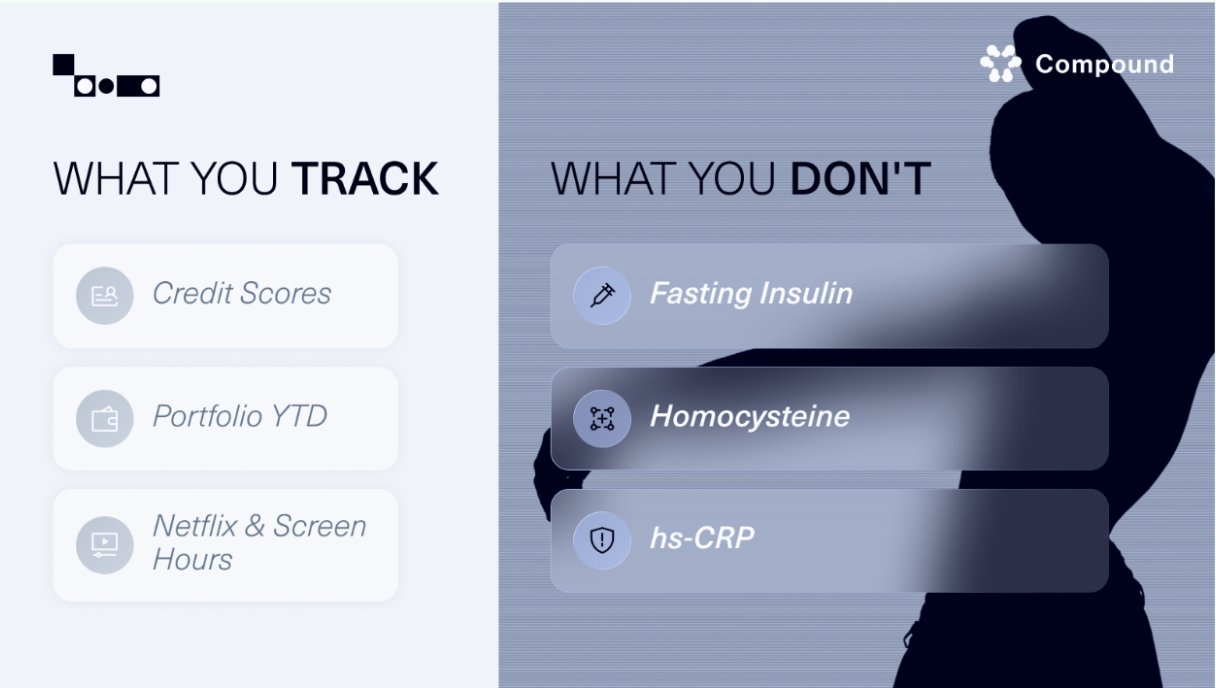
Most people can quote their credit score to the digit. They track portfolio returns weekly. They know exactly how many hours they spent on Netflix last month.
Ask them three questions about their own biology, fasting insulin, homocysteine, hs-CRP, and you get silence.
These are not exotic research markers. They are among the strongest predictors science has for how you will age.
Fasting insulin tells you more about your metabolic future than fasting glucose ever will. Elevated levels can precede a diabetes diagnosis by a decade, long before glucose moves out of range.
hs-CRP is reading your inflammatory baseline right now, whether you feel it or not. Chronic low-grade inflammation, what researchers call inflammaging, is upstream of cardiovascular disease, neurodegeneration, and metabolic dysfunction simultaneously.
Homocysteine is a methylation checkpoint. When it's elevated, it signals that the biochemical machinery your body uses to maintain DNA, build neurotransmitters, and regulate gene expression is running low on the substrates it needs.
The gap between what science knows about aging and what individuals know about themselves is staggering.