

#Episcopal priest “Parson Carson” | Professional Conductor & Soprano | Humorist | NASA SS Ambassador | Photographer | Coffee addict! #Anglican #BeachPriest
Canton, NY
Joined May 2009
- Tweets41.4K
- Following10.8K
- Followers10K
- Likes24.7K

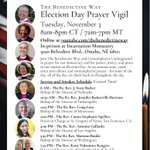



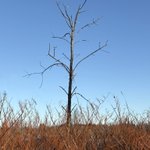




Gratitude Challenge day #3 - PLUS…enjoy these gorgeous #Fall leaves!
🍁🍂🍁🍂🍁🍂🍁🍂🍁🍂🍁
🇺🇸🇺🇸🇺🇸🇺🇸🇺🇸🇺🇸🇺🇸🇺🇸🇺🇸🇺🇸🇺🇸🇺🇸🇺🇸🇺🇸
#voting #voice #vote #gratitude #gratitudechallenge


White Heron Rises Over Blackwater
~ by Mary Oliver (1935-2019)
~ be sure to watch the clip of her reading here: facebook.com/share/v/1JTDq4Y…
I wonder
what it is
that I will accomplish
today
if anything
can be called
that marvelous word.
It won’t be
my kind of work,
which is only putting
words on a page,
the pencil
haltingly calling up
the light of the world,
yet nothing appearing on paper
half as bright
as the mockingbird’s
verbal hilarity
in the still unleafed shrub
in the churchyard –
or the white heron
rising
over the swamp
and the darkness,
his yellow eyes
and broad wings wearing
the light of the world
in the world –
ah yes, I see him.
He is exactly
the poem
I wanted to write.
~ photo by me 😊 (you must imagine its rising!)

Today, November 3, The Episcopal Church offers a commemoration of Richard Hooker, Priest and Theologian, 1600.
Collect (Prayer) for the Day: O God of truth and peace, you raised up your servant Richard Hooker in a day of bitter controversy to defend with sound reasoning the great charity of the catholic and reformed religion: Grant that we may maintain that middle way, not as a compromise for the sake of peace, but as a comprehension for the sake of truth; through Jesus Christ our Lord, who lives and reigns with you and the Holy Spirit, one God, for ever and ever. Amen.
According to “Holy Women, Holy Men”:
“In any list of Anglican theologians, Richard Hooker’s name would stand high, if not first. He was born in 1553 in Heavitree, near Exeter, and was admitted in 1567 to Corpus Christi College, Oxford, of which he became a fellow ten years later. After ordination and marriage in 1581, he held a living in Buckinghamshire. In 1586 he became Master of the Temple, in London. Later, he served country parishes in Boscombe, Salisbury, and Bishopsbourne near Canterbury.
A controversy with a noted Puritan led Hooker to prepare a comprehensive defense of the Reformation settlement under Queen Elizabeth I. This work, his masterpiece, was entitled Laws of Ecclesiastical Polity. Its philosophical base is Aristotelian, with a strong emphasis upon natural law eternally planted by God in creation. On this foundation, all positive laws of Church and State are grounded–from Scriptural revelation, ancient tradition, reason, and experience.
Book Five of the Laws is a massive defense of the Book of Common Prayer, directed primarily against Puritan detractors. Hooker’s arguments are buttressed by enormous patristic learning, but the needs of the contemporary worshiper are paramount, and he draws effectively on his twenty-year experience of using the Book. Hooker’s vast learning, and the quality of his style, reveal him to be a man of moderate, patient, and serene character.
Concerning the nature of the Church, Hooker wrote: ‘The Church is always a visible society of men; not an assembly, but a Society. For although the name of the Church be given unto Christian assemblies, although any multitude of Christian men congregated may be termed by the name of the Church, yet assemblies properly are rather things that belong to a Church. Men are assembled for performance of public actions; which actions are being ended, the assembly dissolveth itself and is no longer in being, whereas the Church which was assembled doth no less continue afterwards than before.’
Pope Clement VIII is reported to have said that Hooker’s work ‘had in it such seeds of eternity that it would abide until the last fire shall consume all learning.’”


The Parson Carson retweeted

Battling with dragons, a lion, and dog in the initial 'A'(dam) at the beginning of 1 Paralipomenon (Chronicles) with a scribal correction visible too
BnF MS Latin 10; Biblia Latina; 12th c (2nd quarter); France (West or South?); f.228r @GallicaBnF


The Parson Carson retweeted
14th May is the feast of the Ascension.
BnF MS Latin 9428; Sacramentarium, dit Sacramentaire de Drogon; 9th century (between 826/837 & 855 CE); Metz; f.71v @GallicaBnF

Y’all know I am obsessed with “sky things” so here are some photos of a couple of dramatically wild thunderstorms on my way home through #Syracuse today! At one point, I did pull off the road. #NYWX #upstatenyweather #nyweather


The Parson Carson retweeted
"Principiis geminis orditur linea Christi.
Ex uno coepit data circumcisio carnis.
Alterius juxta cor facta vocatio sancta."
BnF Latin 275; Evangelia; 11th century; f.4r @GallicaBnF

First firepit of the season for me! I also took some time to pick up sticks in the church yard - yay free kindling! #campfire #outside #evening #chill #northcountry #upstateny


