Crocodilian Specialist Group (@CrocSpecGroup) header
Crocodilian Specialist Group (@CrocSpecGroup) profile picture

We are the IUCN-SSC Crocodilian Specialist Group. Moving forward for crocodilian conservation since 1971. 🐊

Joined December 2019
Photo by Crocodilian Specialist Group (@CrocSpecGroup)Photo by Crocodilian Specialist Group (@CrocSpecGroup)Photo by Crocodilian Specialist Group (@CrocSpecGroup)Photo by Crocodilian Specialist Group (@CrocSpecGroup)Photo by Crocodilian Specialist Group (@CrocSpecGroup)Photo by Crocodilian Specialist Group (@CrocSpecGroup)Photo by Crocodilian Specialist Group (@CrocSpecGroup)Photo by Crocodilian Specialist Group (@CrocSpecGroup)Photo by Crocodilian Specialist Group (@CrocSpecGroup)Photo by Crocodilian Specialist Group (@CrocSpecGroup)
On 21 July 2026, the U.S. Department of the Interior hosted “Scales of Success: The Triumph of the American Alligator”, an official Great American Expeditions and Freedom 250 event, in Washington, D.C.
1
1
204
The program celebrated the remarkable recovery of the American alligator (Alligator mississippiensis) and the partnerships that transformed a species once in serious decline into one of the world’s most recognized examples of conservation through sustainable use.
1
37
Conservation in Action! 🐊 American crocodile nesting study in the Dominican Republic and the World Crocodile Day celebrations that followed: The 2026 American crocodile nesting season in Lago Enriquillo concluded on 17 June, when the last nest was opened by the monitoring team.
1
6
219
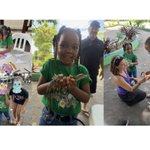
As part of World Crocodile Day celebrations, an educational outreach activity was conducted on 20 June 2026 at the National Zoological Park. This event provided an opportunity to raise awareness and educate the public about the importance of conserving Crocodylus acutus.
1
1
84
Dear CSG Members: Here is the most recent Newsletter 45(2) April - June 2026! 🐊 Follow the link here or in our profile: iucncsg.org/365_docs/attachm…
1
4
143
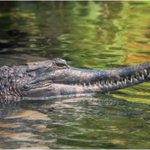
There are 2 types of crocodiles called Gharials — the Indian Gharial uses its slender jaws and sharp teeth strictly to catch fish, however its look-alike cousin—the Sunda Gharial—uses their strong slender snouts to catch fish, as well as hunt monkeys and deer! #WorldTomistomaDay
7
18
89
2,646
Sunda gharial (Tomistoma schlegelii): Indonesia, Malaysia, Brunei. - Conservation Status: Endangered Indian gharial (Gavialis gangeticus): India, Nepal, Bangladesh. - Conservation Status: Critically Endangered
3
214
Secretive and handsome, the Sunda Gharial is disappearing from the swamp forests and freshwater rivers of Indonesia, Malaysia, and Brunei. World Tomistoma Day is celebrated on August 5th to highlight crocodile conservation, specifically of this unique endangered crocodilian.
1
16
1
49
2,172
Also known as the Malay Gharial or False Gharial. Scientific Name: Tomistoma schlegelii Conservation status is Endangered due to severe habitat loss from logging, forest fires, and plantation development.
2
108
Different crocodilians are designed to catch different types of prey items. The Indian Gharial (Gavialis gangeticus) has a long slender snout with lots of long slender teeth designed for catching fish. Photo of young Indian Gharial by Pheobe Griffith
1
2
33
934
...While some crocodiles, alligators, and caiman have more blunt teeth for catching mammals, birds, and other reptiles. But all crocodilians swallow their food whole.
2
55
Status Update on Critically Endangered Gharial in the Gandak Riverscape in Bihar, India, and it's looking good! Read more here: iucncsg.org/365_docs/attachm…
1
7
20
1,468
The Gharial (Gavialis gangeticus), a critically endangered crocodilian native to South Asia, has experienced severe range contractions over the past century primarily due to hunting for skins and trophies, followed by egg harvesting, river regulation, habitat alteration ...
1
4
170
Recovering the Estuarine crocodile (Crocodylus porosus) population in the Bhitarkanika National Park/ Wildlife Sanctuary in Odisha, India. Read more here: iucncsg.org/365_docs/attachm…
1
13
1,064
The “rear and release” program implemented since 1975 has resulted in the release of 3008 crocodiles around 1 m total length between 1977 and 2024 into Bhitarkanika wetlands. The FAO/UNDP, Government of India and state Forest Department program found this to be a success story...
1
1
116
This large freshwater crocodilian, the Malay Gharial or Sunda Gharial, lives in the slow-moving rivers and peat swamp forests of Malaysia, Indonesia, and Brunei. They are secretive and opportunistic ambush predators feeding mostly on fish, as well as birds and small mammals.
8
1
46
1,341
Conservation of Kalimantan's crocodiles - the Siamese crocodiles & Tomistoma - The Kalimantan Province of Indonesia comprises approximately 75% of the island of Borneo, and maintains a diverse fauna. Read more here: iucncsg.org/365_docs/attachm…
15
54
1,376
For the longest time, we all thought the large African crocodile with a broad snout was just the Nile crocodile, however, some individuals looked and behaved differently in subtle ways. Photo: Nile crocodile
1
19
469
After scientists began evaluating blood samples and different aspects of the body, the science revealed there were actually TWO different species: the Nile crocodile (Crocodylus niloticus) and the West African crocodile (Crocodylus suchus).
1
2
102
A Crocodile Sanctuary under threat at the Ndumo Game Reserve in Africa - Once one of South Africa’s pre-eminent protected areas for Nile crocodiles (Crocodylus niloticus), and the site of pioneering crocodile research and conservation efforts in the country, Ndumo Game Reserve...
1
125
...in northern KwaZulu-Natal Province has been illegally occupied and utilised for 16 years, with irrigated fields spreading across the former ancestral crocodile breeding grounds. Read more here: iucncsg.org/365_docs/attachm…
62
Calling Fellow CSG Photographers - we're looking for great photos of crocodilians. Currently looking for Caiman photos: Genus Caiman, Melanosuchus, and Paleosuchus. If you're interested in allowing us to use your photos for the website and social media purposes...
1
5
138
...please send us a message. Only include high resolution photos as .jpg or .png files, with your credit information in print on the corner of your photos. We will email you an Image Copyright Permission PDF to sign for each photo you send us. Thank you!
1
63
Searching for Gharial: Information on the occurrence of Gharials in a stretch of the Babai River outside the protected area is largely lacking, but something is being done to find the Gharials. iucncsg.org/365_docs/attachm…
3
87
World Crocodile Day was started to shine a bright light on crocodilian conservation, so let's share all the success stories happening around the world for these incredible reptiles.
2
3
21
556
Celebrating on June 17th and if you want to make donations to support the IUCN SSC-Crocodilian Specialist Group, you can do that here: paypal.com/ncp/payment/UCGVV…
106
Crocodile surveys and Nesting season - An update from the Dominican Republic at Lago Enriquillo regarding their American crocodiles, Crocodylus acutus. Read about it here : iucncsg.org/365_docs/attachm…
2
13
475
Crocodilian Redlist Authority Update: As of March 2026, of the 23 species of crocodilians that have been assessed, 7 are listed as Critically Endangered, 1 as Endangered and 3 as Vulnerable. Learn more: iucncsg.org/365_docs/attachm… Photo: Mecistops leptorhynchus by Jen Brueggen.
1
12
32
1,325
There are also 12 species listed as Least Concern. Two species are listed as Not Evaluated, although assessments are currently being drafted. No crocodilians have been listed in the extinct or data deficient categories.
2
81
Tanned Teeth 🐊 Crocodilians replace their teeth and go through thousands throughout their lifetimes. So even if it's stained today, a pearly white will replace it soon.
2
16
250
Some crocodilians, like this Estuarine crocodile (Crocodylus porosus) live in river-systems that have tannins in the water from natural organic material like fallen leaves and other decaying vegetation, and it will stain a crocodile's teeth. Photo by David White/ Solar Whisper.
1
1
120
Crocodilians are protective mothers. 🐊 They will deposit their eggs in a nest and then guard the nest until the babies are ready to hatch. Photo: Adult Indian Gharial (Gavialis gangeticus) on the nest bank with hatchlings in the water behind them, by Phoebe Griffith.
1
2
22
391
When she hears their chirping calls, she will help the hatchlings from the nest and continue to guard them until they are old enough to go fend for themselves.
51
Boosting the Gharial population in the Ghaghra River in Uttar Pradesh, India🐊 The global adult population is estimated to be around 650 individuals, and the species is listed as Critically Endangered on the IUCN Red List. iucncsg.org/365_docs/attachm…
2
9
36
1,120