




What's in your $WALLET?

The Robinhood Chain flywheel thesis: AA + (3,3)
DEEPDIVE.
@RobinhoodCrypto could be building more than a blockchain for tokenized stocks. It could be working on a programmable financial distribution network in which wallets control the user experience, incentives coordinate participation, and $WALLET potentially connects the economic activity.
The central idea is that these components are complementary. AA can make participation easier; incentives can make participation worthwhile; and a token could, if designed for that role, help coordinate those incentives.
The flywheel only becomes economically meaningful if each stage reinforces the next.
To understand why this flywheel could matter, start with the business Robinhood is trying to build.
Tokenizing a stock is only one part of the opportunity. The bigger opportunity is controlling the infrastructure through which people discover, access, hold, trade and use financial assets.
Robinhood Chain is designed as an Ethereum-compatible Layer 2 for tokenized real-world assets, including equities and ETFs. Its official documentation describes an open network on which developers can deploy applications and users can interact with on-chain assets.
2. AA: turn the wallet into a programmable financial interface.
Traditional crypto wallets often expose users to the underlying mechanics of blockchain transactions.
A user may have to obtain ETH for gas, approve a token, execute a swap and then sign another transaction to complete a task.
Every additional step creates friction.
Account Abstraction changes what a wallet can do. ERC-4337 supports smart-account features such as gas sponsorship, transaction batching and programmable authorization.
This is illustrative: actual steps depend on the application, wallet configuration, token approvals and sponsor policies.
Why does it matter economically?
- Fewer steps can improve conversion from attempted transactions to completed transactions.
- Sponsored gas can let a new user transact before acquiring ETH.
- Session keys and programmable permissions can support approved automated activity.
- Batching can make complex interactions feel like a single operation.
AA does not automatically generate demand. It makes it easier to act on existing demand and creates more possibilities for applications to offer useful experiences.
AA is the mechanism that makes the participation layer programmable.
3. Programmable participation
Now imagine that the wallet is not just a place to store assets. It becomes the entry point to an ecosystem of financial applications.
A user could potentially interact with a decentralized exchange, provide liquidity, use an eligible lending protocol or authorize an automated strategy.
A smart account could be configured to execute certain permitted actions without requiring a fresh manual signature for every step.
That opens up a much broader design space. It would be a complete rebranding to the goal they're aiming for.
For example, a hypothetical application could offer:
- A gas subsidy for a user's first eligible swap.
- A reward for maintaining liquidity in a particular market.
- A fee discount for using a partner application.
- An incentive for completing a series of legitimate transactions.
- A reward for providing useful liquidity during a new market's launch.
These are examples of mechanisms an ecosystem could implement.
- Loyalty incentives.
The critical transition is from rewarding ownership alone to rewarding useful participation.
A wallet could become the point where identity, permissions, transaction execution and incentives meet.
That creates the conditions for a flywheel.
4. (3,3) enters the picture
Can a network and an ecosystem make it individually attractive for participants to take actions that also make the network more useful?
3,3 is a cooperative equilibrium
It represents a desired state where:
- Users have a reason to stay active.
- Developers have a reason to build.
- Liquidity providers have a reason to supply capital.
- Applications have a reason to integrate.
The ecosystem becomes more useful as these contributions accumulate.
The ideal is not that everyone simply buys a token and refuses to sell it. It is that participants benefit from helping create something that other participants genuinely want to use.
That is a potentially powerful design principle for a financial distribution network.
The deeper possibility: Robinhood Chain as an incentive-driven, tokenized financial distribution layer connecting users, developers, AI agents, and liquidity providers in a self-reinforcing economic flywheel.


Sometimes the biggest clue is the thing everyone else overlooks.
Hansel & Gretel left breadcrumbs on the official @RobinhoodCrypto website. crumbs.robinhood.com says: “I've left a trail, like last time.”
Hans and Gretel is written by the famous Brothers Grimm, they also wrote The Frog King.
@ribbita2012 @RibbitCapital
Now look at the clues:
→ RIBBIT is missing the A. → RIBBITA. → GRiBBiTS NFTs feature crowns and 33 balloons and shirts. → 33 keeps appearing in the $WALLET investigation. → The $WALLET launcher: aa33.
The NFT's show many hints. A crown. Stealth themed clothing. 33 balloons. 33 shirts etc.
A hidden identity. A trail of breadcrumbs. A number recurring across NFTs and on-chain infrastructure.
Two Grimm fairy tales. One possible hidden narrative.
These breadcrumbs were deliberately placed.
🍬 Hansel & Gretel
A house made of sweets. An irresistible attraction. A witch hiding behind the illusion of abundance.
But there's more.
Behind the danger lies a huge treasure the children eventually take home.
👑 The Frog King
An ordinary-looking frog conceals a prince. The apparent identity hides something entirely different.
One hides danger and wealth behind beauty. The other hides royalty behind an unexpected exterior.
There's so much more to share.
But I can finally say:
It's complete.

I'm not sure where we are,
but the future is $NEAR.

Things i genuinely think could happen to $NEAR if the bull market goes full send.
pure speculation, but hear me out.
NEAR Business just made me think about the bigger picture.
what happens when you combine confidential business treasuries, cross-chain liquidity, chain abstraction and AI agents that can actually transact?
here’s what i’m watching:
>> crypto companies start running payroll, vendor payments and treasury operations through NEAR Business instead of stitching together multiple tools.
>> DAOs, foundations and grant programmes use programmable treasury rules to manage millions in capital without exposing every payment to the entire market.
>> confidential onchain finance becomes a much bigger narrative. businesses want the benefits of blockchain without showing competitors their balances, payroll or capital movements.
>> more wallets and applications integrate NEAR Intents because users don’t want to think about which chain their assets live on.
>> stablecoin payments become a much bigger part of the NEAR story. users care about moving dollars, they don’t necessarily care which chain makes it happen.
>> AI agents start managing budgets, paying for APIs, hiring other agents and settling transactions without waiting for a human to approve every individual action.
>> agentic commerce moves beyond demos. agents begin handling real workflows, from procurement and research to recurring payments and portfolio rebalancing.
>>NEAR’s confidential execution becomes increasingly relevant as those agents handle sensitive business data, trading strategies and financial transactions.
>> businesses start operating across dozens of chains without needing separate treasury workflows for every network.
>> NEAR AI and NEAR Intents become more tightly connected in the market’s mind: one helps agents do the work, the other helps them coordinate and move value.
>> third-party apps build on these rails instead of reinventing cross-chain swaps, execution and confidential transactions from scratch.
>> treasury management itself becomes more automated. imagine setting the rules once and having authorised agents rebalance reserves, pay invoices and execute approved allocations within those limits.
>> the users of these products stop thinking about @NEARProtocol as just another chain. they interact with the applications while NEAR infrastructure handles more of the complexity underneath.
>> if usage translates into sustainable fees, stronger token utility and meaningful value capture, the market may eventually start pricing NEAR around the infrastructure it powers rather than just its current ecosystem.
that’s the part i find interesting.
the bet isn’t simply that NEAR Business becomes a successful treasury product.
it’s that businesses, users and autonomous agents could end up relying on the same underlying rails to manage money, access liquidity and execute transactions across chains.
if that happens at scale, the opportunity for NEAR is much bigger than any single product launch.
the market might not be pricing that future yet.
pure speculation. adoption and actual economic value will decide whether this thesis plays out.
but this is the kind of direction i’m watching for $NEAR. 👀
Their software will power and own it's title, "The Internet of Trust"
$QNT

Who's ready to see what a company connecting Web2 and Web3, central banks, commercial banks, tokenized deposits, stablecoins, CBDCs, capital markets, crossborder payments, and public/private ledgers is actually worth? $QNT
We're talking about infrastructure connecting trillions in global financial activity. Proven. Quant IS a critical piece of that infrastructure. Don't think the market has even begun to understand the scale.
Price discovery could be an aggressive, multiyear event. Low supply, verticle accumulation.

$SHx 🤫🍔

$SHx | A NEW PAYMENT METHOD STILL NEEDS THE RIGHT INFRASTRUCTURE
Europe is preparing for a possible digital euro, a digital form of central bank money intended to complement cash.
But introducing another way to pay doesn't automatically connect it to the systems businesses already use. Merchants still need to accept #payments, process transactions, and keep accurate financial records.
sűp3rvisør retweeted

5 Quant explainers. 1 map. 🗺️
Overledger, Fusion, PayScript, Quant Flow, SATP: I covered each one alone. This video puts them together, layer by layer, plus the 3 places $QNT shows up.
10 min, straight from the docs 🧵👇
Which layer do you know least about?
sűp3rvisør retweeted

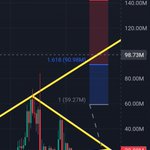
$TIBBIR to $25B ?
x100 ahead 🔥 ?
Thanks to @Altcoinist for his great article, here is a short and easy summary where we could probably go :
Visa became a $700 billion company by doing one simple thing.
It let banks compete, and still work together.
You tap a card abroad. It just works. You never meet the other bank.
That was the simple version.
The next version is already starting.
Software that understands your money, and does the work for you.
Not another bank app. A network.
$TIBBIR is the bet that this network stays open. And that regular people can own a piece of it.
The frog is the front door. The idea behind it is much bigger.
Where it can go in 3 to 5 years, if this actually works:
• ChatGPT, Robinhood and the apps you already use start handling real money tasks. A house. Payroll. A bill overseas. You approve. It gets done.
• You do not need to understand crypto. You pay in normal money. The network runs underneath.
• Independent companies join because it brings them customers. A plumber, a lender, an insurer. They still compete. The network makes them more useful together.
• Every time that work gets done, a slice buys and burns $TIBBIR. You never have to touch the token for that to happen.
• McKinsey says AI agents could arrange $3 to $5 trillion of shopping by 2030. That number does not even include services, businesses, or finance.
• Visa takes a tiny cut of enormous volume and is worth about $700 billion. $TIBBIR is about $260 million today. Fully out. No locked supply waiting to hit the market.
• It does not need to become Visa. It needs a small seat at a much larger table.
• If an open network arranges even a fraction of that work, and a disclosed slice supports the token, $10 to $25 billion is the optimistic case. A true breakout, with a major app in front of it, points higher.
• The customer never hears about the frog. Their financial life just finally works together.
The closed platforms want to keep that value inside the chat box.
This is the open ticket.
NFA. Early. Unproven. The upside is the whole point.


Using Dee as the moniker for a Visa agentic commerce avatar is a direct homage.
$DUAL


Founder Alumni Connection: Fraser Edwards, the CEO and Co-Founder of cheqd, previously served as the Head of Identity Advisory Services within Capgemini's Identity and Access Management (IAM) practice in the UK.
sűp3rvisør retweeted

"If you only knew the magnificence of the 3, 6, and 9, then you would have the key to the universe." -Nikola Tesla
Robinhood $Wallet
9. ₂9
9:33
AA33
3+3=6
3x3=9

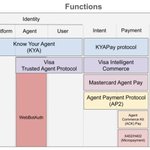
AI agents don't have eyeballs, FOMO, or impulse-control problems.
Ads won't work on your bot—discounts and programmable deals will. Stop targeting humans; start negotiating with software. 🤖💸
$DUAL
and this too...
something us @CryptoCanvasCC crew take seriously.
Critical Thinking.
xitter.cf/i/status/2102526766866…

Remember: people who call $WALLET a scam or rug rarely engage with the on-chain evidence when it’s put in front of them. If they disagree, they should address the transactions and explain why. Dismissing the evidence without examining it isn’t critical thinking.

sűp3rvisør retweeted

If $WALLET was Robinhood’s stealth launch, there’s a legal reason the token would come before the product or utility.
The SEC puts that possibility in its 2026 crypto interpretive release, Release No. 33-11412, specifically on page 18.
It describes a token “offered and sold initially as a meme coin” that can “later become a digital commodity.”
The condition in that example:
“no related representations or promises to create such functionality”
That’s the part worth understanding.
A company selling tokens on promises of future development creates a different legal situation from an existing token that later gains a useful role.
Page 26 takes it further: promises made after a sale don’t retroactively turn that earlier sale into an investment contract. Later transactions still need their own analysis.
What buyers were promised—and when—matters.
Now consider $WALLET’s recorded launch:
• Zero initial creator allocation.
• Zero initial creator buy.
• Essentially the entire supply seeded into public liquidity.
If Robinhood launched it without promises of future functionality, then later introduced a genuine use within a working crypto system, that sequence could fit the SEC’s example.
That’s the possible strategy: the token’s initial sale stands apart from any later product integration.
The allocation figures alone don’t establish compliance. Creator trading fees existed, and original communications, economic substance, and the company’s disclosure obligations still matter.
But the idea at the center of the theory has support in the document: a token can acquire real utility after its market already exists.
If this was Robinhood’s plan, it aligns with the framework necessary to avoid legality issues
That’s why I find this compelling. Under that theory, the launch and the eventual use case were meant to happen in that order—and the SEC’s own framework recognizes and allows it.