Delhi Policy Group (@DPG_ORG) header
Delhi Policy Group (@DPG_ORG) profile picture

Delhi Policy Group is among India’s oldest independent think tanks with its primary focus on strategic & international issues of critical national interest.🇮🇳

New Delhi, India
Joined May 2017
Photo by Delhi Policy Group (@DPG_ORG)Photo by Delhi Policy Group (@DPG_ORG)Photo by Delhi Policy Group (@DPG_ORG)Photo by Delhi Policy Group (@DPG_ORG)Photo by Delhi Policy Group (@DPG_ORG)Photo by Delhi Policy Group (@DPG_ORG)Photo by Delhi Policy Group (@DPG_ORG)Photo by Delhi Policy Group (@DPG_ORG)Photo by Delhi Policy Group (@DPG_ORG)Photo by Delhi Policy Group (@DPG_ORG)
Delhi Policy Group retweeted
My video message for the 9th India-Japan Indo-Pacific Forum in New Delhi 🇮🇳 🇯🇵
87
878
13
8,876
120,562
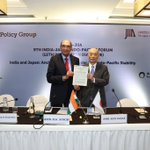
DPG hosts 9th India-Japan Indo-Pacific Forum The Delhi Policy Group (DPG) and the Japan Institute of International Affairs (@JIIA_eng) convened the 9th India-Japan Indo-Pacific Forum in New Delhi on November 16-17, 2026. This was also the 12th edition of the India-Japan Dialogue series co-anchored by DPG and JIIA since 2016. The event was hosted by DPG with the support of the Ministry of External Affairs (@MEAIndia), Government of India. The JIIA delegation was supported by the Ministry of Foreign Affairs, Government of Japan. Since its inception, this Forum has played an important role in forging deeper mutual understanding on the respective roles and shared interests of India and Japan as maritime democracies and indispensable strategic partners for Indo-Pacific stability, prosperity and progress. H.E. Dr. S. Jaishankar (@DrSJaishankar), External Affairs Minister of India, and H.E. Mr. Motegi Toshimitsu (@moteging), Foreign Minister of Japan, delivered virtual Keynote addresses at the Forum, reflecting the importance attached by both India and Japan to enhancing bilateral relations from a strategic perspective. The DPG and JIIA delegations were led respectively by Ambassador Hemant Krishan Singh, Director General, DPG and Ambassador Sasae Kenichiro, President of JIIA. Participants at the Forum included distinguished experts, academics and senior government representatives from both sides. The theme of this year's Forum, “India and Japan: Anchoring Global Order and Indo-Pacific Stability”, was seen as particularly relevant and timely as the global order faces significant structural shifts driven by changing power equations, intensifying geopolitical competition, disruptive conflicts and rapid technological change. Deliberations at the Forum comprised three closed-door sessions on November 16 and a public session on November 17. The first closed-door session reviewed the state of the global order at crossroads; the second examined partnership for securing peace in the Indo-Pacific; and the third explored ways to accelerate bilateral relations in priority areas, in particular economic security, energy resilience, technology and innovation that are so vital for the public welfare and progress of both peoples. The concluding public session, titled “Anchoring Global Order and Indo-Pacific Stability”, explored ways to navigate uncertainty, strengthen regional partnerships and enhance strategic coordination between India and Japan. The Forum concluded with a Rapporteur’s summary of discussions and the signing of the DPG-JIIA Joint Statement. The 10th edition of the Forum will be hosted by JIIA in Tokyo in 2027. View event profile, agenda and programme: delhipolicygroup.org/storage… View Joint Statement: delhipolicygroup.org/storage… View Keynote Address of Dr. S. Jaishankar, External Affairs Minister of India: drive.google.com/file/d/1GZf… View Keynote Address of H.E. Mr. Toshimitsu Motegi, Foreign Minister of Japan: drive.google.com/file/d/1fBU…
2
11
480
India Strategic Review Lt. Gen. D. S. Hooda Pakistan deepened its defence partnerships with Saudi Arabia and Türkiye, even as domestic political tensions and its conflict with Afghanistan intensified. India-China border friction persisted, India-Bangladesh ties showed signs of renewed engagement, and regional powers navigated shifting strategic equations. A month marked by fragile diplomacy, competing interests and geopolitical uncertainty. Read more on our website: delhipolicygroup.org/publica…
2
7
422
Japan’s Transformed Security and Military Posture: Sustainability and Ramifications Vice Admiral Anil Chopra In this brief, the author examines Japan’s shift from post-war pacifism towards a more proactive security posture, driven by growing threats from China, North Korea and Russia. Japan’s defence buildup, expansion of counterstrike capabilities and stronger security partnerships are reshaping the Indo-Pacific, but demographic decline, fiscal pressures and energy dependence raise questions about the transformation's sustainability. The brief also examines the implications for regional stability and India–Japan relations, highlighting opportunities for deeper defence technology cooperation and maritime coordination. Read more on our website: delhipolicygroup.org/publica…
3
250
In collaboration with the Ministry of External Affairs (@MEAIndia), the Delhi Policy Group (DPG) hosted a delegation of US Congressional Staff for an interactive discussion on October 24, 2026. The delegation comprised staff directors and professional staff members from several key Committees of the US House of Representatives. The DPG Senior Faculty shared with the delegation a broad overview of India’s strategic outlook and priorities, security environment and defence capability, as well as perceptions regarding the future of the India-US partnership. This was followed by a Q&A interaction which provided an opportunity for both sides to exchange perspectives on the opportunities and challenges shaping India-US relations.
2
4
315
Delhi Policy Group retweeted
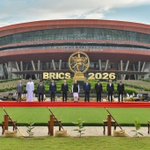
BRICS 2026: The Geopolitics of Consensus Ambassador Ruchira Kamboj The 18th BRICS Summit held in New Delhi showed eleven diverse countries can still find consensus when the focus stays on practical cooperation. The test now is converting that ambition into sustained implementation. Read more on our website: delhipolicygroup.org/publica…
6
6
665
Delhi Policy Group retweeted
Prospects and Terms of an India-China Economic Reset Dr. V. S. Seshadri In this brief, the author examines whether India and China can reset their economic relationship amid a changing global trade and geopolitical environment. He argues that a reset could offer economic opportunities for India, but that it cannot simply mean a return to the pre-2020 model of expanding trade and investment without adequate safeguards. Read more on our website: delhipolicygroup.org/publica…
1
2
237
Delhi Policy Group retweeted
The Evolving Grammar of Power in Japan Dr. Ashok Kumar Chawla In this brief, the author assesses evolving political trends in Japan under the leadership of Prime Minister Sanae Takaichi. He observes that politics rarely changes in Japan through a sudden dramatic break; changes come gradually, through institutional adaptation, shifting political calculations, and the accumulation of small but consequential adjustments. PM Takaichi’s recent Cabinet reshuffle offers a revealing window into this long-term trend. Read more on our website: delhipolicygroup.org/publica…
1
2
3
358
Economic Security and Resilience Review Dr. V.S. Seshadri In this issue, the author reviews the 18th BRICS Summit in which member states reaffirmed cooperation on WTO reform, local-currency trade and diversified critical-mineral supply chains, while stopping short of endorsing a common currency or challenging the US Dollar. India used the summit to engage China, Russia and Iran on trade, energy, connectivity and maritime security. Meanwhile, new US sanctions on Russian and Iranian oil purchases raised concerns for India’s energy security, while the short extension of the US–China trade truce and China’s controls on critical minerals kept supply-chain risks elevated. Read more on our website: delhipolicygroup.org/publica…
256
Global Horizons Amb. Nalin Surie This issue examines mounting challenges to the post-war international order, the growing use of economic coercion, and the emergence of new forms of warfare. It covers U.S. moves involving Greenland, Cuba and Canada, alongside supply-chain vulnerabilities and high-technology competition. It reviews India’s hosting of the 18th BRICS Summit, the Modi-Xi meeting and President Xi’s state visit to the U.S. It also examines the conflicts in Ukraine and West Asia, Europe’s continued support for Ukraine despite limitations in military equipment supplies, and India’s engagement at the UN General Assembly, including EAM Dr. S. Jaishankar’s call for greater accommodation of a multipolar world. Read more on our website: delhipolicygroup.org/publica…
1
3
243
Focus Europe Amb. Ruchira Kamboj & Awantika Singh Sengar Europe is recalibrating as security, migration and political pressures reshape the continent—from a push for greater strategic agency in defence and the Arctic to the rise of far-right forces and growing constitutional tensions in the UK. Amid these shifts, India-EU ties are gaining new strategic momentum with defence, investment, energy and the advancing FTA opening new avenues for cooperation. Read more on our website: delhipolicygroup.org/publica…
1
2
5
351
The China Monitor reviews: India-China dialogue on the sidelines of the BRICS Summit, President Xi's state visit to the U.S., the EU's concerns about trade deficit with China, and the sharpening of security risks owing to the weaponisation of outer space. Read more on our website: delhipolicygroup.org/publica…
1
2
3
250
India Strategic Review Lt. Gen. D. S. Hooda South Asia in September: Pakistan faced mounting pressure on multiple fronts—from Afghanistan and India to a first test of its Saudi-Türkiye defence pact. India-China ties remained cautious, while Bangladesh, Nepal and Sri Lanka navigated growing economic and strategic vulnerabilities. Read more on our website: delhipolicygroup.org/publica…
2
5
290
Indo-Pacific Monitor Cmde. Lalit Kapur Three multilateral summits dominated India's discourse during the month of September: the 26th SCO Summit in Bishkek, the 18th BRICS Summit in New Delhi, and the high-level debate at the 81st session of the UN General Assembly. The Trump-Xi Summit in Washington DC indicated continuation of the fragile economic truce between the US and China, but offered little substance. The stalemate in the US-Iran confrontation continued, marked by sporadic kinetic action. Japan continued strengthening its defensive capabilities, including through expanded defence cooperation with India, while India continued with its maritime engagement of partners to the east and west. Read more on our website: delhipolicygroup.org/publica…
2
4
267
The Evolving Grammar of Power in Japan Dr. Ashok Kumar Chawla In this brief, the author assesses evolving political trends in Japan under the leadership of Prime Minister Sanae Takaichi. He observes that politics rarely changes in Japan through a sudden dramatic break; changes come gradually, through institutional adaptation, shifting political calculations, and the accumulation of small but consequential adjustments. PM Takaichi’s recent Cabinet reshuffle offers a revealing window into this long-term trend. Read more on our website: delhipolicygroup.org/publica…
1
2
3
358
Prospects and Terms of an India-China Economic Reset Dr. V. S. Seshadri In this brief, the author examines whether India and China can reset their economic relationship amid a changing global trade and geopolitical environment. He argues that a reset could offer economic opportunities for India, but that it cannot simply mean a return to the pre-2020 model of expanding trade and investment without adequate safeguards. Read more on our website: delhipolicygroup.org/publica…
1
2
237
Delhi Policy Group retweeted
India-Japan Relations: Shaping the Modi-Takaichi Era Dr. Ashok Kumar Chawla This brief assesses the outcomes of 16th India-Japan Summit, interrogates what was delivered, what remains conditional, what the relationship needs to sustain, and what it must deepen over the decade ahead. Read more on our website: delhipolicygroup.org/publica…
2
5
2
11
930
BRICS 2026: The Geopolitics of Consensus Ambassador Ruchira Kamboj The 18th BRICS Summit held in New Delhi showed eleven diverse countries can still find consensus when the focus stays on practical cooperation. The test now is converting that ambition into sustained implementation. Read more on our website: delhipolicygroup.org/publica…
6
6
665
Delhi Policy Group retweeted
Japan’s 2026 Defense White Paper Cmde. Lalit Kapur Japan’s annual defense white paper is intended to provide citizens an overview of the country’s security challenges and what has been done during the preceding year to address them. In this brief, the author summarises the core elements of the 2026 paper, China’s response and implications for India. Read more on our website: delhipolicygroup.org/publica…
1
3
374
Delhi Policy Group retweeted
Evolving India’s Defence Industry Through Private Sector Prime Contractors V. Adm. Anil Chopra Amid growing technology denial and strategic competition, importing major weapon systems is no longer a viable option. India must prioritise a globally competitive defence industrial base. This requires the emergence of large private-sector prime contractors. Accelerating the Strategic Partnership Model, placing assured demands, flexible contracting and risk-sharing are all essential to incentivise the larger private corporations. Drawing established large companies into investing in the defence sector, and evolving them as prime contractors and lead integrators, will strengthen indigenous capability and reduce strategic vulnerability. Read more on our website: delhipolicygroup.org/publica…
1
1
391