

The Developmental Social Neuroscience Lab @UNCPsych. Examining the neural processes of social, emotional, and cognitive dev. during adolescence. PI: @EvaTelzer
Chapel Hill, NC
Joined September 2013
- Tweets229
- Following715
- Followers1.6K
- Likes291
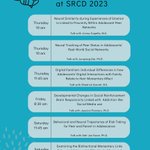







The DSN Lab will be representing at @SRCDtweets and would love too see you there! Come check out what we've been working on 🤓🧠🤓
#SRCD23

Developmental Social Neuroscience Lab retweeted

Out now in @BiologicalPsyc1, we find that neural sensitivity to social punishment, in combination with a 'real world' index of peer rejection, predicts future NSSI. Thanks to coauthors @SehJooKwon Nathan Jorgensen @ka_lindquist @EvaTelzer @mitchprinstein! bit.ly/3rPW8oE
Developmental Social Neuroscience Lab retweeted

An absolutely fantastic talk by the @DSNLab’s own Maria Maza on social media checking and brain development. So proud!! 👏🏼 #Flux2022 @FluxSociety

Developmental Social Neuroscience Lab retweeted

Finally, a scientifically accurate and comprehensive review of digital media and adolescent mental health!!
It's here, and totally FREE (thanks to a foundation donor)!!!
Just click "Open Full Book PDF" here: cambridge.org/core/books/han…
@EvaTelzer @JacquelineNesi @teensandtechunc


Handbook of Adolescent Digital Media Use and Mental Health by @JacquelineNesi , @EvaTelzer and @mitchprinstein
An accessible overview of the mental health effects of adolescent digital media use, for researchers, policymakers and parents. #psychology
ow.ly/GzJB50Ja1Ti

Learn more about our current research at dsnlab.web.unc and feel free to email Dr. Eva Telzer (ehtelzer.unc.edu) if interested!
This quoted post is unavailable.
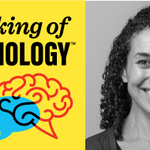
Announcing the release of a new podcast episode from Speaking of Psychology with guest speaker Dr. Eva Telzer!
Dr. Telzer speaks on the adolescent brain and its connection to several elements of risk-taking behaviors, including positive risk taking.
apa.org/news/podcasts/speaki…

Summer has arrived, which means new additions to the DSN Lab team! On Monday, we welcomed two new Project Coordinators: Mary Cox (left) and Sarah Albani (right). Learn more about them via our our website! dsnlab.web.unc.edu/people/

Congratulations to our post-doc @natashaduell on earning the departmental Innovation in Equity & Inclusivity Service Award!
Natasha has been heavily involved in efforts to improve equity and inclusiveness in psych research and is a dedicated mentor to junior members of the lab.


Introducing our eight new Research Assistants: Jordan Doersam, Yijing Lin, Hannah Moore, Merytt Haney, Keerthi Narasimhan, Amy Xu, Jillian Whitener, and
Ben Dameron 🎉


Also, VS-TPJ/pSTS and VS-mPFC connectivity during adaptive risk taking for themselves differentially predicted that for their parents across time. This study contributes to our understanding of the self as a neural proxy for promoting social behaviors in youth.
Results show that from the 6th through 9th grades, adolescents took increasingly more adaptive risks for themselves than for their parent.
In this longitudinal study, a total of 173 participants completed between 1-3 sessions across three waves. During an fMRI scan, adolescents completed a risky decision-making task where they made risky decisions to win money for themselves and their parent.
Check out a new longitudinal paper entitled “Self-oriented neural circuitry predicts other-oriented adaptive risks in adolescence: A longitudinal study” that was just accepted into SCAN! Authored by @SehJooKwon, Caitlin C. Turpyn, @mitchprinstein, @ka_lindquist, and @EvaTelzer!
Congratulations to @j_flan, @benjaminwnelson, @natashaduell, Caitlin Turpyn, @McCormickNeuro, @kathydo_ , @EmilySBibby, @mburroughs1, @rvilla1_ , and Emily Watlington for all your amazing achievements!
Introducing our four new Research Assistants: A'sja Abron, Gabby Walton, Nicole Mora, and Roshni Ammanamanchi! 🎉


Results from these cross-sectional analyses indicate that higher resting heart rate, lower step count and step count variability, and higher variability in sleep duration are associated with greater internalizing symptoms.