

Senior Fellow @JoinFAI @FREOPP @MasonNatSec | Former Senate HSGAC policy director
Capitol Hill, Washington
Joined June 2009
- Tweets2.2K
- Following1.4K
- Followers1.5K
- Likes7.1K





Pinned Tweet
In the @FT today, I explain how President Trump, the Treasury Department, and @SenJoniErnst are working to save tens of billions by strengthening the Do Not Pay system, which President Obama created in 2010.
This reform should have bipartisan support. @SenatorDurbin @RonWyden @SenGaryPeters sponsored similar reforms last year.


America’s war on government waste deserves bipartisan support on.ft.com/45kSLJQ | opinion

Dan Lips retweeted

Is school choice the answer to the sorry state of special education?
fordhaminstitute.org/nationa…

Dan Lips retweeted

Interviews with former students offer a rare firsthand account of one of the largest education experiments in history, challenging decades of criticism of Direct Instruction.
apmreports.org/story/2026/10…

.@ehanford is right.
I wrote about Project Follow Through for @JoinFAI.
It's a tragedy that it was ignored.


The study provided some answers. But didn’t change education.
“It’s just astonishing to me that we’re still fighting the same battles."
Read about the history of Project Follow Through.
apmreports.org/story/2026/10…


Dan Lips retweeted

It’s been exciting to see many governors and state financial officers signing onto @VP’s anti-fraud pledge.
As @DanLips wrote for @CityJournal this summer, partnering with @USTreasury to use Do Not Pay would be a great first step for states to take.
city-journal.org/article/do-…

100%.
IDEA solved a real injustice: kids with disabilities shut out of school.
To reauthorize IDEA, Congress should examine over-identification, which strains services for the kids who need them most.

The last time Congress reauthorized IDEA, the hottest phone was a Motorola RAZR.
A lot has changed since 2004, including the rise of education choice for students with disabilities.
My new paper proposes a grand bargain to reform special education.

🚨 New CERN Report: A Grand Bargain to Reform the Individuals with Disabilities Education Act: Shifting from Due Process to Education Choice, by @DanLips
Congress should increase funding for states providing education options to children with special needs. aei.org/research-products/re…

Thanks, Ginny! A first step toward IDEA reform is congressional oversight. Last year, Ginny brought powerful parent advocates to the Hill to highlight unfairness in special education. Congress should hold hearings and invite experts like her.

Families shouldn't need a lawyer to access services for their child with disabilities. @DanLips proposes a "grand bargain": substantial new federal funding contingent on states giving families ESAs and scholarships.
Dan conceived both education savings accounts (ESAs) AND 529s for K-12 students. His new @AEIeducation paper is definitely worth a read. ⤵️
Great stuff.
Each of these 22 states should partner with Treasury to use Do Not Pay for pre-payment screening.

We're proud to stand alongside @VP Vance and the @WHFraudTF. 22 state financial officers have already signed the pledge, strengthening the coalition against fraud.


More than 20 years have passed since Congress last reauthorized IDEA. Special education has changed since then, especially with the spread of education choice programs. Reform is long overdue. The 120th Congress could start with oversight.
aei.org/research-products/re…
Dan Lips retweeted
FAI's @DanLips in @thehill:
"Which senator would be willing to publicly object to bipartisan reforms that simply strengthen the government's tools for preventing billions of taxpayer dollars from being stolen by fraudsters?"
thehill.com/opinion/congress…

Dan Lips retweeted

Another day, another #SchoolChoice report release! This one is the annual accountability report on the Arkansas universal ESA program, called Education Freedom Accounts. Kudos to my @ua_edreform colleagues @mistygallo2 & @jbmcgee for leading on it. Highlights: 44,254 students participated in the 1st year of universal eligibility, representing 8.7% of government-supported K-12 students in Arkansas. Participation was widespread statewide, but highest in our major metropolitan areas in central and northwest Arkansas and in a few high-poverty rural areas.
35% of participants met one or more priority categories for service, including 16.3% with disabilities, comparable to the 16% rate for all Arkansas students. 60% used their accounts to attend private schools and 40% used them for microschools (3%) or homeschools (37%).
All K-10 students were required to take a standardized test chosen by their education provider to align with the content they received. EFA students scored at the 62nd national percentile in math and the 66th in reading.
Private school students spent most but not quite all of their EFA funds on tuition and fees. Homeschoolers spent their funds on a variety of educational products and services necessary to operate a school in the home.
The program re-enrollment rate from spring 2026 to fall 2026 for K-11 students was a phenomenal 96%.
Details here:
bpb-us-e1.wpmucdn.com/wordpr…
Dan Lips retweeted
REPORT ALERT: My co-authors & I report that, nationally, more than a quarter of a million students with disabilities (SWDs) participate in a private #SchoolChoice program, representing 15.5-17.2% of all choice students, a rate higher than the representation of SWDs in district-run public schools. aei.org/research-products/re…
Dan Lips retweeted
The @DeptofWar is on a mission to develop America's top STEM talent pool. @DanLips has ideas:
✔️ Implement the best practices already identified by federally funded education R&D
✔️ Set up a STEM Young Scholars Program
✔️ Offer a STEM Enrichment Account program

Our experience too. It takes about 30 hours altogether to get through the lessons. And it works.

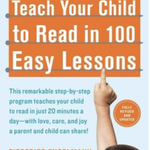
This simple method has helped untold numbers of homeschool parents to teach their children to read. It is easy. So easy that some people take a look and doubt its effectiveness.
I taught my two boys to read with it. Contrary to popular wisdom, my boys were ready to read very early. We started this book around age 4, and they were reading very quickly.
I did not teach handwriting at the same time because I figured out with my older kids that reading and writing are two very different skills and don’t need to be taught together.
The 100 Easy Lessons isn’t a good fit for everyone, but it’s been a lifesaver for so many families. If you feel like phonics is overwhelming, try it: amzn.to/4iYw0nt
Read my blog post on teaching children to read: nickitruesdell.com/teaching-…

So excited for this based on the trailer.
Hopeful that parents will start asking questions about Direct Instruction like they did about the science of reading after the first season.
Sold a Story Season 2 is coming, two weeks from today. youtube.com/watch?v=4YDq-AB_…
