




Pinned Tweet
Immensely proud of this record; great work with Mukoma @MONOMUKUNDU over a four year period and now available for pre-order on iTunes and Apple Music! itunes.apple.com/album/id155…

D. Tinashé Hofisi retweeted

Today, we recall how in 2020, our lawyer @DavidHofisi assisted to challenge and dismantle the recital of the so-called National Pledge at schools.

Why Constitutional Amendment Bill No.3 signals the end of the Constitutional Court as we know it
youtube.com/watch?v=zWdcdCaF…
What do we lose if Parliament removes public interviews in the appointment of judges? Public interviews are not only essential for assessing candidates; they also foster public trust, enable accountability, and confer social legitimacy
youtube.com/watch?v=WQL-ncNo…
The retirement of Zimbabwe’s first, and apparently last, Chief Justice appointed via a public interview process lays bare the undemocratic nature of the patterned amendment layering embodied in Constitutional Amendment Bill (CAB) No. 3. youtube.com/watch?v=Shh_CIHy…
Thank you so much @Muswatadzi and hopefully we extend the conversation and keep everyone engaged

Tinashe, I read the full piece. It is a masterclass in the quiet, devastating art of letting the facts do the shouting while the scholar sits calmly in the footnotes. You have traced the constitutional amendments like a pathologist tracing a wound - Amendment No. 1, public interviews for senior judges, gone. Amendment No. 2, public interviews for the Prosecutor General, gone. Amendment No. 3, public interviews for everyone, gone. The Second Republic, it turns out, is allergic to the Public!!!
Ziyambi says the bill does not alter term limits, only "election cycles." You note, with the gentle smile of a man who has actually read the text, that the bill simultaneously cites & overrides S. 328(7) - the very prohibition whose irrelevance it asserts. This is not a contradiction. It is a performance. ZZ is telling you the cage is open while his other hand is locking the door.
Your conclusion - that Mnangagwa may prove more authoritarian than Mugabe - will offend those who measure tyranny only by decibels. Mnangagwa legislates. Mnangagwa captures the Courts & then expands their jurisdiction, because why have an independent judiciary when you can have a busy one? The Second Republic, as you so elegantly put it, longs for the powers of the First. It has simply learned that you do not need to scream when you can Amend!!!
The Problem with Zimbabwe's #CAB3
Full video: youtube.com/watch?v=p5ZaEVxJ…
Please like share and subscribe
Article details: constitutionnet.org/news/voi…
Remember to tune in at 1600 hours Zimbabwe time for my brief discussion on votes of no confidence vs impeachment
Click the notify me option on YouTube so you do not miss out!

Does it really matter that parliament will have no power to remove the indirectly elected president by a vote of no confidence & will only have the option of impeachment? Join me for this brief discussion on Thursday 14 May 2026 youtube.com/watch?v=p5ZaEVxJ…
Does it really matter that parliament will have no power to remove the indirectly elected president by a vote of no confidence & will only have the option of impeachment? Join me for this brief discussion on Thursday 14 May 2026 youtube.com/watch?v=p5ZaEVxJ…
D. Tinashé Hofisi retweeted

Dr Tinashe Hofisi, a Zimbabwean human rights lawyer and legal scholar currently serving as a Research Fellow at the Karsh Institute of Democracy at the University of Virginia, recently joined an interesting debate on Constitutional Amendment Bill N0.3 with Professor Jonathan Moyo.
The debate was organised by the Southern African Times and run in full by The NewsHawks.
Hofisi's work primarily focuses on constitutional law, judicial design, and enforcement of human rights in Africa.
He is currently a Research Fellow at the University of Virginia School of Law and the Karsh Institute of Democracy.
Previously, he was a Hauser Global Fellow at New York University.
Before his academic career in the United States, Hofisi spent seven years as a human rights lawyer with Zimbabwe Lawyers for Human Rights, specialising in constitutional litigation.
This is a prescient warning.
And explains why I highlighted in the debated hosted by @TSatNewslive that there is no timeline in the bill for the transition to the new 'cycle'

What if it’s 2033?
They may have settled for 2033. This is how it would pan out.
ED’s hangers on insist that any period shorter than three years does not count as a full term and they have continuously made this their starting point in their public discourse. It may therefore be that they are racing to have CAB3 signed into law before ED’s 2023 term reaches its three years. That way, they will argue that ED has not served a second term—at least by the time the new law comes into force. If CAB3 is enacted, Parliament would promptly elect ED to a seven‑year term that would run as his second term until 2033.
Keep your eyes on 2033. If CAB3 becomes law before September 2026, this is the danger we could all face.
This must concern everyone. ZANU PF supporters would have been sold a ruse should that course be adopted. Zimbabweans would have been deeply disrespected, saka muchaita sei style.
By every lawful means available, we must stop this unfolding madness. First price, we stop the amendment. In the event we can’t do that, we stop them from amending prior to September 2026.
We can’t eat this.

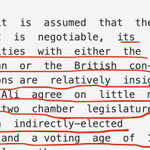
Election of president in the draft Patriotic Front Constitution followed the 'modern African practice' for executive presidents NOT Westminster system. The only similarities w the British/Rhodesian proposals were 1. Bicameralism 2. Indirectly elected senate 3. Voting age of 18


ZANU PF did not emphasize popular election in 1979. Their focus was on presidential powers, not the democratic mechanism of selection. Direct election only became a constitutional reality in 1987, meaning the claim of uninterrupted continuity from 1979 is historically inaccurate.
People who are disagreeing with Cde Chinamasa should cite where it is a written that in a new Zimbabwe a President would be elected by a popular vote?

D. Tinashé Hofisi retweeted

Academic Panel Discourse | Zimbabwe
The Southern African Times hosts a discussion on the Constitution of Zimbabwe Amendment (No. 3) Bill, 2026.
Featuring Prof. Jonathan Moyo and Dr Tinashé Hofisi
23 April 2026 | 18:00 GMT
Live on Twitter Spaces
teapawt.org/i/spaces/1pKdRbjqrojJW

D. Tinashé Hofisi retweeted
For all his faults, Mugabe prided himself on the ritual of regular elections & put a draft constitution to a referendum he wasnt legally required to hold. Yet Pres Mnangagwa seeks to postpone elections, evade a referendum & scrap direct presidential voting constitutionnet.org/news/voi…
Dissent was allowed in pervious amendments as the outcome was guaranteed.
This is a dark turn which is *not* a sign of strength, but fundamental vulnerability overcompensating through raw aggression.
Much appreciation to Doug & everyone attending the hearings regardless

To evade the referendum trigger, the Minister of Justice argues that the bill only adjusts “election cycles.” This contradicts the plain text of the bill, which explicitly cites & overrides the prohibition against term-limit amendments which lengthen tenure.

🇿🇼 New piece!
Zimbabwe gazetted amendments to extend presidential and parliamentary terms, replace direct presidential elections with parliamentary selection, and consolidate executive control over key state institutions.
@DavidHofisi examines how the bill fundamentally reorders Zimbabwe's constitutional order, increasing presidential authority while weakening mechanisms for popular participation and democratic accountability.
Read more: constitutionnet.org/news/voi…
Impeachment is a difficult process for removing a DIRECTLY ELECTED President
Indirectly elected presidents are removed easily by the legislature through a vote of no confidence
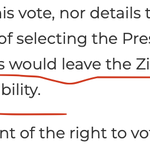
The bill switches from direct elections without empowering parliament with vote to remove president


Read my piece. When you get to the allegation you are now making about the U.S.? Click the link on faithless elector laws - it will address the mistaken notion you have about the relationships between voting & outcomes in the U.S.

Yes they did. If people disapprove of fundamental changes they punish politicians at the NEXT SCHEDULED ELECTION. That's democracy. When you make the change, BUT remove direct presidential voting AND postpone elections WHILE avoiding a referendum? That is illiberalism on steroids