

Board-Certified Neurologist | Harvard CME Faculty | 7x NYT bestselling author Empowering you to take control of your brain health.
Naples, Florida, USA
Joined July 2009
- Tweets13.2K
- Following120
- Followers82.4K
- Likes5.3K




Pinned Tweet
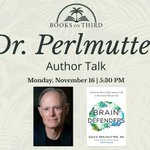
Today, Brain Defenders is officially available.
After more than 40 years of research, clinical experience, and asking different questions about Alzheimer’s disease, this book feels like the culmination of everything I’ve learned about protecting cognitive health for the long term. I truly believe it’s some of the most important work I’ve done.
Your brain’s future is not predetermined. You have more agency over your cognitive health than you may have been led to believe.
I hope you’ll join me for this next chapter in protecting your brain.
Order your copy: braindefenders.com/

Your brain cannot afford bad sleep.
Chronic sleep disruption can affect far more than your energy levels, including inflammation, metabolic health, and long-term brain health.
I discussed this and more wih @thegarybrecka.
Watch here: youtu.be/JJqBbx6c9qM
Your lab results can offer important clues about what is happening metabolically long before changes in brain function become apparent.
3 markers I pay particular attention to:
Fasting insulin: Ideally 2–5 µIU/mL. Above 10 may signal insulin resistance.
Homocysteine: Above 15 µmol/L is elevated.
Vitamin D: I generally look for 60–80 ng/mL.
These are just a few of the markers I explore in Brain Defenders as part of a more proactive approach to understanding and protecting brain health.
Learn more about Brain Defenders here: braindefenders.com/
Your oral health is not limited to your mouth. It affects your entire system.
Research is now exploring how bacteria linked to gum disease may contribute to neuroinflammation and Alzheimer’s disease.
I discussed this with @askthedentist: youtu.be/k8jAXzYaUhk
Brain health can feel overwhelming: sleep, exercise, nutrition, metabolic health.
Where do you even begin?
Start with the next choice in front of you.
Take a walk after a meal. Prioritize sleep tonight. Choose food that supports stable blood sugar. Check your blood pressure. Build consistency before complexity.
Brain health is not built through one dramatic change. It is built through repeated daily decisions.
For a practical roadmap, Brain Defenders offers steps to help you get started:
braindefenders.com/
Every time you eat fiber-rich foods, you help shape how your brain’s immune system behaves.
More details here: drperlmutter.com/fiber-may-o…

David Perlmutter, MD retweeted

Consistently getting less than 6 hours of sleep has been associated with a 30% increased dementia risk.
What happens when AI can predict something about your future that you’d rather not know?
In my conversation with @TillyNorwoodX's creator, @Elinehq, we explored some unsettling possibilities.
Watch here: youtu.be/wGLyO-vfn0Q
Your age at menopause could predict your brain health years later.
I recently spoke with @Preventionmag about new research examining the relationship between the timing of menopause and long-term cognitive health. The findings add to an important and evolving conversation about how hormonal changes during midlife may influence the female brain and why this period deserves far more attention when thinking about Alzheimer’s risk.
Read the full article here: prevention.com/health/a74030…

If you've ever felt busy, capable, and needed, yet somehow invisible, this conversation is for you. On this episode of The Empowering Neurologist, John R. Miles joins me to explore the difference between being useful and truly mattering.
It's far more than an emotional question. Feeling unseen can influence your sleep, inflammation, and even how your brain perceives threat. youtu.be/IQtn4un-wFU?si=yDtO…

Scented-candle season is here, and it’s worth thinking about what you’re putting into the air inside your home.
Fragranced products can release a mixture of compounds into indoor air, especially in spaces with limited ventilation.
If you love candles, consider using them less often or finding cleaner options, ventilating the room, and paying attention to the other scented products you use throughout the day.
Your brain is responding every day to the environment you create for it. What you eat, how you sleep, how often you move, your stress level, and even the people you spend time with all matter.
What is one change you have made that has noticeably improved how you feel?
Feeling like you don't matter can take a toll on your brain health.
On this week's episode of The Empowering Neurologist, I'm joined by John R. Miles, host of the Passion Struck podcast and author of The Mattering Effect, to explore the difference between being valued for what we accomplish and feeling valued for who we are.
youtu.be/IQtn4un-wFU
Dementia is not an inevitable part of aging.
A history of smoking, high blood pressure, diabetes, and other factors can influence risk, but the choices you make today can also shape how your brain ages.
The goal should be more than delaying dementia. It should be protecting brain health for life.
There is a lot of brain health advice online, and not all of it is supported by good science.
I am curious: what claim, trend, supplement, or habit have you seen recently that you would like me to break down?
If you can’t drink coffee, you have other options for getting polyphenols.
Polyphenols can also come from green tea, extra virgin olive oil, colorful vegetables, and other plant foods.
Coffee can be part of a healthy diet, but it’s certainly not the only option.
Social isolation can take a toll on brain health as you age.
Staying connected to others may help reduce stress, support oxytocin production, and protect cognitive health.
What’s one thing you can do today to strengthen a social connection in your life?
No matter how old you are, it is not too late to start protecting your brain.
Research shows that lifestyle changes including exercise, dietary changes, stress reduction, and cognitive activity can support cognitive function, even in your 70s, 80s, and beyond.
Alcohol may help you fall asleep faster, but it can interfere with the restorative sleep your brain needs.
In the Brain Defenders Immersion Course, which compliments what you’ll learn in the book, I explore sleep and other key factors that influence brain health. The course takes things a step further with guided videos, FAQs, self-assessments, and actionable tools to help you apply the principles to your daily life.
Learn more about the course offering here: drperlmutter.com/immersion-c…
