

Book insights worth spreading.
Joined June 2023
- Tweets5.8K
- Following324
- Followers783
- Likes2.4K







Pinned Tweet
This is how I turn books into thinking tools.
Every book decomposed into its atomic ideas — structured, linked, and ready to think with.
Full walkthrough below
This week on HN someone turned handwriting into a font. You still pick typefaces by vibes. Ellen Lupton's Thinking with Type fixes that.
books.deepread.com/library/t…

14
The act of writing brought ad absurdum

an MIT researcher built a realtime LLM vector steering tool and it’s the coolest thing I’ve seen someone build in a very long time.
this is so brilliant. the primary use case I see this realistically used for is long form writing tasks. some might find it controversial, considering it plays into llm-generated writing. however in my opinion it kind of solves for some amount of the tension around the issue by making the process multiplayer in a new way. the human and the AI become collaborators, sort of.
idk this sh*t is so cool though, man.
(@ far__behind on instagram)
20


W. Edwards Deming's Out of the Crisis makes one idea hard to unsee: when work goes wrong, look at the system before you blame the person.
books.deepread.com/library/o…

20
Skip the compiler textbook. With a PostScript interpreter on HN this week, Robert Nystrom's Crafting Interpreters shows the hands-on way.
books.deepread.com/library/c…
28
A slow Saturday suits a book whose investing advice is mostly to do less. A Random Walk Down Wall Street by Burton Malkiel.
books.deepread.com/library/a…

30
Your weekend read: The Count of Monte Cristo by Alexandre Dumas. Serialized in 1844, so nearly every chapter ends on a hook. Read it unabridged.
books.deepread.com/library/t…

22
“"Surveillance Valley" is another excellent book about the tech industry's military roots.” Yasha Levine, timely as TV spying hits HN this week.
books.deepread.com/library/s…

14
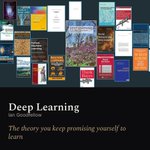
44 Hacker News commenters recommended Deep Learning by Ian Goodfellow. You bookmarked it in 2016. It gets dark by five now. Out of excuses yet?
books.deepread.com/library/d…

29
still relevant as ever: Brave New World
books.deepread.com/library/b…

19


DeepRead.com retweeted

Everything good that I have done in my life, everything that will last, comes after I first read this book.


DeepRead.com retweeted

Most of what you read, you forget.
Not because you're distracted. Not because you have a bad memory. Because reading and remembering are two different skills, and almost nobody practices the second one.
I used to burn through books and retain almost nothing. I'd finish something, feel smarter for a week, then couldn't tell you the author's main argument a month later. The problem wasn't the books. It was that I treated reading as consumption instead of encoding.
Here's what actually works:
1. Read with a pen. Highlight the sentence that made you stop. Not every clever line — only the one you'd want to find again a year from now.
2. Write one sentence per chapter in your own words. If you can't, you didn't understand the chapter. Go back.
3. Transfer the highlights into a single document you actually revisit. The notebook in your drawer doesn't count. The notes app you never open doesn't count. One place. Searchable.
4. Teach it to someone — out loud, over coffee, in a post. The research on the protégé effect is clear: preparing to teach forces you to encode in a way passive reading never will.
The reason most people forget what they read isn't a memory problem. It's that they finish the book and move on. The retention happens in what you do after you close it.
Reading more books isn't the goal. Remembering a few of them is.

this is why kids need face-to-face attention for learning.
iPads are not enough to learn new knowledge.
67
The most underrated book on how to structure your thinking and writing.
Barbara Minto's Pyramid Principle, the McKinsey bible, in 7 minutes:
deepread.com/videos/?v=sOQNZ…

1
97


