

Cracking the code of Solana DeFi — @kamino
Paris, France
Joined April 2021
- Tweets4.9K
- Following1.2K
- Followers8.7K
- Likes19.8K




Pinned Tweet
I've been through every Solana @colosseum radar hackathon applications so you don't have to.
...and the DeFi track was full of hidden gems.
Here's my top 7🧵


“what if @kamino gets bought out and solana:KMNo3nJsBXfcpJTVhZcXLW7RmTwTt4GVFE7suUBo9sS holders get nothing?”
this is your answer.
all revenue and IP go to the foundation.
no separate equity. only solana:KMNo3nJsBXfcpJTVhZcXLW7RmTwTt4GVFE7suUBo9sS.

Today, I’m sharing my first letter to the KMNO community as CEO
Since joining @kamino , I’ve been asked a version of the same question by longtime KMNO holders and people getting to know us for the first time. As Kamino grows, where does the value we create go?
It’s a fair question, particularly as we work to bring Kamino into banks, brokerages and wallets, through which our goal is to allow millions of people to earn on their capital or borrow against assets they already own.
The answer starts with how Kamino was built. The Kamino Foundation owns the intellectual property and receives all revenue, including revenue from institutional partnerships. KMNO is the only token. The founders, our investors, the team and I have our upside tied to the same token our community holds. None of us has a separate equity allocation.
What we do with the revenue matters, too. We’re committing at least $20 million over the next two years to expand the assets people can use on Kamino, and bring Kamino's credit and liquidity infrastructure to more of the platforms consumers already use today.
I wrote my first letter to KMNO holders to put those decisions on the record. I also share why I chose to make most of my own KMNO allocation vest only when it reaches and sustains a series of valuation milestones.
One Kamino. One KMNO.


Solar ☀️ retweeted

META is now trading on Phoenix

METADAO perpetuals are first on Phoenix.
@MetaDAOProject runs fundraising and governance on Solana through futarchy. Proposals pass or fail on market prices, not token votes.
phoenix.trade/METADAO

weird way to find out my @perena points will be worth nothing

Update: quite a few people reached out after my original post and I've since had hours of fascinating conversations with people interested in alternative family structures. So here's my V2 proposal:
I'm looking to donate my eggs to families under these conditions:
1. $100K donated to charity with future donation amounts set to a bonding curve. I already paid for egg retrieval.
2. I'd like the option (but not the obligation) to take them on a day trip once a year. I'm not looking to co-parent, but I'd love to know how the children are doing.
At a women's CEO retreat, we were daring each other to take concrete steps toward our goals. One of mine was to start philanthropy now.
I've spoken to a few families who might be interested, but figured I'd cast a wider net and run some ads it!
Next: If we could design a family from first principles, what would we do differently?
Solar ☀️ retweeted

Come build the future of onchain finance with Kamino.
We’re hiring across engineering, product, business development, marketing, legal, and operations.
Explore open positions: jobs.ashbyhq.com/kamino


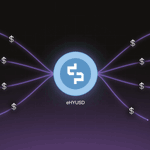
Emmanuel went much deeper into the risk behind $eHYUSD here.
"a 50% drop across all collateral works out to about a 0.5% loss at the time of writing."
this is basically why I'm comfortable moving a meaningful part of my stablecoins into $eHYUSD.

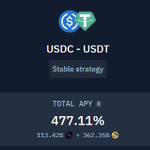
Yes, $eHYUSD is yielding 20%+ APY. No, it isn't taking on extra risk to do it.
That sounds backwards, because high yield usually means high risk.
But is that true for eHYUSD? Let's look at it together 🧵

Solar ☀️ retweeted

Loop it on Kamino (soon)

Just opened a 6-figure position in $eHYUSD (@hylo_so's yield-bearing asset)
20%+ APY, and imo the best risk/reward on @solana right now.
I spent hours reading the docs & talking to the team to understand the yield and what could go wrong.
Here are my personal notes ⤵️
1) Quick recap about Hylo
Hylo is best known for its leveraged tokens: xSOL, xHYPE and xBTC.
They give you roughly 2–3x exposure without liquidations. So if SOL goes up 10%, xSOL would gain around 20–30%, depending on its leverage at the time.
That works both ways: losses are amplified too.
2) What's $eHYUSD and where does the yield come from?
You can stake hyUSD, Hylo's stablecoin, and receive eHYUSD to earn a share of the yield generated by the protocol basically:
• xSOL holders give up the staking rewards on the SOL backing their positions in exchange for leverage.
• xBTC and xHYPE holders pay borrow charges for theirs.
• xSOL holders might also pay extra borrow charges, specifically when liquidity is needed (which is the case right now)
Those revenues are shared with eHYUSD holders and compound automatically.
3) APY was around 9%, why has it recently jumped to 20%+?
As SOL and BTC went up, xSOL and xBTC holders made money, but the leverage on their positions came down.
They're now at 2.20x and 2.48x, both below Hylo's 2.54x lower boundary.
To bring that leverage back up, Hylo needs to buy more SOL and BTC, which means attracting more stablecoin deposits.
So holders pay more for their leverage, and part of that goes to eHYUSD holders.
For example, xSOL holders currently pay ~5% in borrow charges while also giving up the staking yield on the SOL behind their positions.
Those staking rewards and extra borrow charges flow into the Earn Pool alongside revenue from the other markets, bringing the yield we receive on eHYUSD to ~21% APY.
Once leverage is back in range, those extra charges come down. I'd expect APY to move closer to 10–15%, depending on deposits and market conditions.
4) What could go wrong?
In V1, the Stability Pool could convert your hyUSD into xSOL during a selloff, leaving you exposed to further SOL losses.
V2 instead starts selling collateral into USDC when leverage goes above ~3.86x, reducing exposure as the market falls.
But if prices crash faster than the protocol can rebalance and a pool becomes under collateralized, the Earn Pool can be used to cover the shortfall.
That means losing part of your deposit, even if hyUSD keeps its peg.
There are also smart contract and oracle risks of course.
5) What to do with your $eHYUSD?
- Hold it in your wallet and let the yield compound. $eHYUSD started at $1 and is now worth ~$1.48 as interest has built up.
- Explore tranching markets on @ExponentFinance. I put a small amount into jrEHYUSD, currently yielding ~28%, but it takes losses first if eHYUSD drops, so the downside is much bigger too.
- Loop it on @kamino (soon).
Let me know if you have any questions, I'll be more than happy to answer
Note: I'm a seed investor in @hylo_so

Solar ☀️ retweeted

Great read!
Just opened a 6-figure position in $eHYUSD (@hylo_so's yield-bearing asset)
20%+ APY, and imo the best risk/reward on @solana right now.
I spent hours reading the docs & talking to the team to understand the yield and what could go wrong.
Here are my personal notes ⤵️
1) Quick recap about Hylo
Hylo is best known for its leveraged tokens: xSOL, xHYPE and xBTC.
They give you roughly 2–3x exposure without liquidations. So if SOL goes up 10%, xSOL would gain around 20–30%, depending on its leverage at the time.
That works both ways: losses are amplified too.
2) What's $eHYUSD and where does the yield come from?
You can stake hyUSD, Hylo's stablecoin, and receive eHYUSD to earn a share of the yield generated by the protocol basically:
• xSOL holders give up the staking rewards on the SOL backing their positions in exchange for leverage.
• xBTC and xHYPE holders pay borrow charges for theirs.
• xSOL holders might also pay extra borrow charges, specifically when liquidity is needed (which is the case right now)
Those revenues are shared with eHYUSD holders and compound automatically.
3) APY was around 9%, why has it recently jumped to 20%+?
As SOL and BTC went up, xSOL and xBTC holders made money, but the leverage on their positions came down.
They're now at 2.20x and 2.48x, both below Hylo's 2.54x lower boundary.
To bring that leverage back up, Hylo needs to buy more SOL and BTC, which means attracting more stablecoin deposits.
So holders pay more for their leverage, and part of that goes to eHYUSD holders.
For example, xSOL holders currently pay ~5% in borrow charges while also giving up the staking yield on the SOL behind their positions.
Those staking rewards and extra borrow charges flow into the Earn Pool alongside revenue from the other markets, bringing the yield we receive on eHYUSD to ~21% APY.
Once leverage is back in range, those extra charges come down. I'd expect APY to move closer to 10–15%, depending on deposits and market conditions.
4) What could go wrong?
In V1, the Stability Pool could convert your hyUSD into xSOL during a selloff, leaving you exposed to further SOL losses.
V2 instead starts selling collateral into USDC when leverage goes above ~3.86x, reducing exposure as the market falls.
But if prices crash faster than the protocol can rebalance and a pool becomes under collateralized, the Earn Pool can be used to cover the shortfall.
That means losing part of your deposit, even if hyUSD keeps its peg.
There are also smart contract and oracle risks of course.
5) What to do with your $eHYUSD?
- Hold it in your wallet and let the yield compound. $eHYUSD started at $1 and is now worth ~$1.48 as interest has built up.
- Explore tranching markets on @ExponentFinance. I put a small amount into jrEHYUSD, currently yielding ~28%, but it takes losses first if eHYUSD drops, so the downside is much bigger too.
- Loop it on @kamino (soon).
Let me know if you have any questions, I'll be more than happy to answer
Note: I'm a seed investor in @hylo_so
Solar ☀️ retweeted
Kamino will be one of the big winners in tokenized equities - not only this year (already a winner on core KPIs) but over the next 3 / 5 / 10 years.
You don't believe me yet (based on price) so I am posting this to QT it when you do.


this is a new era for @kamino
Michael Weisz spent the last decade bringing private market investments to individual investors at scale.
now he’s joining @kamino to help build the infrastructure that will support the next wave of assets moving onchain.
tokenization alone is not enough tho.
those assets still need distribution, liquidity, credit and the infrastructure connecting asset managers, financial platforms and capital providers.
@kamino is already building that infrastructure, with credit and liquidity at the core and the institutional layer expanding around it.
opening our US headquarters in New York puts us at the center of where the capital, institutions and distribution already sit, and closer to the firms we want to bring onchain.
future is bright.
We are thrilled to announce Michael Weisz (@WeiszM) as the new CEO of Kamino
After more than a two decades in fintech & private markets, Michael joins Kamino to lead us into our next chapter of institutional growth, and expand Kamino to the US market
A letter from Michael below


Solar ☀️ retweeted

$ONyc takes the top spot on Kamino Swap
The @onrefinance market just passed $300M, now the largest isolated RWA market on Solana
ZEC, HYPE & PUMP complete the top 5, all having their own markets, and usable as collateral
Trade all five with Zero fees and Zero route bias

Solar ☀️ retweeted
Introducing xStocks Vaults on @krakenfx, powered by Kamino, @veda_labs, and @SentoraHQ.
Holders can now deposit their xStocks into vaults on Kraken and earn yield denominated directly in that asset, growing their exposure over time.
Now live for SPYx, QQQx, and NVDAx, powered by @chainlink CCIP & Data Streams.
Solar ☀️ retweeted

There has been an insane amount of growth for $ZEC on Solana.
Total 7-day volume: $518.5M
Current holder count: 68,300+ holders
Total onchain market liquidity: ~$11M
And now you can put it to work on the largest credit market on Solana.
Access ZEC-backed credit on Solana.
The ZCASH Market on Kamino has grown to over $2M, giving ZEC holders access to USDC liquidity against $ZEC in a fully isolated market curated by @AllezLabs.

Solar ☀️ retweeted
Over $50M in deposits into Kamino Vaults through @BinanceWallet in less than 24 hours.
Bringing Solana’s onchain markets to millions of users globally.
Solar ☀️ retweeted

When designing a fixed rates product for on chain finance, two initial questions you need to ask are:
1. Why none of the existing fixed rates product currently work?
2. Inversely: what makes floating rate work?
The answers are:
* Lenders do not want the extra decision complexity or management overhead - which is the same reason why one-click earn programs will remain popular
* Lenders want immediate liquidity aka no or little duration - they don’t want to be trapped for 6 months - which is why the pooled utilisation model works - the unutilised funds are immediate exit liquidity
—
What solves this duration / liquidity / management complexity is the simple interface of a vault for the lenders.
Curators will absorb all the fixed rates decisions and mix durations to give as much of the instant liquidity experience of open-term lending.
And they should get paid for it.
—
(some of the existing models are outright flawed with no liquidation mechanism or 1d long fixed term, that are not even worth discussing - this is obviously a complex product so no wonder nobody got it right yet and many had such bad takes on it)
Introducing Kamino Fixed Rates
The definitive architecture for fixed-term, fixed-rate credit on-chain. Now live in private beta. Public launch in Q3 2026
Read the light paper: kamino.com/fixed-rates-light…
Solar ☀️ retweeted
Introducing Kamino Fixed Rates
The definitive architecture for fixed-term, fixed-rate credit on-chain. Now live in private beta. Public launch in Q3 2026
Read the light paper: kamino.com/fixed-rates-light…


Solar ☀️ retweeted
The Institutional vault will keep growing because it achieves a very fine balance of risk and reward:
* Mostly off chain so the negative discount usually applied to on chain stuff goes down significantly
* Mostly delta neutral: the loan is collateralised by escrowed cash waiting for trade delivery, on an already insured deal
* Mostly liquid: 10% on chain liquidity sleeve with the rest of the funds locked in 3m long deals.
You get paid ~7.5% to take on, what in my opinion is, good risk.
Also, an extremely cool thing that was shipped with this vault is the Withdrawal queue that is FIFO ordered - essentially if there is no exit liquidity, you can submit a ticket and you will be filled the moment some appears, automatically, without having to come and check daily.
