

Military Strategy & History | Decoding Global Strategies & Past Campaigns| Data-driven Insights 🌍 | #MilitaryStrategy #MilitaryHistory #Geopolitics
Joined August 2024
- Tweets7.8K
- Following366
- Followers4.7K
- Likes6.4K






Delwin | Military Theorist retweeted

You have no idea what you are talking about.
What you said about Facebook and Insta and other social networks are not targeted because they are free, means you don’t understand the basics of economy. You don’t understand the difference between Revenue and Profit. Nor what is a non-profit.
You don’t understand anything about digital economy and digital business models.
You don’t understand anything about security and updates.
You should be ashamed of yourself.

You’re talking nonsense; the tax is capped, and in your case, it wouldn’t apply at all. Read the text of the amendment instead of just jumping into the fray along with the rest of the pack.
Readers added context they thought people might want to know
L'amendement crée une taxe de 0,055 € par Go émise par les fournisseurs de contenu, plafonnée au max à 15 % du CA France ou 2 % du CA total de l'émetteur, sans exemption pour VideoLAN ou les associations (flux mesurés par FAI si identifiés).
politique.pappers.fr/amendement/n00…
scan.contexte.com/bill-1319/step…
Delwin | Military Theorist retweeted
The model of the locomotive fleet with projections is ready. If I find the time to write the article, it should be published next month.
Since procuring locomotives is hardly possible at the moment, and due to accelerating destructions, repair bottlenecks, and the fact that part of the electrical railroads cannot be used, my earlier assessment that the situation would not be critical in 2027 has to be adjusted.

Delwin | Military Theorist retweeted

Komentarz do aktualizacji strat ukraińskich na portalu Ualosses.
Niedawno portal Ualosses - właściwie jedyne większe źródło danych na temat strat ukraińskich sił zbrojnych w wojnie z Rosją - opublikował sporą aktualizację oraz wprowadził nową funkcjonalność: mapę przedstawiającą straty w ujęciu geograficznym. Według portalu w konflikcie z Rosją od 24 lutego 2022 roku zginęło lub zaginęło (KIA i MIA) niespełna 225 tysięcy ukraińskich żołnierzy.
Trzeba od razu zauważyć, że dane te są mocno niepełne. Ponieważ w ramach własnego projektu sporo pracowałem na tej bazie danych na poziomie pojedynczych rekordów, posiadam pewną wiedzę na temat jej metodologii.
Metodologia osób lub osoby stojącej za portalem Ualosses opiera się w zdecydowanej większości na przeszukiwaniu oficjalnych stron rządowych i samorządowych bądź dedykowanych serwisów. W przypadku zabitych monitorowane są głównie strony władz lokalnych, gdzie co jakiś czas zamieszczane są informacje o żołnierzach zameldowanych w danej miejscowości. Jeśli chodzi o zaginionych, głównym źródłem informacji jest oficjalna baza danych Ministerstwa Spraw Wewnętrznych Ukrainy, służąca do poszukiwania osób zaginionych. Twórcy nie korzystają natomiast z danych pochodzących z mediów społecznościowych, takich jak np. Facebook.
Baza osób zaginionych ukraińskiego MSW opiera się na oficjalnych zgłoszeniach rodzin. Z tego względu pomija ona osoby, które nie mają bliskich lub z różnych względów nie utrzymują z nimi kontaktu (uzależnienia, przestępczość, bezdomność). Z doniesień medialnych wiadomo, że znaczna część takich osób trafiła później do jednostek szturmowych - głównie 425 Pułku Szturmowego - i tam zaginęła.
Powyższa metoda zbierania danych ma kilka istotnych mankamentów:
1. Władze samorządowe szczebla podstawowego (hromady wiejskie, osiedlowe oraz małe miasta) sumiennie informują o mieszkańcach, którzy jako żołnierze Sił Zbrojnych Ukrainy (ZSU) zginęli na służbie. W miejscowościach tych powstają również różnego rodzaju miejsca pamięci (patrz materiał wideo z Hajsyna poniżej). Z niewiadomych względów tego typu informacji nie podaje jednak duża część samorządów z obwodu zakarpackiego oraz zachodniej części obwodu odeskiego.
2. Tylko część miast liczących od 50 do 100 tysięcy mieszkańców informuje o poległych żołnierzach pochodzących z ich terenu. Jeśli chodzi o duże miasta, nie robi tego żadne z nich.
Z powyższych powodów baza danych Ualosses jest niepełna, a przewaga rekordów dotyczących mieszkańców terenów wiejskich częściowo ją zniekształca. Widać to choćby po statystykach podziału KIA i MIA według jednostek, w których służyli poległymi.
Na pierwszym miejscu znajduje się 36. Brygada Piechoty Morskiej (2788 przypadków KIA i MIA), co jest bezpośrednim efektem walk w Krynkach. Jednak kolejne miejsca zajmują jednostki desantowo-szturmowe oraz brygady zmechanizowane z obwodów lwowskiego, iwano-frankowskiego i żytomierskiego (95 Brygada Desantowo-Szturmowa, 10 Górska Brygada Szturmowa, 24 Brygada Zmechanizowana). Wynika to wyłącznie z lepszej dostępności danych, ponieważ bazą rezerwistów dla tych jednostek są hromady wiejskie i osiedlowe, których władze regularnie informują na swoich stronach o śmierci obywateli. W rzeczywistości na czele listy KIA i MIA powinny znajdować się 425 Pułk Szturmowy „Skala” oraz 225 Pułk Szturmowy.
Jako przykład tego, jak bardzo dane o 425 Pułku Szturmowym są zaniżone, niech posłużą walki o miejscowość Szewczenkowe pod Pokrowskiem z grudnia 2024 - lutego 2025 roku. Z postów publikowanych wówczas na grupach poszukiwawczych na Facebooku oraz z doniesień medialnych (informujących o tym, że „wyzerowano cały batalion”) wiadomo, że były to starcia niezwykle ciężkie i krwawe dla tej jednostki. Tymczasem w bazie danych Ualosses znajduje się zaledwie 40 rekordów dotyczących 425 pułku z tego okresu.
Odpowiedź na pytanie, jak bardzo niepełna jest baza Ualosses, jest oczywiście trudna. Osobiście nie podejmuję się rozstrzygania, czy obecny wynik (225 tys.) należy mnożyć razy dwa, czy może razy trzy aby uzyskać prawdziwy szacunek. Prawdopodobnie nigdy nie dowiemy się dokładnie, ilu ukraińskich żołnierzy zginęło w tej wojnie.
Poniżej: film z przejazdu wzdłuż miejsca pamięci w Hajsynie (23k mieszkańców) w obw. winnickim.
Delwin | Military Theorist retweeted

UAlosses is a good source, but they lack the team Mediazona has.
I dont believe that UAlosses allows submissions from outside sources (individuals), nor do they utilize social media as well as Mediazona does.
I took a small sample from both and found these discrepancies in loss tracking.
So while I still think UAlosses is a decent source, there are major gaps in their tracking capabilities that dont give the same picture as Mediazona does.

Ua losses updated their count, methodology and map on Ukrainian 🇺🇦 losses in the war, following KIA, MIA and POW
Ukrainian losses :
🔸29k losses in 2022
🔸31k losses in 2023
🔸47k losses in 2024
🔸51k losses in 2025
🔸30k losses in 2026
The database is very useful : we have multiple units, WIA and POW, a map of losses and the possibility to track key battles of the war. The recent data is much better than the Russian one and includes MIA, which is the main difference with Mediazona's count of Russian losses (it is also less conservative).
🔸 ~2k Ukrainian soldiers died during the Kostiantynivka battle, most of which are MIA
🔸~4k Ukrainian soldiers died during the Pokrovsk battle
🔸~1.2k Ukrainian soldiers died in Krinky, Kherson oblast
🔸~6k Ukrainian soldiers died in the Bakhmut battle
🔸~2k soldiers died in the Robotyne counter-offensive and ~1k in the Velika Novosilka counter-offensive
🔸~8k Ukrainian soldiers died during the Kursk operation (all lenght of it)
Check @LossesUA for details

Delwin | Military Theorist retweeted

Figures regarding artillery systems show no trend toward an increase in Russian losses since the beginning of 2025, with the exception of the summer of 2026, when both belligerents experienced a temporary spike, most likely due to the tempo of operations.

Delwin | Military Theorist retweeted

Pologne : sortir de l'impasse
lettrevigie.com/pologne-sort…

Delwin | Military Theorist retweeted

Muutama ajatus Stubbin ja Støren puhelusta Putinille.
Tapahtumaa on vaikea tulkita muuna kuin hankalassa tilanteessa olevan osapuolen reaktiivisena toimena, jossa Ukrainalla tai sen tukijamailla ei ole selkeää vastausta tuleviin sotilaallisiin uhkakuviin. 1/
Delwin | Military Theorist retweeted
Koniec projektu pocisku manewrującego FP-5 "Flaming" firmy Fire Point?
Dzisiaj na ukr kanale tg Snajper pojawiło się o info o zamknięciu projektu pocisku manewrującego FP-5 Flaming firmy Fire Point.
"Projekt FP-5 „Flamingo” został zamknięty z powodu braku efektywności." napisał prowadzący go Stanisław Bunjatow.
Jednak powyższe info stoi częściowo w sprzeczności z oświadczeniem przedstawicieli Fire Point dla portalu Gordon z wczoraj. Poinformowali oni że produkcja FP-5 "nie została wstrzymana i nie ma planów jej zakończenia".
Dosłownie dwa dni temu sporą popularność w ukr sieciach społecznościowych zdobył film z wypowiedzią Ireny Terek z lipca 2026 r. z konferencji platformy Brave1. Powiedziała ona w jej trakcie, że FP-5 "był znacznie ważniejszy jako deklaracja polityczna niż jako jakaś "super-duper wunderwaffe". Nigdy nie zakładaliśmy, że stanie się "super-duper wunderwaffe".
Część ukr opinii publicznej zwróciła słusznie uwagę że wypowiedź Terek jest kłamstwem ponieważ przez wiele miesięcy w drugiej połowie 2025 r. i na początku 2026 r. Flaming był przedstawiany ukr opinii publicznej właśnie jako coś w rodzaju wunderwaffe. Widać to choćby po zdjęciu prezydenta Zełenskiego, jakie sobie zrobił na jego tle w kwietniu 2026 r. (poniżej), a także po wypowiedziach przedstawicieli Fire Point z 2025 i 2026 r. Poniżej przypominam kilka z nich:
"Flaming jest dziesięć razy lepszy od Tomahawka", Tomahawk jest całkowicie przestarzały. Nasz pocisk radzi sobie lepiej" Irena Terek dla portalu Liga początek września 2025 r.
Denis Sztilerman - wywiad dla kanału tube ukr dziennikarki Natali Mosejczuk z 20.11.2025 - "Akcja oczerniania Fire Point jest inspirowana przez amerykańskie firmy zbrojeniowe, które boją się konkurencji w postaci najlepszego pocisku manewrującego na świecie".
Warto także zwrócić uwagę na wielką rozbieżność pomiędzy deklarowaną przez Fire Point i prezydenta Zelenskiego produkcją FP-5 a faktycznymi użyciami bojowymi.
Wrzesień 2025 r Prezydent Zełenski podczas konferencji prasowej na szczycie ONZ w Nowym Jorku. "Rozpoczęliśmy masową produkcję pocisku FP-5 Flaming".
Denis Sztilerman - wywiad dla portalu Znua z 11.10.2025 - "Obecnie produkujemy 2-3 pociski FP-5 dziennie"
Denis Sztilerman - wywiad dla kanału tube ukr dziennikarki Natali Mosejczuk z 20.11.2025 "Obecnie produkujemy 3 pociski FP-5 dziennie."
Sztilerman wywiad dla portalu tube Presing z końca czerwca 2026 r. po pytaniu o wielkość produkcji FP-5
"Produkujemy tyle, ile od nas zamówią.(...) jeśli będą silniki, to produkcja rzędu kilkuset sztuk miesięcznie jest możliwa. To bardzo prosta, niezwykle prosta rakieta. Bardzo prosta."
Kol @DelwinStrategy w swoim bardzo dobrym artykule o skuteczności pocisków FP-5, wyliczył niedawno, że ukr wykorzystali do ataków na rus łącznie do tej pory około 200 tych pocisków:
"Od lipca wystrzelono – według doniesień – około 120 pocisków (łącznie 190–220), co przy średnim koszcie 600 000 dolarów za jeden start daje kwotę 72 milionów dolarów.
W rezultacie doszło do trafień w zakłady w Wołgogradzie, a także w Rakietowo-Kosmiczne Centrum „Progress” w Samarze oraz zakłady obronne „Awitek” w Kirowie."
Moje szacunki są trochę niższe. Uważam ze ukr łącznie wykorzystali bojowo od maja 2025 r. około 150 tych pocisków w tym około 100 sztuk od lata 2026. Obniżam szacunki bo sami przedstawiciele firmy w wywiadach wielokrotnie podkreślali, że dane rus o przechwyceniach FP-5 są regularnie zawyżane, w rzeczywistości wystrzeliwują ich mniej przy każdym ataku.
Jak widać jednak bez względu czy przyjmiemy dolny czy górny zakres użyć bojowych FP-5 (150-200) obie te liczby nijak nie pasują do deklarowanej "masowej" produkcji 3 sztuk dziennie osiągniętej w październiku 2025 . Według niej do 1 pażdziernika 2026 r. ukr powinno wystrzelić około 1000 sztuk FP-5.
Co dalej? Być może informacja kanału tg Osman o zakończeniu projektu FP-5 nie potwierdzi się i jakieś użycia bojowe FP-5 jeszcze będą. Jednak widać wyraźnie po wypowiedziach samej Terek, że firma zmienia narracje odnośnie FP-5. Zmianę klimatu wokół FP-5 widać także po aktywności ukr kont wpływu na X odnośnie tego tematu. W ostatnich dwóch miesiącach FP-5 Flaming zniknął z komunikatów, oświadczeń, postów w mediach społecznościowych, tak jakby ukr pocisk manewrujący stał się nagle nieważny.


Analysis of the #Flamingo missile performance: with a documented hit rate of approximately 6-8% it is no understatement to emphasise that this weapon system has underperformed.

Delwin | Military Theorist retweeted
Interesting categorization.
The point is that RIA’s map has a dual purpose. It shows how far Russian units can reach, usually repeatedly, and will also be their negotiation baseline in case of a ceasefire on the current frontline.
Based on historical precedents like the Korean War, the “presence line” is likely to be where consensus is reached.
Basically, “the current frontline” or “control area” is a vague concept on which neither side usually agrees. This leads to harsh discussions, and the defender often has to concede part of the territory where the attacking side has regular presence and positions.
Greyzone and infiltration zones disproportionately provide an advantage to Russia.
#UkraineRussiaWar

A simple territorial framework I use to explain the differences between war maps.
I divide maps into three categories - RIA, Suriyak, and DS - representing four different levels of Russian advance.
RIA - Reach
How far Russian forces claim to have advanced, regardless of whether they have established a presence or control.
RIA and Rybar fall into this category, while the Russian MoD usually places its claims slightly further ahead.
Suriyak - Presence
Where Russian forces have established some presence, but not necessarily control. This is the most sensitive category, reacting quickly to changes on the ground. Easy come, easy go.
Suriyak, AMK, Radov, Creamy, and others pro-Ru belong here.
DS - Contest and Control
DS grey represents contested territory where Ukrainian forces maintain a presence and continue operating.
DS red represents actual Russian control and closely matches the GSUA maps.
OWL, Blackbird, Andrew, Playfra, Poulet, and others pro-Ua generally fall into this category, regardless of how they describe their own mapping methods.
2024–2025 were the golden era of the Russian offensive train. The advance was steady enough that you could simply copy RIA's territorial gains with a week's delay and appear reliable.
But 2026 changed that. RIA moved too far ahead of actual Russian control, while Ukrainian counteractions made delayed copying increasingly unreliable. What once required little more than waiting a week now demands constant corrections, revisions, and sometimes outright reversals.

Delwin | Military Theorist retweeted
Refinery output steadily back to normal levels.

A brief update on the status of Russian oil refineries. As expected, production is up and now above Russian domestic historical demand.
I used the past 2-3 weeks to review and update my methodology. I found a few new reliable sources. I also included NASA FIRMS data directly into the model. For long time watchers, the net result was about a 0.3 mpd daily increase. Otherwise, little was changed.
The NASA FIRMS data has helped better pinpoint when refineries restart. Usually I can catch the flare, even during the day.

Delwin | Military Theorist retweeted
Sortie inacceptable, inexcusable. Une honte, tout simplement, car impossible qu'il s'agisse d'une simple maladresse.

« Ce qui s’est passé aujourd’hui c’est un tournant. C’est la première fois qu’il y a un acte terroriste planifié pour tuer nos compatriotes, nos enfants, a raison de leur couleur de peau ou de la religion qu’on leur donne » « Ne baissez pas la tête »
Emmanuel Macron à Trappes.
Readers added context they thought people might want to know
La déclaration citée d'Emmanuel Macron n'est pas exacte. Des attentats terroristes planifiés ont déjà tué des enfants en France en raison de leur religion, comme celui de Mohammed Merah en 2012 à l'école juive Ozar Hatorah de Toulouse.
lefigaro.fr/faits-divers/t…
lefigaro.fr/actualite-fran…
Delwin | Military Theorist retweeted
Critical information on Rassvet proceeding according to plan for the first 2 launches. If the 3rd one also proves successful, Russian forces could benefit from some coverage in 2027 relevant to operations. To be monitored closely.

𝗪𝗛𝗘𝗥𝗘 𝗜𝗦 “𝗥𝗔𝗦𝗦𝗩𝗘𝗧”?
From time to time, our ill-wishers spread claims that the deployment of the “Rassvet” low-Earth-orbit satellite constellation has supposedly failed, or is at least facing major problems. The constellation is intended to provide reliable, high-speed internet access to subscribers in remote areas of Russia and around the world.
Meanwhile, judging by data from satellite-tracking channels, its deployment is proceeding more or less according to plan. Not without losses, of course — but everyone experiences losses, including Elon Musk.
As we can see from the chart, practically all the satellites from both launches have reached their operational altitude, currently set at around 508 km.
The exceptions are one satellite from the first batch that burned up (each batch consists of 16 spacecraft), along with two other satellites from that same batch that have not yet reached their designated altitude.
There are also three satellites from the second batch. One of them, “Rassvet-3.17,” will most likely burn up in the upper atmosphere soon. The other two, including “Rassvet-3.23,” which was falling toward Earth just days ago but began raising its flight trajectory at the last moment, are also climbing toward their operational orbit.
Thus, as of today, 26 satellites have successfully reached their designated orbits, while another four or five may still reach them later.
The next launch of another batch, assuming the launch rate remains unchanged, should take place in mid-November this year.
That is the current situation with “Rassvet.”
t.me/yurasumy/29790

Delwin | Military Theorist retweeted
The volume of strikes is staggering.
The payload impact ratio remains around 15:1, an important factor explaining the €70bn funding gap for Ukraine in 2027.
Projected tax revenues are bound to be much lower than budgeted amounts.
#UkraineRussiaWar


Delwin | Military Theorist retweeted
Mentionnons une explication non donnée par Clément : le front s'est déplacé vers l'ouest et les Russes contrôlent la zone en rouge...
Ce qui explique que les KAB jaunes sont plus à l'ouest encore, en avant du front
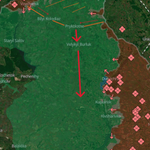
New airstrike map update in the Hulialpole/Orikhiv direction suggests Russia abandonned its plans to capture Ternuvate and fully switched west
🔴KAB impacts from February to August 2026
⚪️KAB impacts in September 2026
🟡KAB impacts in October 2026
Every month this year, Russia launched hundreds of KABs (FAB bombs guided by the UMPK kit) on the Hulialpole frontline. They were targeting Ukrainian positions on treelines and villages.
I've noticed how every month, impacts moved further west, as if Russia was trying to destroy methodically every fixed/known position from east to west. Indeed, there is barely any new strike on places which were already bombed, probably to let infiltrations work.
However, the strikes have now moved 10 to 15km east of the frontline, which in itself has barely moved and is still stuck near the first bunch of villages west of Hulialpole. The focus of the strikes and the montly concentration helps understand what was and is Russian plan in this direction :
-> It seems they abandonned Ternuvate, which is a very big victory for Ukraine, since this town protects all the northern flank of this offensive and has multiple high rise buildings were Ukrainian soldiers can hide.
-> Any offensive northwards no seems very difficult, thanks to Ukrainian Oleksandrivka counter-offensive. This forces Russia to fight on the lower ground without controling the heights.
-> The main push is ongoing from Hulialpole in the direction of Zaporizhzhia, aiming at avoiding Orikhiv. Russia is currently dropping bombs in the area of the unfinished second defensive line despite the fact it still has not crossed the first one.
Thank you for following, I will later try to analyse more deeply this direction and what happened this year, especially how Ukraine managed to nearly stop the offensive on Zaporizhzhia. Remember as well how the infiltrations inside of Orikhiv failed and how Ukraine cleaned the city from infiltrators.

Delwin | Military Theorist retweeted

While Russian advances across the frontline have slowed this year, their mid-to-long-range strikes have significantly increased.
I estimate Russia averages around 140 individual strikes per day using missiles and drones. Ukraine averages around one-tenth of this, giving us a strike ratio of around 10:1 in favour of Russia.
This figure excludes strikes on logistics, which are usually carried out using cheaper, smaller, and more numerous drones.
Mid and long-range strikes have always been one of Russia's biggest advantages in this war, and has remained a very important component of attrition.
Delwin | Military Theorist retweeted
(1/3) [INTEL BRIEF] Developing Russian gains in October across three primary directions: Orikhiv, Rai Oleksandrivka, and Dobropillia.
A total of 114 km² controlled and 39 km² grey zone so far this month (excluding Vivaldi reveals) have been added on DeepState.
In Orikhiv, Russian DRG reached Omelnyk, a key village on the fortress’s main supply line. Latest gains are around Hirke after an earlier armored assault this month. Verkhnia Tersa and Huliailpilske have not been under Ukrainian control since summer and should be marked in the greyzone. (Could be under russian control though.)
Hirke lies near the main defensive line (already breached further north). Satellite images from 9 October show combat and fires across the ditch and dragon teeth in this direction and Russian artillery strikes, indicating the assault possibly advanced further than reported and that renewed attempts will target this point. This armored assault likely intended at securing the breach point. (geolocated footage in reply)
Toward Sloviansk, mapped gains are older and under Russian control since summer, but only recently acknowledged. The area between Mykolaivka and Rai Oleksandrivka remains a grey zone with ongoing skirmishes for routes and villages along the Donetsk River, as well as the remainder of the ridge overlooking the strategic cities.
It is now confirmed that #Vivaldi did not significantly slow the Russian tempo in primary directions. Though slower than last year, operations are proceeding; in fact, Dobropillia taken in a pincer shows renewed intensity.
Ukrainian Vivaldi losses were apparently high as demonstrated by a 25% increase in MIA records this summer (details upcoming in an article). The situation must be monitored closely in the coming months to assess if this will be detrimental to the defense of the key Donbas bastions and the road to Zaporijia.
#UkraineRussiaWar #Strategy


Delwin | Military Theorist retweeted

One glaring issue with Ukraine's current strategy is it is unable to hurt Russia's economy anywhere as much as Moscow can hurt Ukraine's:

Russian strikes are weakening the economy sustaining Ukraine’s war effort. Closing the growing funding gap will require more European support and politically contentious reforms in Kyiv, writes @BalazsJarabik: carnegieendowment.org/russia…

Delwin | Military Theorist retweeted
First, I wrote "appear to be", which expresses uncertainty in English, the equivalent of the French conditionnel. It is therefore an inference, not a categorical assertion, and is not subject to the same burden of proof. Grammar matters.
Second, you have no proof that those forest patches east of the railway were ever captured in the first place. Where is your evidence? Because DeepState certainly marked them as captured on September 3rd.
Now, let me explain how this works.
In the forests west of Dvorichna (Area 1), there was an initial approach before June 8 (blue circle), during which roughly a dozen FAB and 203 mm artillery strikes hit the area. Ukrainian forces advanced closer to the village throughout June, and by July 1, multiple FAB craters and evidence of combat were visible in satellite imagery (red circles).
As per the forested area south of Zapadne (area 3), the main fighting occurred around august 10th, when massive ordinance was dropped on it and the connecting treeline.
This is how we can infer that Russian forces lost control of those sectors at some point in June and august.
But for the forest patches across the railway (Area 2), it is different.
On September 17, the impact of strikes on the Khartia squad that entered the area is visible (at the very edge), but nothing else. On October 12, the situation is identical: absolutely no evidence of airstrikes or combat is visible in satellite imagery.
This does not follow any pattern observed in other sectors of the front.
There are a couple of videos showing South American soldiers entering the area, probably in July (but released in September), and early August, where signs of fighting are visible on images at the very edge.
On Telegram channels associated with Russia's 27th Motor Rifle Brigade, there are also videos showing these soldiers being targeted, followed by Russian infantry clearing the woods.
Since then, nothing… As of October 12, no further evidence of significant fighting ongoing is visible in satellite imagery across this entire area. No bombardment ever took place, no sign of fighting since early august.
So much for the claim that "operations are continuing", because, as a matter of fact, the available evidence points towards no significant activity having taken place there since those initial engagements. Hence my point that what remains are skirmish clashes between light infantry units, in the greyzone.
Therefore, yes, in all likelihood, the forest patches (area 2) were never firmly captured. The squads that entered were immediately engaged by drones and subsequently cleared out by small Russian infantry elements operating from the opposite edge of the woods which reoccupied the area. (All this being documented in geolocated footage)
It is always interesting to see how propagandists, entrenched in their own narratives, demand proof from others while having absolutely none to substantiate their own claims.
Proof is not always a straightforward concept in military analysis. Patterns are identified, hypotheses are formulated, and plausible conclusions are inferred from a variety of sources that are analysed and cross-referenced. The relevant question is not does absolute proof exists, but which scenario is best supported by the observable facts.


Delwin | Military Theorist retweeted
Lots of Russian geolocations in western Kupiansk recently.
The city has been contested for almost a year but never retaken by the AFU.

UA 41mb hit RU position in Kupiansk.
0:36 49.721392,37.603552
src:t.me/ombr41/3381
@GeoConfirmed @UAControlMap


Delwin | Military Theorist retweeted
Since 2023, Ukrainians have been much better at making trailers than Russians. (Whose communication has been poorly conducted)
However, the included footage provides no concrete proof the operation was real, especially since the AFU has made no gains on the Kupiansk front in recent months and nothing has been reported.

Ukrainian forces advanced more than 15 km behind Russian lines through underground gas pipelines during a counteroffensive on the Kupiansk front, killing over 100 Russian soldiers and capturing more than 30.
The operation, codenamed Veles, combined the underground advance with coordinated drone strikes and ground assaults, cutting off Russian infiltration routes into the rear of Kupiansk.
Participating units included the Khartiia Brigade, R.U.H. and Lava Regiments, DIU units including the Russian Volunteer Corps and Freedom of Russia Legion, and the Achilles Brigade.