

Chairman of the Board for R3/RCCS/RC Billing/Regents Health Resources aka Roncology - Ron & Oncology
Austin, TX
Joined February 2021
- Tweets8.6K
- Following4.7K
- Followers1.5K
- Likes48.6K



Pinned Tweet
linkedin.com/pulse/guide-you… Please check out this article meant to help #RTTs in their first five years. @OfficialRCCSInc @ASRT @RegentsHealth #radiationtherapy

Ron DiGiaimo retweeted

Also have been awaiting! Agree with @jryckman3 .
My (and now @rickysavjani’s) trial, LDRT-MIND, tests 3Gy/10fx with a 0.3Gy monthly maintenance dose, specifically to try and combat the post six month reversion they see here.
Very exciting times!
Ron DiGiaimo retweeted

IO + EV upfront is now the SoC for MIBC!! But how much EV do we need in postOP settings? Eagerly looking forward to more data/discussion on Day 2 #ESMO26! VOLGA as the new SoC!!??!!
#gusm @myESMO #BladderCancer


ESMO 2026 - presidential LBA | VOLGA Phase III –
Perioperative Durvalumab + Enfortumab Vedotin (EV) in cisplatin-ineligible/refusing patients:
📊 EV + Durva vs Control
• 2-year EFS: 64% vs 45% (HR 0.51; p<0.0001)
• 2-year OS: 78% vs 69% (HR 0.58; p=0.0027)
• pCR: 45% vs 10%
Adding tremelimumab improved EFS (HR 0.61) but no significant OS benefit yet, with higher grade 3/4 toxicity (42% vs 30%).
🔥can this stop the need of post op EV ? Probably yes . New SOC 🙂👍
Looking forward the full datasets @OncBrothers
@OncoAlert @myESMO
#ESMO26 #VOLGA #BladderCancer


Ron DiGiaimo retweeted

Cognitive outcomes of low-dose whole-brain radiation therapy in mild Alzheimer’s disease: A multicenter, randomized, sham-controlled phase II clinical trial #Alzheimer #ldrt thegreenjournal.com/article/…

Want to be a supporter of the Kukuna O Ka La Conference for Rad Onc CMEs? Here's how, link below. Look up the conference and speakers as well as location. You'll be impressed radonccme.org
kukunaconference.org/support…
Ron DiGiaimo retweeted

Congrats to the SARON investigators! Important randomized data for a question we face all the time. 👏
Consolidation RT improved local control and PFS, but no OS benefit demonstrated: HR 0.99 (95% CI 0.63-1.55).
The RT details caught my eye. Of 62 pts who received RT, 51 had conventional treatment to the primary and only 11 had primary SABR. About 53% of the full cohort had N2/3 disease.
Side note: in the separate 13-pt ESTRO safety substudy, the most common schedules were 55 Gy/20 fx to the primary (10/13 pts) and 27 Gy/3 fx to thoracic mets (4/14 lesions). Those are substudy doses, not the dose distribution for the whole trial.
Curious how pts who actually received SABR to all sites did. That would be exploratory, but I'd like to see the dose/volume details and patterns of failure before generalizing these results to patients receiving total consolidation.
Looking forward to the full paper! #ESMO26 #radonc
cslide.ctimeetingtech.com/es…


Ron DiGiaimo retweeted
MASTERPLAN full publication is out!!
The RT volumes are worth a closer look. CTV = primary GTV + nodal GTV + tumour-vessel interface. The TVI extends 5 mm proximally and 5 mm distally along involved/closely adjacent vessels, for patients where surgery is likely. PTV = CTV/ITV + 5 mm. No elective nodal irradiation, and no elective perineural or celiac/SMA plexus volume specified in the protocol. That is a focused target, with gross nodal disease included.
Real-time RTQA is a big part of this story. Review identified 36 major planning deviations in 12 patients, reduced to 2 deviations in 2 patients after QA. All plans passed independent review before treatment. As a radiation oncologist, I want that detail alongside the outcomes. Reproducing the treatment means reproducing the contour review, OAR constraints and image guidance too.
Also worth keeping the treatment delivery denominator in view: only 40/49 patients assigned to SBRT actually received it (82%). The efficacy analysis is intention-to-treat. It should not be read as an outcome series of patients who all completed SBRT.
The surgical numbers need some unpacking. All comparisons below are chemo + SBRT vs chemo alone:
✅ Underwent surgery: 62% vs 44% (29/47 vs 11/25).
✅ Completed resection: 53% vs 44% (25/47 vs 11/25).
✅ R0 among all resected patients: 52% vs 36% (13/25 vs 4/11).
✅ R0 in the resected POPC subset: 62% vs 40% (13/21 vs 4/10).
POPC is the potentially operable cohort. So the 62% surgery figure includes exploration without resection, while the 62% R0 figure applies only to resected POPC patients. These are different endpoints with different denominators. None of those between-arm surgical comparisons was statistically significant. The paper also defines R0 as more than 1 mm clearance.
Adjuvant chemo is another important difference: 80% vs 36% of resected patients received it (20/25 vs 4/11). That complicates attribution within the treatment pathway. Early progression in the control group may have contributed, so this is a post-randomisation imbalance with more than one possible explanation. The post-hoc analyses were directionally consistent, but the authors explicitly caution about selection bias.
For the planning details: PTV_EVAL excluded the GI PRVs, with a minimum 3 mm PRV expansion. OAR constraints took priority over target coverage. Duodenum, stomach and small bowel D0.5cc were each constrained to <33 Gy, with V30 <5 cc. Delivery used standard linacs; breath hold was recommended, and fiducials were placed in 35/40 patients (88%). This is relevant to how we would implement the approach in practice.
With no elective nodes, isolated regional nodal relapse was 4% vs 8% (2/49 vs 2/25). Reassuring, although that does not establish the optimal elective volume (especially considering these patients went to surgery - ASTRO/NRG recommends inclusion of elective perineural coverage). Overall G3+ AEs were 70% vs 64% (33/47 vs 16/25). One G3 pancreatitis and one G2 small bowel obstruction were attributed to SBRT. The practical takeaway for me is to keep the target definition and prospective QA attached to the results, and to be precise about what the surgery and R0 numbers actually measure.

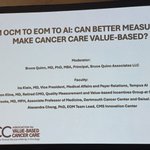
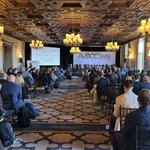
Nice job @ACCCBuzz Association of Cancer Care Centers for Annual Conference in Boston … when we continue to learn, share our knowledge and grow… we all win 👍🏻 @OfficialRCCSInc


Ron DiGiaimo retweeted

P cool, huh? 🇺🇸🚀
@ndstudio FTW

Now on America.gov: report fraud against government programs in just a few steps and, if eligible, receive a reward up to $30K
Ron DiGiaimo retweeted

Calling all #RadOnc Residents: Only 3 days left to volunteer for an ARRO subcommittee!
Forms due Friday, Oct. 23: bit.ly/4BcdFts

Ron DiGiaimo retweeted

Treatment options for a rising PSA after prostatectomy for prostate cancer
A brief video for patients and physicians
youtu.be/GBxcGlMmc5g

Ron DiGiaimo retweeted

As @RajaFlores points out, oncology has a language problem, including how to define "early stage". cancerletter.com/perspective…
For patients & families "early stage" sounds reassuring:
✅ Caught early
✅ Treated
✅ Cured
But in #lungcancer, even stages I and II have a significant risk of recurrence. I know firsthand how devastating it is to be diagnosed with Stage Ia, believe I'm cured, experience recurrence, and learn I have advanced-stage disease.
Of course staging matters. But stage is not a prognosis, and patients aren't statistics. For patients and families, the real question is, "What does that stage mean for me, my family, my life?"
Because understanding your stage is not the same as understanding your cancer.
#LCSM #WordsMatter #staging @TheCancerLetter @DrewMoghanaki

Ron DiGiaimo retweeted
Clinical Foundation: From the basics to the most mature data. Here we touched on the logistics, holding/bridging therapies, and AEs for CAR-Ts with @sghmd and @End_myeloma!
Full 🗣️:
⭐️ oncbrothers.com/cf-car-t
⭐️ “Oncology Brothers” podcast
@OncUpdates #HemeTwitter
Interesting article on cancer survival by facial analysis. @Dr_RayMak scientificamerican.com/artic…

Ron DiGiaimo retweeted
Thank you to #AAMD2026 for the invitation to speak. Salt Lake City is an incredible venue and the attendees were awesome! Always great catching up on the incredible work Dosimetrists do for cancer patients across the nation. Don’t let your influence deteriorate just because you’re not always physically in the clinic. Stay engaged where ever you can and let that knowledge base you have be “seen” and felt clinically, financially and leadership wise 👍🏻👊🏻 @OfficialRCCSInc


Ron DiGiaimo retweeted
If he had gotten SBRT, he would have left 5 minutes after the procedure….
Just saying….

It’s lovely to see @Pontifex leaving the hospital POD#4 after having lung cancer surgery 🫁 on Tuesday. Praying for his fast recovery
( FYI: most patients that undergo robotic lung surgery do leave the hospital within days- surgical techniques have improved)
Thank you to #AAMD2026 for the invitation to speak. Salt Lake City is an incredible venue and the attendees were awesome! Always great catching up on the incredible work Dosimetrists do for cancer patients across the nation. Don’t let your influence deteriorate just because you’re not always physically in the clinic. Stay engaged where ever you can and let that knowledge base you have be “seen” and felt clinically, financially and leadership wise 👍🏻👊🏻 @OfficialRCCSInc
Prepare yourself Salt Lake City and AAMD and @aamd_foundation I have arrived 👍🏻🎉#AAMD2026


