
Student turned Data Scientist turned back to student. PhD candidate @VUAmsterdam & #DiscoveryLab, working on ML on graphs for hypothesis generation.
Amsterdam, The Netherlands
Joined October 2017
- Tweets64
- Following213
- Followers100
- Likes254


Want to know more about the effect of using multimodal biomedical embeddings for link prediction on a biomedical knowledge graph? 🤓🧪
Our work is published! doi.org/10.1186/s13326-023-0…
Shout out to my great collaborators: @danieldazac @thompijn @pmitra01 @michaelcochez @pgroth 🎉


Our work on embedding multimodal biomedical knowledge graphs is now published at the Journal of Biomedical Semantics @BioMedCentral!
Read the paper here: doi.org/10.1186/s13326-023-0…
5
256
Be there folks!

Third of the Amsterdam FoMo lectures on Foundation Models: Tuesday June 20, 12:00, room L3.36, Lab42 at UvA. @Sel_Baez (VU) on Task-Specific Performance of LLMs and Francesco Manigrasso (Trento) on Neurosymbolic Integration of Reasoning and Learning. pbloem.github.io/fomo/
1
94
What a journey. Finally it is out there! 🎉🎉
Very proud and very lucky to have been part of this team. So many interesting discussions and lots of development.
@danieldazac @thompijn @pmitra01 @michaelcochez and @pgroth
New preprint! We introduce BioBLP, a method for learning embeddings on multimodal knowledge graphs.
Paper: arxiv.org/abs/2306.03606
Code: github.com/elsevier-AI-Lab/B…
w/ @DimitrisAlivas @pmitra01 @thompijn @michaelcochez @pgroth
1/4

Another amazing output by magic Mike and team! Congrats 🎉🍾
Also great to see there’s room for further research and improvement for inductive QA!

Our new #NeurIPS2022 work on inductive query answering - new nodes at inference, complex queries over incomplete graphs, no node features, seems impossible? 🤔
With @zhu_zhaocheng @ren_hongyu @tangjianpku
Paper: arxiv.org/abs/2210.08008
Code: github.com/DeepGraphLearning…
🧵1/10
5
Winner winner chicken dinner 🎉🎉🍾🍾Congrats @Sel_Baez @EmilevanKrieken @ThiviyanSingam @michaelcochez and @JanCKalo

We are excited that our team won the @lm_kbc @iswc_conf 22 competition!
We do Knowledge Base Construction using @OpenAI GPT-3.
Our conclusion: Size gets you more than prompt engineering.
arxiv.org/abs/2208.11057
(1/n)

So proud!
Check out the work of @Sel_Baez if you are interested in a future where humans and robots co-exist and co-operate to improve our society!

Demo time! @LeoLaniVU showed the Minister @RHDijkgraaf how difficult it is to be a #robot 🤖 while @PiekVossen and I shared our research on building a #referenceMachine for #hybridIntelligence. Hit me up @CLTLVU if you want to check out this social robot 🤓
4
Curious about our work on hyper-relational query embeddings /w StarQE? 🤔
Visit us in the #ICLR2022 poster session 11 (7:30 p.m CEST), Q/A and discussions! 🥳 😎
Link: iclr.cc/virtual/2022/poster/…
Paper+code: github.com/DimitrisAlivas/St…
@michael_galkin
@michaelcochez
@BerrendorfMax
🥳🥳🎉🎉🍾🍾
🎉 Glad to share the two accepts to #ICLR2022
🌟 StarQE - logic query answering on hyper-relational KGs teapawt.org/DimitrisAlivas/status/…
🍰 NodePiece - compositional tokenization for transductive and inductive learning on knowledge graphs teapawt.org/michael_galkin/status/…
Updated pdfs coming!
1
omfg

Holy crap. Malware hidden in a strand of DNA hijacks the computer that analyzes that particular gene sequence. wired.com/story/malware-dna-…

Neural query answering on RDF* #KG w/o graph databases!
In our new work (StarQE), we show how to answer complex SPARQL* queries with #GNN and collect a new #Wikidata-based dataset
arxiv: arxiv.org/abs/2106.08166
Work done in collab /w @BerrendorfMax @miselico @michael_galkin 1/n

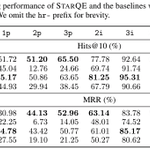
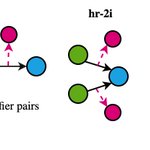
Inspired by MPQE (@danieldazac) + utilising StarE (@michael_galkin) as an encoder of hyper-relational (RDF*) graphs, we encode hyper-relational (SPARQL*) queries. We investigate the effect of qualifiers in query answering and show that they greatly improve the accuracy! 2/n

1
4
