

Perceptual decision making, metacognition, computational cognition, deep learning. Assos prof at Georgia Tech. Mostly on Bluesky: https://xitter.cf/t.co/oSiJhY0lTH
Atlanta, GA
Joined March 2013
- Tweets1.6K
- Following190
- Followers2K
- Likes1.4K

Pinned Tweet
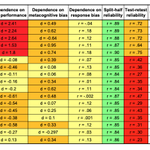
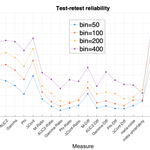
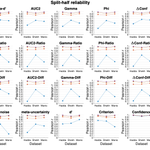
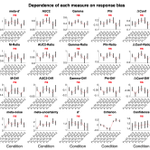
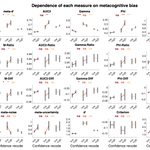
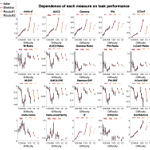
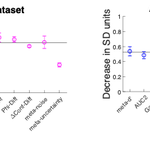
Do you measure metacognitive ability? You may want to read my new preprint: "Measuring metacognition: A comprehensive assessment of current methods" 1/17 psyarxiv.com/waz9h
Turns out that 2-choice tasks strongly underestimate the natural relationships between accuracy, confidence, and RT.

Why are accuracy, confidence, and response time often only modestly related in standard laboratory tasks? In our new preprint, we investigated whether these relationships depend on the number of available choices.osf.io/preprints/psyarxiv/pg…

Doby Rahnev retweeted

Why are accuracy, confidence, and response time often only modestly related in standard laboratory tasks? In our new preprint, we investigated whether these relationships depend on the number of available choices.osf.io/preprints/psyarxiv/pg…
Doby Rahnev retweeted

Excited to share this new work with @DobyRahnev and @Mynameismedha where we tested how people compute confidence in perceptual decisions using a novel dot numerosity task. We introduced a simple yet powerful way to model multi-alternative decisions: osf.io/preprints/psyarxiv/67… (1/5)
Doby Rahnev retweeted
Out today in @PNASNews with @Mynameismedha and my supervisor @DobyRahnev! Our findings challenge the Bayesian confidence hypothesis, showing humans use confidence-in-raw-evidence-space (CRES) computations when rating confidence.
Here is the paper: pnas.org/doi/10.1073/pnas.24…
Doby Rahnev retweeted

When visual metacognition fails: widespread anosognosia for visual deficits
Opinion by Matthias Michel (@MatthiasMichel_), Yi Gao, Matan Mazor (@mazormatan), Isaiah Kletenik (@IsaiahNeurology), & Dobromir Rahnev (@DobyRahnev)
Free access before Nov 20: authors.elsevier.com/a/1jsFQ…

Doby Rahnev retweeted

Excited to share our piece in @TrendsCognSci on anosognosia for visual deficits which challenges the view that our conscious experiences are what we know best. We propose a model to explain these striking failures of awareness
@MatthiasMichel_ @DobyRahnev cell.com/trends/cognitive-sc…

Doby Rahnev retweeted

When visual metacognition fails: widespread #anosognosia for visual deficits cell.com/trends/cognitive-sc… by @MatthiasMichel_ @mazormatan @DobyRahnev @IsaiahNeurology et al.; could sensory substitution help inform the metacognitive system of perceptual errors?
This was a really fun project. If you have never heard of Anton Syndrome or anosognosia but are interested in subjective perception, you're in for a treat. Great work by @MatthiasMichel_, Yi Gao, @mazormatan, and @IsaiahNeurology.

Excited about this new paper! Suppose you lost half a field of view, or color vision, would you notice? In a new paper in @TrendsCognSci, we show that you probably wouldn’t! You can find out more about those striking failures of visual metacognition here: authors.elsevier.com/a/1jsFQ….
Doby Rahnev retweeted

Excited about this new paper! Suppose you lost half a field of view, or color vision, would you notice? In a new paper in @TrendsCognSci, we show that you probably wouldn’t! You can find out more about those striking failures of visual metacognition here: authors.elsevier.com/a/1jsFQ….
Press release from @GeorgiaTech about our work: research.gatech.edu/new-neur…

Thrilled to see this paper published in @NatureHumBehav. It was a multi-year effort from Farshad and Medha to marry modern neural networks with traditional cognitive models. The resulting network, RTNet, mimics the critical features of human perceptual decisions.
Thrilled to see this paper published in @NatureHumBehav. It was a multi-year effort from Farshad and Medha to marry modern neural networks with traditional cognitive models. The resulting network, RTNet, mimics the critical features of human perceptual decisions.

Rafiei, @Mynameismedha and @DobyRahnev develop a neural network (RTNet) that generates stochastic decisions and human-like RT distributions. RTNet reproduces features of human responses and predicts human behavior on novel images.
nature.com/articles/s41562-0…
Doby Rahnev retweeted

Exciting new work from @DobyRahnev ‘s lab!
Rafiei, @Mynameismedha and @DobyRahnev develop a neural network (RTNet) that generates stochastic decisions and human-like RT distributions. RTNet reproduces features of human responses and predicts human behavior on novel images.
nature.com/articles/s41562-0…
Doby Rahnev retweeted

Rafiei, @Mynameismedha and @DobyRahnev develop a neural network (RTNet) that generates stochastic decisions and human-like RT distributions. RTNet reproduces features of human responses and predicts human behavior on novel images.
nature.com/articles/s41562-0…
Doby Rahnev retweeted

our perceptual metacognition satellite happening NOW!
launching w/ @hakwanlau's keynote on metacognition's role in consciousness
big thanks to @smfleming @LucieCharlesCog @konohung and @DobyRahnev for helping launch this--150 people registered!
sites.google.com/view/asscme…


Doby Rahnev retweeted

Kicking off our metacognition satellite meeting with a talk by @hakwanlau! Huge thank you to @konohung for helping organising with @smfleming @DobyRahnev and @meganakpeters

Doby Rahnev retweeted

In this new preprint (doi.org/10.31234/osf.io/ydx6…), with @DobyRahnev @Kai_Xue1201 @Mynameismedha, we investigated whether metacognitive noise, hypothesized to affect only Type-2 confidence ratings, also appears in Type-1 perceptual decisions influenced by expectations or rewards.
Come work with Ratan! He is doing some of the most exciting work in visual neuroscience right now. And Georgia Tech is such a vibrant and exciting place (ok, I may be a little biased).

Exciting news! The Murty Lab @GeorgiaTech, has received its first significant funding from the @NatEyeInstitute. We are now actively recruiting up to two postdocs in experimental and computational neuroscience in human vision NeuroAI. 1/n
Doby Rahnev retweeted

PhD studentship on perceptual metacognition in childhood as part of a Marie Curie Doctoral Training Network of 10 labs across Europe, see:
sites.google.com/view/confid…
5 days left, APPLY HERE!!
bcbl.eu/en/join-us/job-offer…
Please RT!

Doby Rahnev retweeted

Two new preprints on the neural mechanisms of temporal attention! We used MEG to study how people selectively attend to items at specific time points within a sequence, when temporal predictability is controlled. With @JiatingZhu @kan_tian @carrasco_lab @djheeger 🧵