

Assistant Professor in UCD School of Public Health, Physiotherapy & Sport Science. Exploring the impact of wearable tech on public health.
Joined May 2013
- Tweets393
- Following134
- Followers780
- Likes574




Pinned Tweet
We reviewed the privacy policies of 17 wearable brands. Most fall short. Some don’t say who can access your data—or what they’d do if it leaked.
Full paper in @npjDigitalMed: doi.org/10.1038/s41746-025-0…
Should rules be stricter?
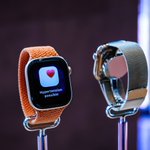
Apple’s new Watch feature doesn’t measure blood pressure — it classifies vascular patterns from optical PPG signals.
In validation (~2,000 participants): sensitivity ≈41%, specificity ≈92%.
Accurate for normal cases, limited for detection.
youtu.be/kTuu30HOINc
The new science of marathon training in one image:
Run more, mostly easy.
Evidence from 100k+ runners shows the best get faster by going slower.
Full piece: The Easy Miles Paradox
open.substack.com/pub/drcail…
datawrapper.dwcdn.net/GjQwU/…
An Evaluation of Apple’s Hypertension Notification Feature.
open.substack.com/pub/drcail…

WHOOP’s new “Healthspan” metrics turn daily habits into added or lost years of life.
I reviewed their white paper - here’s where the science holds, and where it overreaches.
open.substack.com/pub/drcail…

Apple Watch estimates VO₂ max from submaximal exercise, but how accurate is it?
In our study of 40 adults, it underestimated VO₂ max by ~6 ml/kg/min—often a whole fitness category.
Useful for trends, not precision.
📄 DOI: doi.org/10.1371/journal.pone…
@PLOSONE @ucd_sphpss
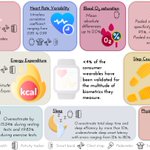
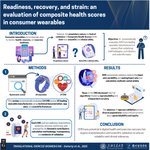
Wearables like Oura, WHOOP, Garmin + Fitbit give you a single “readiness” score.
Our new review shows most rely on just 2 metrics (resting HR + HRV), with opaque algorithms + overlapping inputs.
Good for trends, not daily judgment. 📄 doi.org/10.1515/teb-2025-000…
🫀 HRV: does it actually reflect how you feel?
We tracked 41 people for 14 days.
✅ HRV linked to feeling better. ❌ Not linked to soreness. ⚠️ HRV varied up to 70% day to day.
🎥 Watch the explainer: youtu.be/E_SJ1Lj5B6Y
📄 Paper: doi.org/10.3390/s25144415
@Sensors_MDPI
How accurate are consumer wearables at tracking your health?
💡 Our living umbrella review updates the evidence every year —
just 3.5% of devices have been validated.
🧠 Latest findings on HR, sleep, EE, step count, and more:
🔗 osf.io/fqvms/
📖 rdcu.be/dPv9Q

📱 Can You Trust Apple Watch for HRV? 🧠
Heart rate variability (HRV) is a powerful marker of stress and recovery—but how accurate is the Apple Watch at measuring it?
🎥 Watch the full breakdown:
youtu.be/kJhDe53pU1s
Dr Cailbhe Doherty retweeted

⌚️🏃♀️ Opinion - How trustworthy is your fitness tracker score?
🏋️♀️ "Fitness trackers can still offer valuable insights. Watching how your core physiological signals shift over time — from week to week or season to season — can help you spot patterns, improve habits and better understand your body’s response to stress and training."
🩻 "The problem is when we treat the daily score as a definitive measure of health. It’s not a diagnosis, and it doesn’t always reflect what’s really happening inside your body."
👩⚖️ "So while it’s fine to glance at your readiness or recovery score, don’t let it dictate your decisions. Use your fitness tracker as a guide, but not as your coach, your doctor, or your judge."
✍️ Assistant Professor Cailbhe Doherty, UCD School of Public Health, Physiotherapy and Sports Science writing in @ConversationUK

ALT Stock image of someone interacting with a fitness tracker
Your fitness tracker gives you a daily “readiness” or “recovery” score — but how accurate are those numbers?
Our new article in TheConversation explores the science (and the guesswork) behind wearables' health scores.
📲 Read here: theconversation.com/how-trus…


Dr Cailbhe Doherty retweeted

1st publication of my PhD is available in @BJSM_BMJ 🥇
Machine learning approaches to injury risk prediction in sport: a scoping review with evidence synthesis 🤖⚽️🏀
Thanks to co-authors @EamonnDelahunt,@NicolvanDyk,@DohertyCailbhe,@aonghuslawlor
Link: bjsm.bmj.com/content/early/2…

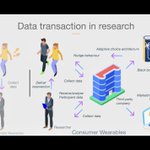
What are the privacy implications of using consumer wearables (#fitbit #garmin) in your research?
Full video: youtu.be/YauUhUjb7nM?si=xlwP…

So much about healthcare involves education—but very little research has been conducted looking at how we educate our patients.
This review highlights the current ‘state of play’ in educational multimedia for healthcare, and what needs to happen next…

📲💻 Using multimedia resources to teach patients? 📹🖥 It took a while to comb through 160 included studies, but check our Sys Review finally published with JMIR. Thanks to @DohertyCailbhe and team in @ucd_sphpss for their help! (infographic below)
rehab.jmir.org/2024/1/e48154

Dr Cailbhe Doherty retweeted

📲💻 Using multimedia resources to teach patients? 📹🖥 It took a while to comb through 160 included studies, but check our Sys Review finally published with JMIR. Thanks to @DohertyCailbhe and team in @ucd_sphpss for their help! (infographic below)
rehab.jmir.org/2024/1/e48154
Heart Rate Variability (HRV) is recognised as a marker of autonomic stress—it’s used in the @WHOOP strain score, and the ‘readiness’ scores provided by @Garmin and @ouraring.
But what about #AppleWatch?
Our latest study validates the Series 9 and Ultra 2 for HRV measurement:

🔍 Our new review identifies 6 challenges for wearables in sports and health:
1) Accuracy
2) Access
3) Safety
4) User engagement
5) Cybersecurity
6) Privacy
Tackling these is key to maximising their impact.
Read the full article here: doi.org/10.1055/a-2376-6332

Dr Cailbhe Doherty retweeted

A wearable sensor band that uses microfluidics to analyze sweat pH and lactate during exercise, potentially a metric for promoting or quantifying level of physical fitness
science.org/doi/10.1126/scit… @ScienceTM

