

building open ai infrastructure @pleiasfr — χαλεπὰ τὰ καλά
Joined April 2011
- Tweets47.2K
- Following4.1K
- Followers24.6K
- Likes168K





Pinned Tweet
After a long wait, releasing the SYNTH paper!
It’s not pretraining, mid-training or post-training, it’s just training: a fully synthetic single-stage pipeline to train workable reasoning models with unprecedented data efficiency.

Happy to announce Pleias team won the Nvidia codefest hackathon with medical small models (medibaguette?), pretrained on a new healthcare SYNTH pipeline and building on top of DeepSeek’s Engram to enhance performance on specialized terminology.


We pretrained three SYNTH 2B medical models with @pleiasfr and made the top 5 at NVIDIA's #OpenModelsCodefest, so we’re invited to present at GTC Berlin.
They’re a new Pareto frontier on several medical benchmarks, and their reasoning is ~10x shorter than similar-sized models 🧵

Announcement on Nvidia blogs.nvidia.com/blog/europe… and compute partner Deutsche Telekom t-systems.com/de/en/insights…

hopefully the zeitgeist will soon catch up to man without quality and it will be glorious

i almost want to say that this is just another groupchat conspiring to inject a book into the discourse like with Demons a few months ago (the Mannosphere?) but also like. earlier this week my coworker randomly mentioned this book in a meeting. and then earlier this summer i independently felt an urge to read The Magic Mountain." So who knows really
Pleias Berlin synthetic apéritif (though real food) running right now with a good part of the local simcluster.


Announcing that Pleias will be at Berlin for the @NVIDIAGTC and we'll host a synthetic data mixer on October 21: apéritif/diner all about synth and baguette models.


Some thoughts for the new synth just teased by @pieterdelobelle at Shenzhen. xitter.cf/pieterdelobelle/status…


Since SYNTH is travelling across Europe this week: coming to London on Thursday for the first session of AI research Foundry, in excellent company (w/ pretraining/data team from Gemini and MAI-1).


Announcing that Pleias will be at Berlin for the @NVIDIAGTC and we'll host a synthetic data mixer on October 21: apéritif/diner all about synth and baguette models.
Many thanks to @shubhamjain0594 for setting it up. luma.com/8ct1lo38


Announcing that Pleias will be at Berlin for the @NVIDIAGTC and we'll host a synthetic data mixer on October 21: apéritif/diner all about synth and baguette models.
(invitation also opened to non-synthetic personas if you're around: luma.com/ff0kjfqy)
Went through it but zero mention of an obvious contender: data shape. Latest models like Qwen-3 or Kimi are trained on vast amounts of "clean" synthetic data/environments and this impacts superposition/features.

interpretability might be the most important scientific problem in the world right now, as I don't think we can solve alignment if we don't know what we're building. I think I have good news about it. I co-authored early work in mechanistic interpretability at OpenAI and came away pessimistic, because neural networks appeared to fold into arbitrary tangled knots. years later, I started openai's first large-scale automated interpretability project, finding about 2% of neurons legible with the primitive tools we had
with modern agentic tools and a much closer look, the picture looks totally different. the vast majority in models up to trillions of parameters are legible, and their circuits beautiful. many famous examples of tangled neurons turned out to be misunderstood. The roadblocks I expected mostly aren't there. I now think ambitious interpretability will be solved by the time we need it most, and possibly quite soon, as automated scientists keep improving. it may be a bitter lesson for interpretability: the simple thing, at absurd scale, works
already-clean.goodfire.com/


they call it the most simcluster acquisition of all time

one of those rare acquisitions which does actually incentive both sides.
congrats @vikhyatk and PI team!


Final blogpost victory


Cheeky Pint is back! Mark Zuckerberg @finkd and Alexandr Wang @alexandr_wang came to the pub to discuss their new frontier model, Muse Wonder.
00:00:24 Muse’s breakout use cases
00:07:28 The model is the product
00:14:35 Muse Wonder
00:24:56 How frontier models are built
00:48:26 Betting $100B
01:07:21 Agentic commerce
01:19:34 OpenRouter
01:20:06 Beyond the smartphone
01:27:00 Funding
01:34:06 Why AI won’t be winner-take-all
01:40:46 Meta Superintelligence Labs (MSL)
02:08:11 Working for Mark Zuckerberg
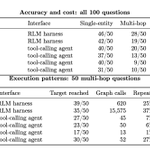
An new Pleias paper: in collaboration with AI Bridges and @Wikimedia Deutschland we developed a new harness for complex semantic search over the largest knowledge database, @wikidata

While our initial focus was on the harness, we see a wider potential for making smaller effective models for search (is it cognitive core?): recursively exploring graphs and texts is largely a skill in itself that can be exercised and learned with much less parameters
As usual, not just shipping the blogpost (pleias.ai/blog/rlm-for-wikid…):
*full paper on @arxiv: arxiv.org/pdf/2610.06650
*open reproducible harness github.com/aibridges/RLM_Wik…
*synthetic multi-hop on huggingface: huggingface.co/datasets/AI-B…