

NEWS | EQUIPMENT | FOOTAGE
Joined July 2025
- Tweets5.4K
- Following55
- Followers19.1K
- Likes216
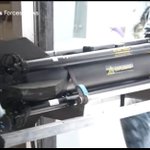




Ukrainian Navy sailors practised locating and neutralizing naval mines using SeaFox remotely operated underwater vehicles (ROVs) during training in the United Kingdom.
The training took place as part of Operation Interflex Maritime, under the supervision of Royal Navy mine countermeasures specialists. The exercises are intended to prepare Ukrainian crews for future mine-clearance operations in the Black Sea.
The sailors used three SeaFox variants. The reconnaissance version, equipped with sonar and a camera, was used to locate and identify a training mine on the seabed. A separate training version allowed the crew to rehearse the neutralization procedure before deploying the combat variant, SeaFox C.
The combat vehicle carries a shaped-charge warhead with an explosive charge equivalent to approximately 1.5 kg (3.3 lb) of TNT. It is remotely guided via a fibre-optic cable and detonated alongside the mine, destroying it. Unlike the reusable reconnaissance version, SeaFox C is expended during the operation.
Developed by German company ATLAS ELEKTRONIK, part of the TKMS Group, SeaFox is approximately 1.3 m (4.3 ft) long, weighs around 43 kg (95 lb) and can operate at depths of up to 300 m (984 ft).
Source: Royal Navy, Forces News


A T-54/55-type main battle tank of the Vietnamese Army, equipped with protective cages.
2025/2026
Source: ASEAN Defense Studies, Lee Ann Quann
Czech company KBP International has unveiled the GRYF, a tactical drone designed to carry weapons for countering unmanned aerial vehicles (UAVs), at the FUTURE FORCES FORUM.
The system was presented in two configurations: one carrying interceptor UAVs and another equipped with small missiles designed to engage other drones. Czech President Petr Pavel and military officials attended the public demonstration, Militarnyi reports.
The GRYF is powered by a four-cylinder internal combustion engine and has a reported cruising speed of 150 km/h (93 mph).
The aircraft features four hardpoints and has a maximum payload capacity of 50 kg (110 lb). According to Militarnyi, these can accommodate lightweight interceptor missiles weighing approximately 5 kg (11 lb) each.
Source: Militarnyi


U.S. firm Heaviside Industries has introduced the TYR loitering munition, a system weighing just over five pounds (2.3 kilograms) that can strike targets from more than 25 miles (40 kilometers) away.
Unveiled at AUSA 2026 on 12 October, TYR reaches speeds exceeding 150 mph (241 km/h) and offers more than 60 minutes of flight time, according to the company. The complete system weighs about 15 pounds (6.8 kilograms). It is designed for GPS-denied environments and has a low acoustic and visual signature.
Four warhead options come from Norwegian firm Nammo: shaped-charge anti-tank, anti-structure, explosively formed penetrator and anti-personnel fragmentation. The system can support ground and base defense, counter-drone roles or integration on larger unmanned systems.
Heaviside CEO Phillip Walker said TYR combines size, weight and performance to strike armored and fortified targets while increasing standoff. The company said the munition has completed live-fire testing and is under contract with U.S. Department of Defense customers.
#Heaviside #TYR #LoiteringMunition #AUSA #USArmy #DroneWars


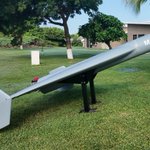
Mexico’s Navy Secretariat (SEMAR) has displayed an unmanned aircraft associated with its “Extended Projection Strategy” platform, with the designation “ROCA” now circulating in reports about the project.
The aircraft attracted attention due to its delta-wing configuration and overall resemblance to long-range one-way attack drones such as Iran’s Shahed-136.
However, SEMAR has not publicly disclosed detailed technical specifications, the aircraft’s intended operational role, or its development status.
Photo Source: Zulu


Netherlands-based volunteer initiative DroneAid is developing the DRONOLAW active protection system that fires nets to stop FPV drones, Militarnyi reported.
A representative described the system at the Future Forces Forum in Prague. It uses a thermal imaging camera on a rotating platform to scan 360 degrees in five seconds and detect targets up to 100 metres (328 feet) away. Nets are fired at 10 to 20 metres (33 to 66 feet) to tangle propellers.
Developers said they chose thermal imaging after testing sound, cameras, lidar and radar, because electronic warfare is ineffective against fiber-optic drones.
Development has run for about a year and a half, with first tests in Germany. Trials are now planned in Ukraine, and the team aims for at least a 70 percent interception rate before front-line use.
Figures are developer statements.
#DroneAid #DRONOLAW #FPV #ActiveProtection #Ukraine #DroneWars


The New York Times reports that the Ukrainian Armed Forces had to suspend drone attacks for three days due to limitations imposed by Starlink.
In addition, drones worth a million dollars were lost.

Soldiers of the Ukrainian Armed Forces’ 475th Assault Brigade, known as Code 9.2, have shown preparations to launch a heavy Stargate helicopter for medical evacuation.
The footage shows preparations for using the aircraft to evacuate wounded personnel.


Slovenian company Valhalla Turrets has unveiled a new configuration of its Skythunder air defense system, combining a 20 mm (0.79 in) M197 three-barrel Gatling gun with 70 mm (2.75 in) laser-guided rockets.
The system is designed to counter unmanned aerial vehicles (UAVs) and other low-altitude aerial threats, including during mass attacks, and to protect critical infrastructure.
According to the manufacturer, the configuration will feature 360-degree radar coverage and automated target detection and tracking. The gun and guided rockets are intended to provide different engagement options depending on the target and distance.
The M197, manufactured by General Dynamics, is a lightweight, three-barrel variant of the six-barrel M61A1 Vulcan cannon. It has a stated rate of fire of up to 1,500 rounds per minute and a muzzle velocity of approximately 1,030 m/s (3,379 ft/s).
Valhalla Turrets has not yet published performance figures for the new configuration, including its detection or engagement ranges.

The U.S. Army is testing Seattle-based Overland AI’s ULTRA 4x4 unmanned ground vehicle in roles ranging from resupply and reconnaissance to breaching support and counter-drone surveillance, Army Recognition reported.
At AUSA 2026 the vehicle appeared in different configurations, including one fitted with Leonardo DRS’s Multi-Mission Hemispheric Radar. Official imagery showed soldiers from the 1st Battalion, 505th Parachute Infantry Regiment, operating ULTRA during Panther Avalanche at Fort Bragg in January. Overland AI said four vehicles supported the 82nd Airborne’s 3rd Brigade during a Joint Readiness Training Center rotation, cutting resupply times by about 50 percent. The company also described an 8-kilometre (5-mile) resupply with a decoy vehicle and a 12-kilometre (7.5-mile) command-post move.
In African Lion 2026 in Morocco, ULTRA vehicles were used for covering fire, obstacle breaching and placing munitions. Counter-UAS equipment on the vehicles detected and tracked aerial threats in training. Manufacturer specs list a 1,000-pound (454-kilogram) payload, 35 mph (56 km/h) top speed and a 114-horsepower engine. Exercise claims come from the company.
Source: armyrecognition.com/news/arm…
#USArmy #OverlandAI #ULTRA #UGV #AUSA #DefenseNews

The German Army has received its first heavy-lift cargo drone, a TEKEVER system delivered to the 131st Supply Battalion in Bad Frankenhausen for logistics trials.
The Bundeswehr announced the handover on 13 October as the start of uncrewed cargo transport for its logistics units. The drone is meant to move supplies where roads are difficult or exposed to drones, artillery and mines. The battalion will now test how autonomous cargo flights fit into German Army logistics.
Portuguese firm TEKEVER is also opening a German subsidiary in Munich. The company, known for the AR5 used by Ukraine and selected by the British Army to replace Watchkeeper, unveiled its AR6 heavy-lift family at Farnborough in July. TEKEVER says the AR6 can carry about 200 kilograms (440 pounds) over 500 kilometres (310 miles), with the military version able to operate without satellite navigation.
Production is due to start by the end of 2026 in Swindon. This is the first German Army unit to receive a heavy-lift system; trials will decide whether more follow.
#Germany #Bundeswehr #TEKEVER #AR6 #CargoDrone #DroneWars

U.S. firm GM Defense is proposing a driverless Chevrolet Silverado-based unmanned ground vehicle for military logistics and casualty evacuation, NextGen Defense reported.
The concept, shown at AUSA 2026, uses a dual-rear-wheel Silverado 3500HD layout with an open flatbed. Full technical details were not released, but functional trials are targeted for 2027.
Other reports from the show put payload capacity at up to 8,000 pounds (3,628 kilograms) and energy storage at around 100 kilowatt-hours. The company also showed EPIQ Hybrid, a 60-kilowatt, 100-kilowatt-hour expeditionary energy system with an onboard generator to cut noise.
GM Defense President Steve duMont said the firm transfers commercial engineering and manufacturing scale to the military rather than starting from scratch. The concept arrives as Army demand for the company’s Infantry Squad Vehicle has grown from an initial 649 units to more than 12,000.
No order for the UGV was announced.
#GMDefense #UGV #Silverado #USArmy #AUSA #DroneWars


Russia has raised production of Geran-4 and Geran-5 jet strike drones to 4,000 a month, twice the Geran-2 output, Ukraine’s Defence Intelligence told NV.
The jet drones reach 400–500 km/h (249–311 mph), harder for mobile fire groups to intercept. Russia still makes about 2,000 Geran-2s a month. In August output was about 3,000 Geran-4/5 and 2,800 Geran-2, so jet production is up by a third. Intelligence links the shift to Ukrainian mobile teams intercepting slower drones.
Overall UAV production is around 10,000 a month, including decoys. Alabuga in Tatarstan is the main hub. Russian forces hold a reserve of about 6,200 Gerans.
Russia has localised the Geran-4 turbojet, replacing the Chinese Telefly unit with an Alabuga-made equivalent, earlier intelligence said. The numbers are Ukrainian assessments and have not been independently verified.
#Russia #Geran4 #Geran5 #Geran #Shahed

Chinese robotics company Unitree has presented a humanoid robot designed for personal security applications.
Demonstrations show the robot performing martial arts movements, intervening in simulated robbery scenarios, and attempting to protect its owner, including by positioning itself under a vehicle.
The robot is said to offer up to 8 hours of operation on a single battery charge.
A General Dynamics European Land Systems ASCOD cargo carrier has appeared at Spain’s Atlas 26 exercise fitted with launchers for ARMMO’s Bandit-X interceptor drones, Defence Blog reported.
Atlas 26 runs 19-23 October at the Médano del Loro range in Huelva and brings Spain’s armed forces, Civil Guard and National Police together under one command. Bandit-X, from Spanish firm ARMMO Defense Technologies in Extremadura, is a hard-kill interceptor.
The company says the current version exceeds 360 km/h (224 mph), carries up to 0.8 kg (1.8 pounds) and reaches 50-60 km (31-37 miles), with autonomous navigation that works without satellite signals. An upgrade aims for 420 km/h (261 mph).
It passed live tests in Slovakia in June under a NATO initiative and has a NATO Stock Number. The ASCOD gives it a protected cross-country carrier. Spain’s tracked fleet is already based on ASCOD via the Pizarro, and a €2 billion (about $2.3 billion) programme for 349 new multi-purpose vehicles is planned.
No order for this combination was announced.
#Spain #ARMMO #BanditX #ASCOD #Atlas26 #CUAS #DroneWars

