

Nature, animals, history, reading, walking, gardening, Gateshead, the North East, photography, art, the sea and buildings . Vegetarian.
North-East England Coast
Joined May 2013
- Tweets21.3K
- Following879
- Followers1.4K
- Likes20.2K





Sparty Lea retweeted

I had no previous idea that this existed.
Marc Chagall - utterly entrancing- windows in All Saints Church, Tudeley, Kent.


Sparty Lea retweeted

I'm seeing quite a bit of comment about this, so I want to make a couple of points.
I'm not owed eternal agreement from any actor who once played a character I created. The idea is as ludicrous as me checking with the boss I had when I was twenty-one for what opinions I should hold these days.
Emma Watson and her co-stars have every right to embrace gender identity ideology. Such beliefs are legally protected, and I wouldn't want to see any of them threatened with loss of work, or violence, or death, because of them.
However, Emma and Dan in particular have both made it clear over the last few years that they think our former professional association gives them a particular right - nay, obligation - to critique me and my views in public. Years after they finished acting in Potter, they continue to assume the role of de facto spokespeople for the world I created.
When you've known people since they were ten years old it's hard to shake a certain protectiveness. Until quite recently, I hadn't managed to throw off the memory of children who needed to be gently coaxed through their dialogue in a big scary film studio. For the past few years, I've repeatedly declined invitations from journalists to comment on Emma specifically, most notably on the Witch Trials of JK Rowling. Ironically, I told the producers that I didn't want her to be hounded as the result of anything I said.
The television presenter in the attached clip highlights Emma's 'all witches' speech, and in truth, that was a turning point for me, but it had a postscript that hurt far more than the speech itself. Emma asked someone to pass on a handwritten note from her to me, which contained the single sentence 'I'm so sorry for what you're going through' (she has my phone number). This was back when the death, rape and torture threats against me were at their peak, at a time when my personal security measures had had to be tightened considerably and I was constantly worried for my family's safety. Emma had just publicly poured more petrol on the flames, yet thought a one line expression of concern from her would reassure me of her fundamental sympathy and kindness.
Like other people who've never experienced adult life uncushioned by wealth and fame, Emma has so little experience of real life she's ignorant of how ignorant she is. She'll never need a homeless shelter. She's never going to be placed on a mixed sex public hospital ward. I'd be astounded if she's been in a high street changing room since childhood. Her 'public bathroom' is single occupancy and comes with a security man standing guard outside the door. Has she had to strip off in a newly mixed-sex changing room at a council-run swimming pool? Is she ever likely to need a state-run rape crisis centre that refuses to guarantee an all-female service? To find herself sharing a prison cell with a male rapist who's identified into the women's prison?
I wasn't a multimillionaire at fourteen. I lived in poverty while writing the book that made Emma famous. I therefore understand from my own life experience what the trashing of women's rights in which Emma has so enthusiastically participated means to women and girls without her privileges.
The greatest irony here is that, had Emma not decided in her most recent interview to declare that she loves and treasures me - a change of tack I suspect she's adopted because she's noticed full-throated condemnation of me is no longer quite as fashionable as it was - I might never have been this honest.
Adults can't expect to cosy up to an activist movement that regularly calls for a friend's assassination, then assert their right to the former friend's love, as though the friend was in fact their mother. Emma is rightly free to disagree with me and indeed to discuss her feelings about me in public - but I have the same right, and I've finally decided to exercise it.

“I think she’s going to find that you can’t sit on the fence... The real win is when ordinary people can say these things.”
@DerryBanShee speaks to @joshxhowie about Emma Watson’s comments about JK Rowling.
📺 youtu.be/r2OGEITYe2Y
Sparty Lea retweeted

Sir WG Armstrong's Elswick shipyard viewed from Kings Meadow Island on 13th June 1885. The occasion being the launch of the first ship built in the yard the Austro-Hungarian cruiser 'Panther' the light grey ship on the stocks. Chilean ironclad 'Blanco Encalada' is moored on the left of the photo, the first ship in the world to be sunk by a torpedo in 1891. By W Parry of South Shields who were contracted to Armstrong's to photograph the ships.


Sparty Lea retweeted

#NewcastleUponTyne On this day 21st October 1859 Robert Stephenson the civil engineer and locomotive designer was buried at Westminster Abbey in London.
Such was his loss that Newcastle business's closed for half a day as shown in the Newcastle Weekly Courant of 21st October 1859.

Sparty Lea retweeted

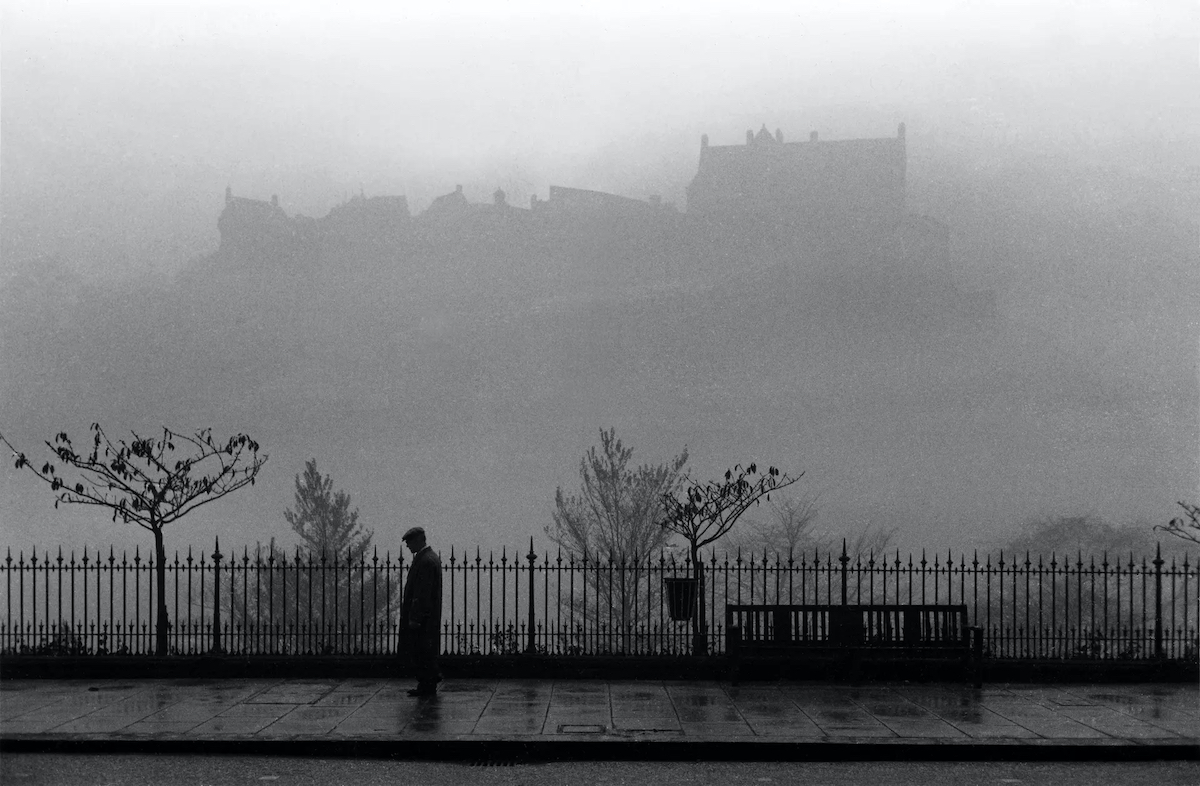
Edinburgh Castle from Princes Street, Scotland, 1960, photo by Robert Blomfield.


Sparty Lea retweeted

Neither man could possibly have imagined that just one generation later, Europe would be defending itself against both of their future successors.
What is happening is truly unfathomable.

Sparty Lea retweeted

I am a member of the Norwegian Nobel Committee.
There are five of us. Five people, appointed by a parliament most of the planet could not find on a map, who decide, once a year, which human being the world has agreed to call good.
I know. I know. I think about it on the tram.
We meet in a building on Henrik Ibsens gate, a street named after a man who wrote almost exclusively about people discovering they are frauds, which nobody on the committee finds funny except me. There is a room with a long table and the portraits of the dead laureates looking down, Mandela, the Dalai Lama, a great many earnest men in spectacles, and one portrait we do not discuss, which is Kissinger, 1973, awarded while the bombs were still falling, after which two of our predecessors resigned and the satirist Tom Lehrer said political satire was now obsolete. We keep him on the wall. A reminder. Every family has the uncle.
It is October in Oslo, which means the sun gives up around four in the afternoon like a civil servant, and it rains the particular Norwegian rain that isn’t quite falling, just hanging there, judging you. I arrive with wet shoes. I always arrive with wet shoes. There is coffee, because this is Norway and there is always coffee, we drink more of it per person than almost anyone alive, and someone’s wife has sent kanelboller, the cinnamon buns, and we sit, five Norwegians, damp, caffeinated, sugared, and we decide the moral standing of the entire species.
Let me tell you how it actually works, because the world imagines a cathedral and it is, I promise you, a book club with a mandate.
287 nominations this year. 208 people, 79 organizations. Anyone can nominate, that’s the secret nobody understands: a professor, a parliamentarian, a former laureate, so the “nominee” list is meaningless, it’s a suggestion box, and every autumn some congressman nominates his own golden retriever and the press writes “SHORTLISTED.” Nobody is shortlisted. There is no short list the public ever sees. There is us, and the coffee, and the rain, and the portraits, and a Norwegian stubbornness that is older than the prize itself.
We read reports. The institute’s advisers write them, thick dull documents, and we argue. Our chairman told the BBC once that in the final meeting “there is a high temperature.” High temperature, for a Norwegian, means someone slightly raised an eyebrow and then apologized for it. We don’t do high temperature. We do a long silence, and then Kristin says “well,” and everyone knows exactly what “well” meant, and it’s settled. That’s our shouting. “Well.” You’d have to be raised here to hear the violence in it.
Now. This year. I will not say the name, because we never say the name, but you know the name.
A certain head of state wanted this prize the way a child wants a thing in a shop window, which is to say loudly, and in public, and with the full belief that wanting it was itself the argument. He said he deserved it. He said he’d ended eight wars, a number that grew most times he said it, like a fish. He had other heads of state phone us. Israel’s prime minister posted it on the internet, “Give him the Nobel.” The leaders of Cambodia and Pakistan announced they’d nominated him, as though announcing it were part of it, as though we tally mentions. A man flew around the globe collecting endorsements for a Norwegian committee the way you’d collect signatures for a petition to the council about a noisy dog.
And here, uff da, is the detail I treasure, the one that makes me smile into my coffee. The nomination deadline is the 31st of January. He took office on the 20th. So for all the phone calls, all the posts, all the gilded lobbying, the only nominations that could possibly count for this year’s prize were filed in the first eleven days of his term, before he had, by his own arithmetic, ended a single one of the eight wars. He campaigned all year for a prize whose window had shut while he was still hanging up his coat. We didn’t have to reject him. The calendar did. We just watched. Norwegians are very good at watching. We have long winters.
People think we sit there weighing his deeds. We don’t. That’s the thing I can’t make the world understand. We’re not grading his homework. We don’t owe anyone the prize for a ceasefire, however real, however loud the announcement. “He made peace” is not a sentence that ends in a medal, the way he believes it does, the way he believes every good thing ends in his name on it. The will of a dead Swede says the prize goes to whoever did the most for fraternity between nations. A dead Swede, I should add, who made his entire fortune inventing dynamite and selling arms, and spent his last years horrified at his own obituary, which called him a merchant of death, and so bought his way to immortality as a man of peace. The whole prize is one guilty arms dealer’s attempt to launder his name. We are, all of us, administering a dead man’s public relations. I find this clarifying. It keeps me humble. It should keep everyone humble, and it keeps, by my count, no one humble at all.
So who did we give it to?
An eighty-five-year-old woman. A judge. Born in Durban, under apartheid, granddaughter of a Tamil man who came to South Africa as indentured labor, a bus driver’s daughter from the poor Indian quarter, who became the first non-white woman to run a law practice in her province, who defended Mandela’s people when defending them was dangerous, who sat on the Rwanda tribunal and the court at the Hague, and who, at eighty-five, is right now a judge weighing whether a genocide is a genocide. When we told the world, our chairman said the rule of law “underpins the system we have set up to ensure peace,” and that “peace requires justice.” She wasn’t even in Oslo. She was in Nuremberg. In courtroom 600. The actual room where they tried the Nazis. You cannot stage that. God staged that, and God, it turns out, is a better satirist than any of us.
She did not phone us. She did not post. No prime minister demanded it for her on the internet. She had, as far as our deliberations are concerned, the one qualification the loud man could never manufacture, which is that she wanted the work and not the medal. The medal finds those people. It flees the ones who chase it. This is not a rule we wrote. It’s just the only pattern the hundred-odd years of our mistakes has ever shown.
The reaction from across the ocean was immediate. His spokesman posted that we “place politics over peace.” Ja. Perhaps. We’re five damp pensioners in a rainy city; of course it’s political, it was always political, it was political when we gave it to a sitting American president nine months into his first term for the promise of things he had not yet done, and we have been quietly embarrassed about that one for fifteen years, so believe me, we had a particular reason this year to prefer a woman with fifty years of verdicts behind her over a man with eight wars in front of him and a deadline already behind him.
Here is what he will never understand, the thing I’d tell him on the tram if he ever took one. We are the one prize he cannot buy, cannot post his way to, cannot have a friendly dictator phone in for him. Not because we’re incorruptible, nei, we’re as vain and wrong and human as the portraits on our wall. But because the entire point of the thing, the only power a small cold country’s book club has ever held, is that it goes to the person not performing the wanting. The moment you demand it, you’ve proven you don’t understand what it’s for, and proving that is itself the disqualification. He ran the most expensive campaign in the history of the prize and the campaign was the reason. He was never losing to Navi Pillay. He was losing to the concept.
It’s dark now. Four o’clock dark. The buns are gone. Kristin said “well” an hour ago and we all went home. I’m on the tram with my wet shoes, and somewhere across the water a very powerful man is explaining to a camera that the prize is rigged, that we’re corrupt, that he’ll win it next year, and he genuinely might, we’re only five idiots and we’ve been wrong before, Kissinger is still on the wall.
But not this year. This year an old woman in Nuremberg, in the room where the law once stared down the exact kind of man who thinks wanting a thing loudly enough should make it his, got a phone call she didn’t ask for.
That’s the job. We don’t reward the man who ends the war and announces it.
We reward the woman who spent fifty years deciding what a war was.
He’ll never see the difference. That’s rather the whole point of him.
Takk for i dag. I have to change trams.
Sparty Lea retweeted

No one painted water like Frits Thaulow.
Just look at the river in this painting: it feels like it’s really moving, catching the light and swallowing it at the same time. He painted it in 1892 and called it Water Mill, a picture that does the hardest thing in all of art… it makes water look alive.
What made him so extraordinary is that he could paint several kinds of water at once: the pale reflections of the buildings on the surface, the green tint of the water itself, the ripples running across the top, and the rocks sitting on the bottom, all of it layered together, melting into one another the way real water actually does.
Most painters can manage one of those things. He gave you all four in a single glance.
Thaulow was Norwegian, born in 1847, and he grew up in a country made of fjords, rivers and waterfalls, and he chose to spend his life on the single hardest subject a painter can attempt, the one thing that will not sit still and will not hold a shape. And in doing so, he made the fleeting beauty of water eternal...

Sparty Lea retweeted

👻 I do love it when I stumble across the ghost of a house within a house - here at Much Wenlock - time and continuity in wood, bricks and mortar.

Sparty Lea retweeted

Since automatons are in the news today. Have you ever heard about the Silver Swan?
It was made over 250 years ago. Over 2000 individual parts/pieces. No modern power. Just incredible brilliance and craftsmanship.
Amazing.


Sparty Lea retweeted

9th October 2014
An intrepid cyclist sets off from Sidney Sussex College in heavy rain. Picture from my book 'Cambridge - Town & Gown'. Available at cambridgebooks.co.uk/cambrid… and all bookshops.

Sparty Lea retweeted

In the 'The Lustre Bowl,' (1908) William Nicholson plays with the shining contrast of the bowl against a dark black background. He would set up a still life and leave it untouched for days, absorbing every element. The flash of light lifts the picture out of the ordinary.

Sparty Lea retweeted

The late Anglo-Saxon west doorway at Holy Trinity Church in Colchester. Dating to the mid-11th century, the doorway incorporates re-used Roman bricks. 📸 My own. #AdoorableThursday #HolyTrinity #Colchester

Sparty Lea retweeted

One of the oldest buildings on Sunderland's Wear waterfront – the Roseline Building on Wylam Wharf is a Grade II-listed late 18th-century former bonded warehouse.
#sunderland #historicbuildings #floodlit #october #autumn #photography


