

Associate Professor, FESC, FEHRA, Cardiac Electrophysiologist, Sports Cardiologist, Editorial board JICE, Surfer and Kitesurfer 🏄🏽♂️, Sarcoma Survivor
Martinique
Joined December 2017
- Tweets2.3K
- Following550
- Followers2.2K
- Likes5.7K
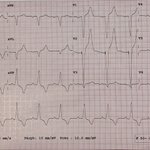


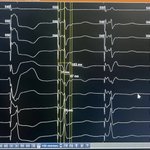
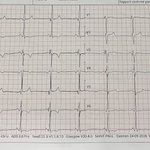


Agreed 👍 The AP and the AVN do not conduct very well. There are different degrees of fusion on the ECG.
With pleasure! No it wasn’t a Mahaim. Non decremental conduction. I don’t have all ECG available yet. Some are on a LinkedIn post
It’s possible that she’ll be paced >40%. Main argument was to find a solution during the same procedure. What would you have done? LBBP? This is the paced ECG

Thx for your answer! Anterograde ERP was 580, retrograde 420 ms. Unfortunately I didn’t test w isoproterenol. I ablated the AP as 1) AP conduction is not reliable 2) to prevent tachycardia in the future. The pat needed a pacemaker but the decision to ablate is surely debatable.

Would you have ablated this AP, #EPeeps? 68 y/o lady + syncopes + WPW, but a very slowly conducting AP. AP block at 600 ms during IAP. Ablation unmasked LBBB, AV conduction disease with AH 100 ms and paroxysmal complete AV block. AP ablated + Micra AV implanted.


Thank you, Dr Warren “Sonny” Jackman for sharing your extensive experience in another great webinar on accessory pathways! It’s a true delight to listen to someone who still practices the beautiful art of electrophysiology!

#Epeeps Sandwich 🥪 ablation of symptomatic LV summit PVC: earliest signal -30 ms before QRS in both, LVOT and GCV. LV ablation (40 W) supressed PVC, subsequent recurrence. Sandwich ablation from GCV eliminated PVC w 1st pulse (20 W). 1 min fluoro. Happy patient


In this case of loss of LBB capture after a previous procedure, we tried CS first but didn’t succeed. Then, this position of LBBP was the 1st attempt. I implant often a bit more midseptal and sometimes more inferior (LIFP) than described by Huang ➡️ less TR, easier implant
Thank you. “Fortune favors the prepared mind” 🤓 (Pasteur). In this case, fusion of LBBP and intrinsic AV conduction to the RV first helped to create this slim QRS. This is the QRS with VVI pacing

The QRS is beautiful isn’t it? It could be HBP but it isn’t. You can see the pacing lead in the middle of the septum. The QRS is so narrow because of fusion of LBBP avd intrinsic AV conduction to the RV. Therefore you don’t see a Qr in V1 as in VVI pacing during the implant


Andreas Müssigbrodt retweeted

Leadless Pacemaker, Right Ventricular Pacing Burden, and Heart Failure #OpenAccess
@Hidehiro_1986 @PrashSanders
heartrhythmjournal.com/artic…

#TLE in a 72yo for recurrent #Enterococcus bacteremia (3 relapses despite antibiotics; PET neg). 20yo passive-fixation RV, 20 yo RA lead & 10yo RV lead. Difficult extraction from above. A combination of Micra sheath + FARAWAVE steerable sheath + needle eye snare changed the game
Unusual case of atypical #AVNRT in 12 yo boy from a neighboring island 🏝️
with daily episodes of
palpitations. 2/1 and 1/1 conduction. Procedure done with only 3 s fluoroscopy (to visualize the Agilis guide wire). Cautious ablation of RIE & LIE of SP #Epeeps #Cardiology


Today I have seen this elderly lady in our outpatient clinic. She’s doing fine. No signs of infection. Good electrical values of the #Micra pacemaker.
