

Ecological Research publishes original papers on all aspects of #ecology, in both aquatic and terrestrial #ecosystems. ©The Ecological Society of Japan
- Tweets3.1K
- Following42
- Followers1.3K
- Likes1.9K




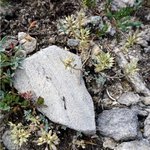

ALT Graphical abstract: The manuscript presents the first analysis of soil algae in serpentine soils. This study identifies 19 taxa, including two globally rare species, contributing valuable insights into the biodiversity of ultramafic environments.

ALT Graphical abstract: In a greenhouse experiment using the endemic shrub Metrosideros laurifolia, we compared the functional effects of AMF community extracted from a disturbed soil restored 20 years ago with that extracted from a reference soil corresponding to a bordering dense shrubby maquis.

ALT Graphical abstract: Plant-derived signaling compounds mediate ecological interactions among plants, herbivores, their natural enemies, and neighboring plants. This graphical summary highlights three approaches to leveraging such ecological interactions for environmentally benign pest management: (1) Recruitment of natural enemies: Using herbivory-induced plant volatiles (HIPVs) to attract parasitoids and predators from the surrounding area to target locations such as greenhouses and open fields, to suppress herbivore populations; (2) Plant–plant communication: Using plant–plant communication where intact plants perceive HIPVs or artificially damaged plant volatiles (ADPVs) to prime their defenses, resulting in reduced herbivory and increased crop production; and (3) Exogenous application of signaling compounds: Applying plant hormones and related compounds—such as jasmonic acid (JA), methyl jasmonate (MeJA), methyl linoleate (MeLin), cis-jasmone, prohydrojasmon (PDJ), salicylic acid...


ALT Graphical abstract: Across tree species, coordinated structural and functional traits link leaves and branch wood. Native species have denser leaf and wood tissues and higher dehydration-resistant branches, whereas invasive species have less dense leaf and wood tissues and lower dehydration resistance. This study provides a trait-based framework to predict shifts in forest composition under climate change in oceanic islands.

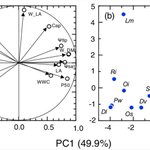
ALT Graphical abstract: Populations of closely related Epimedium taxa inhabiting serpentine and limestone soils converged toward resource-conservative leaf trait syndromes despite strong differences in soil chemistry. Structural equation modeling revealed that edaphic variation was associated with leaf trait variation both directly and indirectly through shifts in leaf elemental composition. This study highlights multiple pathways linking edaphic heterogeneity to convergent resource-conservative leaf trait syndromes across serpentine and limestone soils.

ALT Graphical abstract: The botanical gardens of Osaka Metropolitan University (OMU botanical gardens) have a unique study site, which exhibits 11 types of Japanese forests for more than 60 years. Here, we report tree census data measured at this “forest types common-garden-experiment” which consists of five evergreen forests, three deciduous forests, and three coniferous forests.


ALT Graphical abstract: This study investigated how habitat structure gradients are associated with frog species richness and occupancy in a naturally heterogeneous Atlantic Forest mosaic. We found that frog richness and occupancy patterns varied among ecological guilds and were highest in sites associated with lower values of the habitat structure gradient, which also contained important habitat resources such as bromeliads and temporary ponds. Our results suggest that habitat structure and resource distribution jointly shape amphibian community patterns and highlight the importance of maintaining diverse habitat mosaics for conservation.

ALT Graphical abstract: We experimentally demonstrated that a cyclopoid copepod, Thermocyclops taihokuensis, can function as a planktonic scavenger in freshwater ecosystems. T. taihokuensis actively approached and attacked cladoceran carcasses and was attracted to carcass-derived chemical cues, indicating that chemical cues are key for detecting carcasses. These results suggest that T. taihokuensis contributes to both grazing and detrital food chains.
ALT Graphical abstract: We experimentally demonstrated that a cyclopoid copepod, Thermocyclops taihokuensis, can function as a planktonic scavenger in freshwater ecosystems. T. taihokuensis actively approached and attacked cladoceran carcasses and was attracted to carcass-derived chemical cues, indicating that chemical cues are key for detecting carcasses. These results suggest that T. taihokuensis contributes to both grazing and detrital food chains.


ALT Graphical abstract: Odontarrhena orbelica, a rare endemic species from marble area in the Pirin Mountain (Bulgaria). It is one of the small number Odontarrhena species without known ultramafic populations. O. orbelica showed Ni concentrations < 465 mg kg−1 in roots, < 142 mg kg−1 in stems, and up to 193 mg kg−1 in leaves when cultivated on ultramafic soil. This is an Ni excluder, incapable of accumulating Ni in aboveground tissues, in contrast to O. decipiens and O. muralis grown under the same soil and experimental conditions.

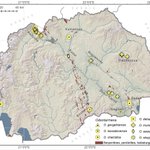
ALT Graphical abstract: This study assessed Ni hyperaccumulation potential, organ-specific partitioning, and soil–plant relationships in seven Odontarrhena species of the O. muralis group across ultramafic sites in North Macedonia. All investigated species occurring on ultramafic soils showed clear Ni hyperaccumulation, with leaf concentrations exceeding 25,000 mg/kg in O. skopjensis and O. chalcidica. Nickel accumulation followed a consistent organ-specific pattern (root < stem < leaf), indicating preferential allocation to aboveground tissues. These findings highlight the importance of intrinsic physiological regulation and tissue-specific sequestration in shaping Ni hyperaccumulation, reinforcing the role of Odontarrhena species as key functional components of ultramafic ecosystems in the Balkans.

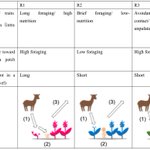
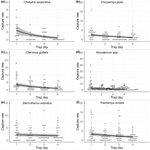
ALT Graphical Abstract: Freshwater turtles are commonly surveyed using baited traps, yet behavioral responses may bias demographic estimates by altering capture rates over time. Using data from 102 wetland sites in North Carolina, we found significant declines in capture rates across multi-day trapping periods for 5 of 6 species. These results demonstrate that species-specific behavioral responses can rapidly influence capture probability, highlighting the need to incorporate temporal and behavioral dynamics into survey design and analysis.

ALT Graphical abstract: Objective: To elucidate plant nutrition strategies by comparing the ionomes of plants from solfatara fields (highly acidic soils) and non-solfatara fields. Key Finding: Ionomic profiles were classified into Al-accumulator and non-Al-accumulator groups rather than by field type.

ALT Graphical abstract: Heavy metals can move from soils to plants and insects, influencing trophic interactions in terrestrial ecosystems. This review synthesizes evidence on the bioaccumulation, trophic transfer, and elimination of metals in soil–plant–insect food chains, highlighting key gaps relevant to ecological risk assessment.

ALT Graphical abstract: This study highlights the complex interplay between soil geochemistry and moisture availability in shaping microbial communities within wetter and drier serpentine and non-serpentine biological soil crusts. It demonstrates that both factors influence the structure of nitrogen-cycling microbial communities and the processes they mediate.

ALT Graphical abstract: We question why Picea glehnii dominates serpentine forests in Hokkaido. First, based on functional trait measurements and a comparison with another coniferous species present in the region, Abies sachalinensis, we report preliminary results consistent with better adaptation of P. glehnii to serpentine soils. We then discuss other non-exclusive hypotheses, based on the literature and observations of regeneration microsites, to provide a comprehensive view of the potential mechanisms involved. Adaptation to soil disturbance and the release of negative biotic interactions on serpentine soils in blowdown areas, promoting successful colonization and regeneration of P. glehnii, are likely complementary drivers. Finally, we propose future research directions to test these hypotheses and clarify the preferential distribution of P. glehnii and A. sachalinensis on different substrates.

ALT Graphical abstract: Potentially toxic metal(loid)s (PTMs) bioaccumulated across a plant-herbivore-predator food chain. Irrespective of soil concentrations, female crickets actively selected PTM-enriched leaves, while predatory mantids showed no developmental impairment. Trophic transfer of PTMs was rather influenced more by a function of intrinsic species traits than by environmental exposure.