

We're a charity that gives young people the skills to think and speak for themselves about current affairs through high-quality, topical discussions.
London, UK
Joined May 2014
- Tweets5.4K
- Following752
- Followers2.3K
- Likes2.4K




Pinned Tweet
@TheEconomist has launched a major Christmas campaign in support of The Economist Educational Foundation. Our joint aim is ambitious: to raise over £100,000 to help us reach one million young people globally by 2026.
Our Topical Talk programme empowers young people across the world to develop critical thinking and communication skills through informed discussions about the news. In a world challenged by AI, algorithms and rising geopolitical tension, these skills are essential for the next generation.
The Economist's journalists have been out into schools, interviewing Topical Talk teachers and students across the world. Check out:
👉 The special article in the Christmas double issue
👉 The new video featuring Topical Talk students from across the world
👉 A feature on a special episode of The Intelligence podcast
If you believe young people should be empowered to think for themselves – we’d love your support.
Watch our new video, share our post and donate if you can using the link below. Every contribution helps transform children's lives.
Donate now: bit.ly/4ap1AXd
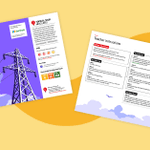
More than 130 countries have committed to reaching net-zero carbon emissions. To help get there, many governments are exploring electrification projects that meet growing energy demand with cleaner, more reliable infrastructure. But these projects have to be built somewhere, and the people who live nearby may not always agree with the plans.
When national goals clash with local concerns, whose views should count most?
Download for free: talk.economistfoundation.org…
These teaching resources are supported by @iberdrola. The Economist Educational Foundation maintained full editorial control.

We’re proud to have won silver in the ‘Best Educational Programme’ category at the Corporate Engagement Awards, for our partnership with The PA Foundation.
This past school year, our partnership reached more than 23,000 students aged 10–16 around the world. More than 4,400 students joined our live lessons, and four of the six STEAM lessons we co-created ranked among the 15 most downloaded on Topical Talk. Together, they help young people build four essential skills: speaking, listening, problem-solving and creativity.
None of this would be possible without the incredible team at the PA Foundation. Their experts brought engineering and science to life in our live lessons, and their volunteers inspired students at workshops in London and at PA’s Global Innovation and Technology Centre.
Thank you to everyone at @PA_Consulting, and to Communicate Magazine for the recognition. We’re excited about what comes next.

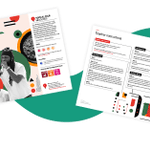
From Afrobeats and African fashion to viral dances and food, black culture is enjoyed all around the world. But when cultural ideas become commercially successful, who gets the money – and who gets the credit?
In this lesson to celebrate Black History Month, students will explore how cultural ideas are shared and what makes that sharing respectful or unfair.
Download for free: talk.economistfoundation.org…

🌍 Give your students the opportunity to connect with classrooms around the world in our live lesson on October 22nd!
As part of Leadership for Change 2026, students will explore loneliness, friendship and human connection through lively activities, polls and discussions with peers around the world.
They’ll also hear from two brilliant guests: @nyckdevries, champion racing driver, and David Gradon, founder of The Great Friendship Project, and have the chance to ask them questions.
📅 Join us at 10am BST / 9am UTC or 2pm BST / 1pm UTC.
Sign up for free: bit.ly/4zsyqQ3

World Mental Health Day is this Saturday 🌍
Keeping up with the news can help us understand the world – but what happens when it starts to feel overwhelming?
Our free lesson on doomscrolling gets students thinking about how the news makes them feel, why negative stories can dominate what they see and how they can develop healthier news habits.
And if you’re exploring this year’s theme of loneliness, friendship and human connection, discover our Leadership for Change programme too.
Explore both for free 👇
Doomscrolling: bit.ly/3UfZGST
Leadership for Change: bit.ly/4ymHh5r
Can technology bring us closer – or push us apart? 📱
In Lesson 3 of Leadership for Change, students put technology on trial, exploring how it can shape social connection. They’ll hear expert views, weigh up the benefits and risks and use evidence to build and present their arguments.
Download the lesson for free: bit.ly/4hQDHdf
These teaching resources are supported by @ROLEX. The Economist Educational Foundation maintained full editorial control.

The Current Affairs Education Commission is convened by The Economist Educational Foundation, which works with schools around the world to help young people think critically and communicate effectively about complex current issues.
Next in our series is Flora Letanka, CEO of the Foundation.
Having previously held senior leadership roles at Teach First and started her career as a History and Politics teacher in London, Flora has long focused on ensuring young people from all backgrounds have access to the knowledge, confidence and communication skills needed to navigate a changing world.
Read more about the Commission here: bit.ly/47gl7WQ

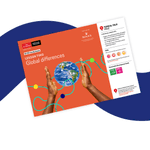
What makes people feel connected – or lonely? 🌍
In Lesson 2 of Leadership for Change, students explore how geography, culture and income can shape loneliness and social connection. They’ll hear first-hand experiences, explore global differences and think about what could be done to tackle loneliness.
Download the lesson for free: bit.ly/4dwXRrp.
These teaching resources are supported by @ROLEX. The Economist Educational Foundation maintained full editorial control.

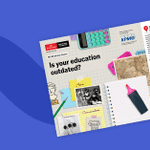
In July 2026 British Prime Minister Andy Burnham proposed that some students could start technical and vocational training from age 14, putting the question of what and how young people should learn back in the headlines.
As technology, jobs and society continue to change, should education change too?
This lesson was supported by @KPMG.
Download for free: bit.ly/4d4OTRY

How do we prepare young people for life online?
From doomscrolling and social media to AI, misinformation and online influencers, our Digital Literacy bundle helps students explore the opportunities and challenges of the digital world through evidence, discussion and debate.
Discover the free lesson bundle: bit.ly/4y8AAnN

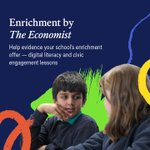
New enrichment requirements? We've got you covered.
Topical Talk is a free, ready-to-teach enrichment programme designed to help students explore the world's biggest issues while building oracy, critical thinking and media literacy.
Whether you're planning a weekly news club or looking to strengthen your wider curriculum, we've created practical guidance to help you get started.
Explore our enrichment resources: bit.ly/4iIdT4S

Climate change is more than one lesson.
From renewable energy and fast fashion to future foods and overtourism, our Environment lesson bundle helps students explore some of the defining environmental challenges of our time through discussion, debate and critical thinking.
Explore the free bundle: bit.ly/4cnPnlN

One of our biggest programmes of the year returns in one week.
Free lessons. Exclusive teacher support. A live global lesson. And the chance to get published in The Economist.
Created in partnership with @Rolex
Register your interest today.

More than one million children took part in Topical Talk discussions last academic year.
Thank you to every teacher who helped make that possible.
If you're new to Topical Talk this September, there's never been a better time to join our growing global community of classrooms discussing the news.
Explore the resources: bit.ly/3zXxze3
Ready to return to school?
Leadership for Change combines five ready-made lessons, a live global event and a prestigious writing competition exploring one of today's biggest challenges.
Created by The Economist Educational Foundation in partnership with @ROLEX.
Learn more:

The Current Affairs Education Commission brings together perspectives from across education, research, media and youth engagement.
Next in our series is Emma-Louise Amanshia, broadcaster and presenter best known for her work on BBC Newsround.
Through her reporting on major global stories for children and young people, Emma-Louise has extensive experience communicating complex issues in accessible, engaging and age-appropriate ways. Alongside her broadcasting work across TV and radio, she brings valuable insight into how young audiences experience news and current affairs today.
Read more about the Commission here: currentaffairscommission.com…

Should social media be banned for under-16s?
Countries around the world are taking very different approaches to protecting young people online.
Some have introduced age restrictions, while others are pushing platforms to strengthen safety features instead.
Explore the evidence, compare global responses and help your students decide: what's the fairest approach?
Download our free lesson: bit.ly/4qONWT7
Ready to return to school?
Leadership for Change combines five ready-made lessons, a live global event and a prestigious writing competition exploring one of today's biggest challenges.
Created by The Economist Educational Foundation in partnership with @ROLEX.
Join the mailing list: bit.ly/45Nbgr1

A new school year is just around the corner.
Over the summer, our team has been preparing dozens of free, ready-to-teach lessons to help you kick-start classroom discussions this September.
From AI and social media to climate change, economics and global politics, we'll be sharing new resources, teacher stories and practical ideas over the coming weeks.
Stay tuned!
It was fantastic to be part of such a brilliant line-up at the Wellington @EducationFest.
Our CEO, Flora Letanka, explored the role of current affairs in the curriculum and how schools can approach the news with confidence.
It was brilliant to see so much appetite for the discussion. Thank you to everyone who joined us and we look forward to next year!
View our resources: bit.ly/3zXxze3
