
Global boutique investment firm. India & global strategies across equities. Fundamental today, evolving into quant and multi-strategy investing.
Mumbai/London
Joined August 2025
- Tweets24
- Following4
- Followers25
- Likes7






Pinned Tweet
Why Iran's Hormuz toll proposal isn't bluster
Hormuz carries 21 mb/d of oil and LNG
Total bypass capacity: ~5–6 mb/d
The remaining ~15 mb/d has nowhere to go
That gap is the leverage

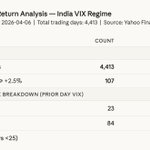
We ran @VivekVRao1's SPX/VIX study on NIFTY 50
When India VIX was ≥25 the prior day:
NIFTY ≥ 2.5% happened 10.69% of days vs 0.63% otherwise → 16.9× more likely

Rational Equity Partners retweeted

Oil will make a killing comeback, brace for stagflation across the board
1.America is the world's largest oil exporter and is incentivised to keep prices elevated. American shale needs roughly $60-70/bbl to justify new drilling. A Trump administration that ran on "energy dominance" has zero motivation to crash the price of its most important export.
2.America is doubling LNG export by 2030 (invested heavily) - it needs to make returns on it.(Forcing Europe to buy (Europe signed a $750bn US energy contract. That dependency is now structural) maybe India too)+ New US LNG terminals lock in buyers for 20 years.
3.1.4 trillion dollar underinvestment in drilling/exploration in the last decade (IEA data). ESG pressure, energy transition narratives, and volatile prices gutted capex in new oil development.
4.$100 nominal isn't $100 real. After years of inflation in steel, labour, drilling services, and capital costs, the breakeven for new supply is structurally higher (Lower purchasing power of the dollar).
5.Iran's barrels are sanctioned, targeted, and largely offline (No resolution in sight, even a US Deal would mean 1-2 years of uncertainty around this).
6.Rebuilding bombed energy infrastructure (entire Middle East) takes years and a lot of money, hence demanding higher prices through deliberate supply cuts from OPEC, longer-term contract negotiations.
7. AI needs a lot of energy (10% of America’s demand in the next 2-3 years)- while the US government will try to protect the domestic consumer (through at-the-pump subsidies + mandating AI datacenter captive solar or PPAs with behind-the-meter gas players (example Bloom) - it will push demand for energy globally.
8.Shadow fleets are being seized, sanctioned, and denied insurance. Those grey market barrels are disappearing (Russia + Iran + Venezuela).
9.Nordstream (Russian gas pipeline to Europe) was destroyed (people conspire it was the US to force Europe to buy gas from the USA) - now at 47%+, Ukraine has attacked Russia’s major export ports with heavy damage (40-60% of Russia’s oil exports are out of the market in the last week) - Ukraine (US proxy) will continue to attack oil and export infra till a deal is reached.
10.IEA has pushed the peak oil demand timelines from the 2030s to the 2050s.
Every chokepoint toll in history earned revenue for exactly as long as the bypass didn't exist
Parthians: 400 years, then Rome found the sea route
Danes: 428 years, then multilateral buyout
Ottomans: 480 years, then WWI ended it
Suez and Panama exist because they ARE the bypass


Interesting commentary from a smallcap IT services earnings call
Mgmt says enterprise clients are facing “AI tool fatigue” — they bought multiple AI/SaaS tools, ran pilots, expanded licenses… but outcomes haven’t materialized.

Tool fatigue increases the value of downstream services:
integration, orchestration, vendor consolidation, data plumbing, workflow redesign.
When DIY AI fails, enterprises outsource accountability.
That could favour AI-Augmented IT players
Everyone asks: Will AI disrupt enterprise software like ServiceNow/Salesforce?
But there’s a second-order layer people ignore: Indian micro/small-cap IT services firms that derive 20–50% of revenue from these ecosystems.
Their growth rides on platform license expansion.
Economics of the wedge:
$1 of enterprise software license → $4–6 of downstream services
But the real value is what follows Once inside, they grow wallet share far beyond the platform itself.
Platform work = beachhead for multi-year revenue streams.
India’s IT sector is saturated with AI narrative.
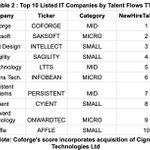
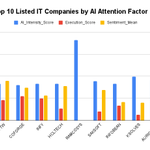
But when we studied what companies are actually doing — talent, delivery models, productivity, and economics — a very different picture emerged.
The next winners in Indian IT are not where most investors are looking 🧵👇

The strongest companies share three traits:
• Concrete AI deployments, not promises
• Short-cycle, engineering-led delivery
• Internal productivity gains before revenue re-rates
This combination is rare — and extremely powerful.