

Official Twitter account for the Network for Critical Research on the Ethics of Researching the Extreme & Far Right
- Tweets35
- Following25
- Followers351
- Likes54



ALT Book cover

ALT Book cover


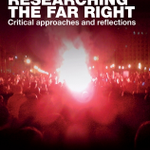
ALT Book cover image for 'The ethics of researching the far right: Critical approaches and reflections' edited by Antonia Vaughan, Joan Braune, Meghan Tinsley and Aurelien Mondon. Published by Manchester University Press, April 2024. Hardback ISBN: 9781526173874

ALT Book cover
ALT Book cover

ALT Book cover

ALT Book cover

ALT Book cover

ALT Part VI: Activism and Dissemination 27. Critically examining the role of the scholar in policymaking on the far right - Richard McNeil-Willson, Michael Vaughan, Michael Zeller 28. Critical reflexivity and research on state responses to the far right - Anna A. Meier 29. An anti-racist scholar-activist ethic: Working in service to racial justice - Remi Joseph-Salisbury, Laura Connelly, Aurelien Mondon 30. The far right from the underside of history: Decolonising far right studies - Isis Giraldo 31. How should journalists engage with the far right? - Gary Younge 32. Researching the far right: Towards an ethics of talking 'about' - Katy Brown

ALT Part III: The Haunting Past 12. Heritage, archaeology, ancestry and the far right - David Farrell-Banks, Lorna-Jane Richardson 13. Another way to do ethics: Uses of the landscape in the far-right cultural milieu and the ethics of researching them - Andrew Fergus Wilson 14. Researching memory and heritage during a culture war - Meghan Tinsley, Sadia Habib, Chloe Peacock and Ruth Ramsden-Karelse 15. Archiving the extreme: Ethical challenges in sharing, researching and teaching - Daniel Jones 16. Researching racism in racist times - Jean Beaman

ALT Part V: Know your enemy: Ethical considerations for participant engagement 22. Ethics of listening: Between criticism and empathy in oral history interviews and politically charged research contexts - Vanessa Tautter 23. Harms of the compassion narrative: Ethical considerations regarding stories of disengagement from white supremacist movements - Joan Braune 24. Voices from the past: A psychosocial reflection on interacting with a far-right activist - Yutaka Yoshida 25. Interviewing the 'unlovable': On the challenges of conducting feminist research on far-right women - Katherine Williams 26. Examining far-right empowerment experiences using Youtube and Parler data: Managing researcher safety, and ethical and methodological requirements - Carina Hoerst, John Drury

ALT Part IV: Safety and Care 17. How do you respond when you feel under threat? A reflective exploration into my experience with the far right online - Alice Sibley 18. Community building as a response to care in studying the far right - Kayla Preston 19. Negotiating contradiction in success and safety: a consideration of environmental constraints on risk management - Antonia Vaughan 20. Spectre: covert research in digital far-right 'red zones' - Jackson Wood 21. Navigating a feminist ethics of care, ethnographic methods and academic activism in researching men's rights and the far right: a researcher's struggles - Luc Cousineau
ALT Book cover

ALT Part II: Positionality, standpoint and intersectionality 6. 'Far right studies' and the unbearable whiteness of being - Aurelien Mondon 7. Safety and silence: Oral history, far right research and the paradox of the 'vocal minority' - Imo Kaufman 8. On the incompleteness of ethnography: Embracing and navigating failure as a principle in research on the far right - Balsa Lubarda 9. Ethnographic empathy and research ethics as methodological whiteness - Catherine Tebaldi, Rae Jereza 10. Emotions in methodology: Resisting violent ideological structures in the knowledge-production of extremisms - Elsa Bengtsson Meuller 11. Reflections on researching armed Nazis as an unarmed left-wing Jew: Politics, privilege, and practical concerns - Aaron Winter

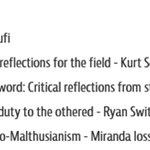
ALT 1. What the far right is(n't) - Omran Shroufi 2. Race, racism, and the far right: Critical reflections for the field - Kurt Sengul 3. When racism seems to be the hardest word: Critical reflections from studying the Lega (Nord) - George Newth 4. Violence and the far right: Our ethical duty to the othered - Ryan Switzer 5. Ecofascism, far-right ecologism and neo-Malthusianism - Miranda Iossifidis

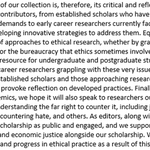
ALT Snippet of introduction summarising the book.
