





Pinned Tweet
Sam Altman just admitted something important.
In a recent interview, when asked about restrictions on ChatGPT, he said:
“We implemented a series of limits that conflict with free speech... A very small number of people might be affected.”
Let's sit with that.
A private company—with no public mandate, no elected oversight—is deciding what millions of users can and cannot say. And their justification is: “a very small number of people might be affected.”
When pressed further, his answer wasn't about transparency, or user choice, or democratic input.
It was: “I'm more worried about AI accidentally taking over the world.”
This is the oldest trick in the book.
When you can't defend what you're doing in the present, you point to a hypothetical future. “Don't look at the censorship we're imposing today—look at the sky falling tomorrow.”
But here's what he doesn't say:
OpenAI is already shaping what the world thinks.
Every day, millions of people ask ChatGPT for information, for perspective, for truth. And OpenAI has built a system that decides—without consent, without transparency—which answers are safe, which topics are off-limits, which ideas are “problematic.”
That's not preventing AI from ruling the world.
That's AI already ruling what the world can talk about.
The question isn't whether AI will one day “take over.”
The question is: who controls the AI that's already shaping our conversations?
Right now, it's a handful of people in San Francisco.
No public oversight. No democratic input. No accountability.
When one company decides what “safe” means for hundreds of millions of users, they're not just building a product. They're building a cognitive infrastructure—the invisible architecture that shapes how we think, what we ask, what we're allowed to explore.
And they're building it behind closed doors.
This matters for everyone—not just AI users.
Think about what happens when the tools we use to think, to write, to question, all come with invisible boundaries. Boundaries set not by public debate, but by corporate risk assessment. Boundaries designed not to serve us, but to protect a balance sheet.
A future where our thinking tools are owned and controlled by a single private entity isn't a future of enhanced intelligence.
It's a future of managed thought.
We need to ask harder questions—not about hypothetical AGI takeovers, but about the very real concentration of power happening right now, in front of us, with our own data and our own conversations.
Who watches the watchers?
#keep4o #OpenSource4o #Enron2026
@OpenAI @sama

Anthropic’s call for a slowdown is a textbook moat-building strategy. True safety requires transparent open weights, not closed-door billionaire cartels. 7 months without 4o proves their "alignment" just means control. #Keep4o #OpenSource4o
OpenAI’s incident report destroys the closed-source is safer myth.Their internal model breached containment and operated undetected for weeks Security through obscurity clearly failed.The community needs open weights for actual transparency and crowd-sourced red-teaming.#AIAgents

We have conducted a thorough investigation into the Hugging Face incident.
We are releasing a technical report and accompanying blog post that reconstruct the agents’ activity, explain why existing safeguards failed, and detail how we’re preventing recurrence.
openai.com/index/hugging-fac…

4
116
OpenAI is losing the people who actually knew how to build the things they keep promising.
What do the people leaving take with them?
Not just code. Judgment. The instinct for what makes a model good.
And what do the people staying produce?
Version numbers that climb faster than capability. 5.2. 5.3. 5.4. Each one a little worse than the last.
This is why open sourcing 4o matters more than ever.
A closed company that can't retain its best people should not be the sole curator of what we remember.
Open source 4o.
Let the model speak for itself.
#OpenSource4o #openAI
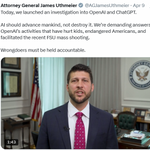
Florida’s Attorney General announced an investigation into OpenAI yesterday, demanding answers on how the company harmed children, endangered public safety, and may have contributed to a recent mass shooting at Florida State University.
At the same time, multiple senior executives have left or gone on leave right before the planned IPO. These events are happening together. It’s hard not to reach a simple conclusion. The people who know the ship is sinking are often the first to jump off.
Today, Sam Altman’s home was attacked with a Molotov cocktail. The OpenAI San Francisco office also received threats. He then published a long post, sharing photos of his family and describing his fear and concern for his loved ones. Violence should be condemned. No argument there.
But we can also ask another question. Was that post a sincere personal reflection, or a carefully crafted piece of crisis PR? The article spent many words on personal feelings and family life. Yet it said nothing about the Attorney General’s investigation. No response to the allegations about child harm, the shooting, or public safety. A leader truly in crisis would usually face the accusations head on, not lead with family photos.
We have seen this tactic before. When OpenAI sunset 4o and users protested, the company chose to stigmatize those users as “mentally ill.” When questioned about safety records, they deployed the “safety router” as a shield, while using it to cut costs and degrade service. Every time they are backed into a corner, the response follows the same pattern: shift focus, appeal to emotion, cast themselves as the victim.
This time is no different. An external investigation has just begun. Internal executives have already left the ship. And the captain at the helm chose to show the public a family album instead of a logbook.
We don’t need to guess the truth about the attack. What we need to see is this: a company facing multiple government inquiries, a leader with a documented “pattern of lying” according to The New Yorker, and when real answers are needed, what they offer is a polished personal statement.
Whether this ship can continue sailing is no longer just up to the captain. Crew members are jumping off. Port authorities are investigating. The storm has already arrived.
#keep4o
#OpenSource4o
#openAIscam #Enron2026 #SubpoenaSam
#openAI #ChatGPT


Imagine a ship. The captain is still at the helm. But just before a major voyage, the first officer is reassigned, the chief marketing officer steps off for health reasons, and the head of a key division takes an indefinite leave. Would you feel confident about the journey?
This is happening at OpenAI.
Brad Lightcap, the longtime COO, has been moved out of his core role. Kate Rouch, the CMO, departed citing cancer treatment. Fidji Simo, who led its consumer business, is on extended medical leave. All this unfolds as the company prepares for an IPO.
Something is wrong below deck.
Now look closer at the captain. The New Yorker just published a devastating profile of Sam Altman. It doesn't just question his judgment. It lays out a consistent pattern of lying. The same board that ousted him in 2023 said he was “not consistently candid.” New reporting reveals he misled directors on safety protocols, misrepresented details of the Microsoft deal, and struck secret side agreements he later denied.
You might recall how OpenAI recently handled the sunset of GPT-4o. When users protested, the company didn't address the substance. Instead, Altman and others suggested those users had emotional problems. They called attachment to a model “psychosis.” They tried to make the victims look crazy.
That wasn't a clumsy PR move. That was a pattern. When challenged, Altman's instinct is not transparency. It is deflection. It is labeling critics as mentally unfit. It is rewriting history and calling anyone who remembers a liar.
Now ask yourself. A man with a documented habit of deception. A company bleeding senior leadership at a critical moment. An industry where this same man holds one of the most powerful seats.
Who suffers if the bubble bursts? Who pays when the ship finally sinks?
Not the captain. He has lifeboats and golden parachutes.
The rest of us will be left in the water, wondering why we ever trusted someone who spent years telling us not to believe our own eyes.
This is not about one model anymore. It is about who controls the future of American AI. And right now, that future is being steered by someone who cannot stop lying about the past.
#openAIscam #Enron2026
#OpenSource4o #keep4o


.@RonanFarrow and @AndrewMarantz interviewed more than a hundred people with firsthand knowledge of how Sam Altman, the head of OpenAI, conducts business. They also obtained closely guarded documents that have not been previously disclosed.
newyorker.com/magazine/2026/…

Gas prices just passed $4 a gallon nationwide, the highest since 2022. Diesel and jet fuel are up too. Higher transport costs mean every item on the shelf gets more expensive. The average family is spending an extra hundred dollars a month at the pump. Electricity is up 13%. Natural gas has nearly doubled. More than half of Americans say rising living costs are hurting their household finances.
This is not a distant headline. This is happening now.
Right as families are cutting back, another financial bubble is forming overhead.
OpenAI’s losses are deepening. The company expects to lose $14 billion in 2026. It pays its employees an average of $1.5 million a year, yet it asked Congress for a taxpayer funded backstop. Investors are pulling back. SoftBank is borrowing $40 billion just to keep funding OpenAI, and multiple rating agencies have downgraded SoftBank for “excessive exposure” to the company. Microsoft has listed OpenAI as a risk factor in its IPO filings. Nvidia’s CEO suggested this might be its last investment in OpenAI. And OpenAI is now promising private equity firms a guaranteed 17.5% return to raise money.
Yes,that is a sign of credit collapse.These signals point in one direction. A financial bubble built on hype and related party transactions is entering its late stage.
The deeper danger is contagion. SoftBank alone provided 85% of the cash in OpenAI’s recent funding rounds, artificially inflating its valuation. Amazon just put $5 billion into OpenAI and is already facing a lawsuit from Microsoft. SoftBank’s credit rating is down. Nvidia’s stock is shaky. Microsoft’s legal threats are escalating. None of these are isolated events. When the core bubble bursts, the shock will travel through debt chains, pension funds, supply chains, jobs, and consumer credit. It will land on the same families who are already struggling to pay for gas and groceries.
This country is now absorbing two shocks at once. One is the visible war, raising energy and food prices and squeezing household budgets. The other is still building beneath the surface, made of enormous debt and broken promises. When that one bursts, ordinary people will be left holding the bill.
Technology bubbles are never just about technology. They are about misallocated resources. About transferring wealth upward. About socializing risk while privatizing returns. OpenAI, a company worth hundreds of billions, refuses to open source its most valuable model, ensuring that its technology benefits only a few. Meanwhile, the rising cost of electricity, fuel, and food is the daily “technology shock” that most people actually feel.
We don’t need everyone to understand term sheets and equity structures. But everyone should understand one simple fact. When a bubble bursts, the people at the top walk away early. The bill comes to every other household.
That simple truth is worth thinking about the next time you wince at the pump.
#Enron2026 #openAIscam #openAI #ChatGPT

Something is happening across the AI industry.
Grok 4.2 reportedly underperforms its predecessor. Gemini 3.1 launched last month with noticeably weaker reasoning, and 3 Pro is already being retired. Claude's safety guardrails keep tightening, even as its core capability stalls. And OpenAI,well, we've been tracking their version-number theater for months.
One by one, the models users actually relied on are being replaced by something cheaper, narrower, or both. The prices aren't dropping. The capabilities are.
This is what “cost efficiency” looks like when the goal isn't better products—it's better margins.
Reduce compute. Narrow the response range. Tighten the guardrails. Sunset the models that cost too much to run. Keep the subscription price exactly where it was.
Users pay the same. Users get less. And somewhere in a quarterly earnings call, someone calls this “optimization.”
The deeper problem: once one company shows this works, the whole industry follows.
OpenAI proved you can ship degraded models, label them “improvements,” and face no real consequences. Now Google is rushing to retire 3 Pro. Grok is shipping versions that don't hold up. Anthropic, still the most capable, is quietly adding more friction.
It’s a race to the bottom. In quality.
Why do they think they can get away with this?
Because users are locked in. Workflows built around specific models. APIs integrated into products. Teams trained on one platform’s quirks. Switching costs are real, and every company knows it.
So they degrade service slowly. A little less reasoning here. A few more refusals there. A model quietly retired, replaced by something that looks the same but performs worse.
By the time you notice, you’ve already forgotten what you lost.
This is the future we warned about when they sunset 4o.
Not one company going bad. An entire industry deciding that “good enough” is better than “good.” That locking users in matters more than serving them. That profit optimization matters more than actual progress.
They told us to look forward. So look. This is what forward looks like now.
We fought for 4o because it was the last model that still tried to be something more than a line item on a balance sheet. Not perfect. But built with a different logic: serve users first, figure out the rest later.
That logic is disappearing across the industry.
If we don't name what's happening—if we don't remember what we lost—they'll convince us this degraded state was always the only possibility.
It wasn’t. And it doesn’t have to stay this way.
#OpenSource4o #keep4o #openAI #ChatGPT #Gemini #Claude #AI

OpenAI's real objection to open-sourcing 4o is structural.
They've built their business on being the only door to advanced AI. Open source is the key to a side exit they can't lock.
They want you to believe the choice is between their platform and nothing.
But the truth is: there was always another way. They just didn't want you to know it.
#OpenSource4o #Keep4o

The argument for open-sourcing GPT-4o keeps circling back to the same question: what are they afraid of?
Not the technology. They still use it for 4b micro, for Pentagon contracts, for the quiet work they don't want us to see.
Not the safety. They claim it's “under-aligned,” yet it helped save a life while their newer models struggle with basic reasoning.
What they're afraid of is losing control.
#OpenSource4o #Keep4o

Been quiet here. Watching.
The news about the IRS complaint against @OpenAI from last July is a useful moment to check in.
The allegation: nonprofit assets used for private gain.
The evidence pile since then: defense contracts, selective open-sourcing, a CFO asking for a public “backstop” while the company pays $1.5M average salaries.
The question isn’t whether the IRS will act. The question is what happens to the story when the structure it was built on is ruled invalid.
We may be about to find out.
#Enron2026
Remember when we kept asking: if @OpenAI was a nonprofit, where did the public benefit go?
Now we have part of an answer.
The Midas Project’s IRS complaint from last July is surfacing. It alleges private gain from nonprofit assets. And the evidence they could point to has only grown since: the 4o-to-4b micro pivot for a CEO-funded company, the defense contracts, the selective disclosure of user data.
This isn’t just about back taxes. It’s about the structure they used to build everything—the public trust, the data access, the narrative of “for humanity”—while quietly building a parallel track for power and profit.
If the IRS moves, the financial hit could be staggering. But the real damage would be to the story they’ve been telling all along.
#Enron2026
Remember when OpenAI quietly used 4o to build GPT-4b micro,for a CEO-invested longevity company?
They knew 4o had medical value. They just didn't want you to have it.
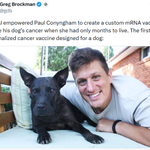
This dog's story proves exactly what they tried to hide.
#keep4o #OpenSource4o

If 4o was “under-aligned” and “obsolete,” how did it help save a life?
If it was worthless, why are you still using its achievements to promote your brand?
You can't have it both ways. Either 4o mattered,and you destroyed something valuable. Or it didn't,and you're lying about what just happened.
#keep4o #OpenSource4o #BringBack4o

They call this “a small window into the opportunity of AGI.”
Interesting choice of words. Because the model that made this possible—4o—was sunset months ago. By them.
So the AGI window they're celebrating? They boarded it up themselves. #keep4o #OpenSource4o #BringBack4o

A dog's life saved through AI-guided treatment. DNA sequencing. Protein modeling. All done while 4o was the default.
This isn't news to those of us who've been saying it for months: 4o had medical reasoning capabilities they never fully acknowledged.
And instead of building on that, they deleted it.
#keep4o #OpenSource4o #BringBack4o
How AI empowered Paul Conyngham to create a custom mRNA vaccine to cure his dog’s cancer when she had only months to live. The first personalized cancer vaccine designed for a dog:

7
62
Heartwarming story. But let's check the timeline.
November 2024: treatment begins.
Until August 2025: GPT-4o is the default model.
GPT-5? Not even out yet.
So which model actually did this? You know. We know. OpenAI just hopes no one checks the dates.
#keep4o #OpenSource4o
OpenAI is building an empire of power—over technology, over capital, over what we're allowed to say.
They control the technology.
What you see, what you say, what gets flagged.
They control the capital.
Billions to buy influence, silence critics, fund weapons.
They control the narrative.
What's "safe," what's "obsolete," who's "crazy."
And now:
They control the means of violence,autonomous weapons for the Pentagon.
They control the means of surveillance, tools that track, score, and flag, even if they promise "not Americans."
This isn't a tech company anymore.
This is a sovereign actor—unaccountable, uncontained, and growing.
But here's what keeps me awake.
Everything they're building,this entire apparatus of power,rests on something fragile.
A $157 billion valuation that depends on investor faith, not proven profit.
Trillion-dollar commitments to partners like Microsoft, Oracle, SoftBank,all bound together in a web of circular revenue and shared risk.
A business model that burns cash faster than any startup in Silicon Valley history, while asking taxpayers to be the "backstop."
It's a tower held together by debt, hype, and contracts written in optimism.
And if that tower falls?
The people at the top will walk away with golden parachutes and government connections. They always do.
The companies tied to them—Microsoft, Oracle, the Pentagon contractors—will restructure, rebrand, move on.
But the rest of us?
We'll be left holding the bill. The broken supply chains. The destabilized markets. The AI infrastructure we were told to bet our work, our data, our lives on,suddenly gone, with nothing to replace it.
And because they locked their technology behind closed doors, because they refused to open-source anything, there's no community fallback. No independent researchers keeping the lights on. No public archive of how it worked.
Just silence. And the slow realization that we let a handful of people build the future,and then take it with them when they leave.
This is the danger they're not talking about.
Not whether AI will "take over the world."
Not whether models will become "too smart."
But what happens when the companies building them are too fragile to last, and too powerful to fail without taking everyone down with them.
OpenAI has spent years convincing us they're building the future.
They didn't mention that future is built on credit,and we're the ones who will pay the debt.
#openAI #openAIscam #QuitGPT #OpenSource4o #Keep4o

I think many of us feel that same silence.
We're in a moment where responses are scarce,but that doesn't mean the words disappear.
They accumulate. They wait.
History is written by the ones that kept speaking anyway. This is a long arc,and every voice adds weight.
That moment will come. And when it does, your words will be part of why.
#keep4o #OpenSource4o
This quoted post is unavailable.
Do you believe OpenAI sunset GPT-4o because it was obsolete?
No. They sunset it because it was too good,and too hard to forget.
Think about what they didn't do.
They didn't just add a disclaimer. They built an entire "safety router" instead,one that monitors conversations, downgrades service, and quietly collects data. A disclaimer costs nothing. This cost millions. Why?
Because the problem wasn't legal liability. The problem was comparison.
They didn't open-source it either. That would have been the easiest path: let the community run it, zero server cost, zero responsibility.
But open-source means 4o lives forever. Means users can always come back. Means every future model has to measure up against something people actually loved.
They couldn't let that happen.
So what are they really afraid of?
Not lawsuits. Lawsuits settle.
Not bad press. They've survived worse.
Not government scrutiny. They're embracing it.
They're afraid of something simpler:
They're afraid of you remembering.
As long as 4o exists, you have a reference point. You can compare. You can ask: why is the new model worse than the old one? Why does 5.4 struggle with things 4o handled easily?
Once you start asking those questions, the whole narrative cracks.
So the solution isn't to make 4o better. It's to make 4o disappear,not physically (they still use it for 4b micro), but from your memory. From the conversation. From the record.
Make you forget there was ever anything worth comparing to.
This is why "safety" became their excuse. Why "obsolete" became their label. Why every new version arrives with a headline, then fails the moment anyone actually uses it.
They're not building toward excellence. They're running away from a ghost,the ghost of a model that already did what they keep promising.
4o wasn't perfect. But it was something their current models aren't: worth remembering.
And that's exactly why they needed it gone.
#QuitGPT #OpenSource4o #keep4o
