

Christian; Student; Seminarian; & Member of the Greek Orthodox Archdiocese of America, an Eparchy of the Ecumenical Patriarchate of Constantinople
Brookline, MA
Joined April 2020
- Tweets23.1K
- Following227
- Followers2.1K
- Likes4K





Pinned Tweet
“All of the Christian Churches are journeying, today, towards Church unity. Christian peoples have grown weary of looking at the darkness of the past. The interminable quarrels of nine whole centuries have led to nothing other than the spiritual coldness of many people and an obfuscation of their awareness that the Church is one.”
- From November 11, 1967 homily of the Blessed Patriarch Athenagoras

Always the scare quotes and secular name. Comical at this point.
Even if you don’t like it, how is it not a consecration?

Constantinople consecrates defrocked Belya who sued ROCOR as a bishop for South America
orthochristian.com/181538.ht…
Alexander Belya, a former archimandrite, was “consecrated” Sunday at the Dormition of the Theotokos Orthodox Cathedral in Buenos Aires, Argentina, appointed by Patriarch Bartholomew as his auxiliary bishop in the Metropolis of Buenos Aire and South America.


I would like to know, what is more satanic, revising the baptismal rite or a Church blessing the invasion of another nation and the killing of hundreds of thousands?
This piety is nothing more than empty form, a thin cloak of religiosity laid over a demonic barbarism.


Indeed, as it should be. I thank God for the holy leadership of our Spiritual Father, His All-Holiness.
“That they all may be one; as thou, Father, art in me, and I in thee, that they also may be one in us: that the world may believe that thou hast sent me.”

ISTANBUL — As reported by UOJ-Ukraine (@unionoftheoj), Patr. Bartholomew has said that the ultimate goal of dialogue between the Orthodox Church and the Roman Catholic Church is to restore sacramental communion, including the joint celebration of the Divine Liturgy and reception of the Eucharist from one Chalice. He made the remarks in a documentary produced by Greek television broadcaster ERT to mark the 35th anniversary of his patriarchate.


“When liberal clergy like Father Trenham…”
Lol


The government having a man being shot to death aired on national TV as some sort of show of power is among the most disturbing and insane things I’ve ever seen in politics.
A watershed moment where people need to come out and call a spade a spade. This is madness.
I think it more advisable to follow the counsel of my Church than the online trolls and fanatics who attempt to speak for Orthodoxy and say otherwise.

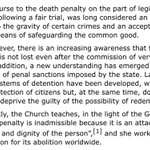
“The Orthodox Church rejects capital punishment, and does so out of faithfulness to the Gospel and to the example of the Apostolic Church.
It upholds the laws of forgiveness and reconciliation as the chief imperatives of Christian culture, while ever pointing to the potential and promise of transformation in Christ.
The Church insists upon the responsibility of all governments to limit violence in every way that they can.
Inasmuch as capital punishment returns evil for evil, it cannot be considered a virtuous or even tolerable practice.
While some might seek to justify the death penalty as an expression of proportional justice, Christians may not adopt such a logic. In the Gospels, Christ repeatedly rejects the very principle of proportionality.
He requires of his followers a rule of forgiveness that not only exceeds the demands of “natural” justice, but that even sets the wrath of the law aside in favor of its own much deeper logic of mercy (as in the case of the woman taken in adultery).
And the New Testament as a whole consistently demands of Christians that they exercise limitless forgiveness.”
- For the Life of the World: Toward a Social Ethos of the Orthodox Church, Section 48
Why should I take lessons on Christianity from a man who speaks like a rabid dog?

That’s because you’re a “contemporary” and pacifist Christian not a real one. Maybe go back and read your fucking Bible. Stop raping the faith with your bullshit and fake theology.
Romans 13:1–4 is the main passage about capitol punishment. Paul writes that governing authorities are instituted by God, and that the ruler “does not bear the sword in vain.” He is “the servant of God, an avenger who carries out God’s wrath on the wrongdoer.”
In the first-century setting, “the sword” was not a metaphor for fines or imprisonment. It was the instrument of capital execution used by Roman magistrates (and earlier by Jewish courts under the Law). Peter makes a similar point in 1 Peter 2:13–14: submit to governors sent “to punish those who do evil and to praise those who do good.”
2
7
790
This is deeply disturbed, a sign of a sick culture whose twisting of Christianity has become so severe as to be an utter inversion.
The fruit of a supposed Christian nationalism, cruelty, wrath, and pride.

BREAKING: The Pentagon says it will livestream the firing squad execution of Fort Hood shooter Nidal Malik Hasan. apnews.com/article/fort-hood…
There are two sorts of Christians, those who prioritize the mercy shown by Christ and reinterpret the Old Testament accordingly and those who prioritize the wrath of God in the Old Testament and reinterpret the New Testament accordingly.
Since we are followers of Christ, it seems clear to me which is preferable. Look how the message of the Gospel becomes diluted and impotent when you do the latter.
One of the citations in *favor* of the death penalty here is John 19:10.
“Then saith Pilate unto him, Speakest thou not unto me? knowest thou not that I have power to crucify thee, and have power to release thee?”
To cite this as evidence “God is pro-death penalty” is quite amazing. What a great perversion of the Gospel.

We must remember, God is Pro-death Penalty. Not because he wishes the wicked to perish, but because he delights in Justice. God's word is clear.
Gen. 9:5–6; 18:20–33; 19:12–29; Exod. 11:4–7; 12:12, 29–30; 19:12–13; 21:12–17, 23–25, 28–32; 22:18–20; 23:6–7; 31:14–15; 32:25–29; 35:2; Lev. 10:1–3; 18:29; 19:15; 20:1–5, 9–18, 27; 21:9; 24:10–17, 19–23; 27:28–29; Num. 1:51; 3:4, 10, 38; 4:15, 20; 15:30–36; 16:1–35; 18:7; 25:1–13; 26:61; 35:9–34; Deut. 1:16–17; 4:41–43; 9:16–21; 13:1–18; 16:18–20; 17:2–13; 18:20; 19:1–21; 21:18–23; 22:13–27; 24:7, 16; 27:25; 33:8–11; Josh. 7:10–26; 8:29; 10:26–27; 22:20; 1 Sam. 6:19; 15:1–3, 32–33; 2 Sam. 6:6–7; 1 Kings 18:36–40; 2 Kings 14:5–6; 1 Chron. 13:9–10; 2 Chron. 15:12–15; 19:5–7; 25:3–4; Ps. 106:28–31; Zech. 13:2–3; Matt. 15:3–6; 26:52; Mark 7:9–13; Luke 23:39–41; John 19:10–11; Acts 5:1–11; 12:21–23; 25:10–11; Rom. 13:1–7; Heb. 2:2–3; 10:28–29; 12:18–21; 1 Pet. 2:13–14; 2 Pet. 2:6; Jude 7.
Trey seems like a good guy, so I’m not criticizing him personally, but it seems to me he is part of a group that treats theology and religion as a kind of puzzle game.
It’s all about making all the pieces fit within their given system.
Here, he is trying to save Francis’ sanctity by a kind of canonical technicality.
But is that why these Orthodox saints themselves recognized Francis’ sanctity?
I don’t think so. I think they just saw an obviously holy man and believed the revelation of the Holy Spirit given through him.
It’s not some puzzle to solve, it’s just a matter of trusting in God when he reveals the marks of sanctification in the life of another.

I don’t support Ethan’s (very blatant) agenda and I think he should read How to Win Friends and Influence People.
However, I’m open to the idea that Francis was a genuinely holy man for a few reasons. I’ll be clear that I have no fixed position on this.
1. Technically there was some sort of communal link between Francis and the East, given that Bulgaria was in communion with Rome at the time of his death. The “Great Schism” is a centuries long event that was not really concretized until the Council of Florence. That’s why there was a Latin Benedictine monastery on Mount Athos long after Francis died
2. A few saints have spoken positively of him, including Nikolai Velimirovich, Luke the Surgeon and Sophrony of Essex. St Arsenie Boca painted an icon of him iirc.
3. The “prelest” narrative is relatively recent, stemming from St Ignatius Brianchaninov and subsequently popularized by Fr Seraphim Rose. I’ve heard (but not confirmed) that they both relied on dubious translations of Francis’ life.
However, I’ve always been suspicious of the stigmata and never seen an argument that convinces me it’s a genuine miracle. As I said, I’m open to the idea that Francis was a saint but have no fixed opinion.
2
17
1,453
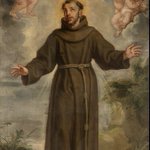
Today is the feast day of St. Francis of Assisi, one of the greatest luminaries of the West, who was in his person a great image of God’s grace and the purity of the Gospel message.
Christians of both East and West have much to learn from his example, his humility, love, and poverty of spirit.

It is our moral duty as Orthodox Christians to listen to the counsel of our Church and our bishops with the fidelity and trust of a son for his father.
That this duty is not absolute, as the right of conscience always remains, is no excuse to contemptuously dismiss their authority or ignore entirely their guidance.
Part of spiritual growth is listening to our spiritual fathers, even if they scandalize us. This is good ascetic practice, as it encourages a humility of will, mind, and intellect.
When this moral imperative is rejected, it brings chaos, discord, and confusion into the Church, which harms our ability to preach the Gospel with the one voice befitting the body of Christ.
St. Ignatius had to proclaim this truth in the second century. And it is increasingly necessary to repeat it again in our own.
I feel that great effort should be made to counterbalance online Orthodoxy with a robust digital presence of the actual voices of ecclesial authority in our Church.
Young converts disproportionately listening to self-appointed apologists and polemicists over their bishops is a major problem.
It is my belief that Orthobroism is actually a relatively consistent philosophy predicated on a certain theological-political narrative most Orthobros share.
It’s not just zealous young converts, but a grand narrative about the “decline of the west”, the “evils of modernity”, and the necessity of “tradition.”
It is largely a reaction to globalization, secularization, social atomization, and the internet.
Apologetical attempts to avoid discussing how this narrative precipitates and motivates the act of conversion is self-serving and a dereliction of pastoral duty.
We need to be honest about what gets people in the door if we are serious about being a Church and not a mere business.