

AI PM | The goal of life : get some fries 🍟
Beijing
Joined August 2021
- Tweets58
- Following277
- Followers4
- Likes91

Felix Sha retweeted

OpenAI models are coming to Google Cloud.
We're bringing our frontier models and Codex agentic workflows to Google Cloud's Model Garden, so enterprises can use our technology where they already build.
openai.com/index/openai-mode…


Grok Bot更新了!

What's new in Grok Bot
00:00 New chat cards
00:31 Speed
00:53 Draft edits
01:08 Email aliases
01:33 X DMs
01:55 Tag @bot
02:31 Connectors
02:48 Voice calls
03:27 Notifications
03:56 Invites and Android Assistant
04:19 Access lists, unread, routines, sign-in
This team ships!
Felix Sha retweeted

What's new in Grok Bot
00:00 New chat cards
00:31 Speed
00:53 Draft edits
01:08 Email aliases
01:33 X DMs
01:55 Tag @bot
02:31 Connectors
02:48 Voice calls
03:27 Notifications
03:56 Invites and Android Assistant
04:19 Access lists, unread, routines, sign-in
This team ships!
cool!

OpenAI models helped researchers—operating as part of our Patch the Planet initiative—discover critical security flaws in PHP, an open-source programming language used to run an estimated 70% of websites.
Over the past two months, we led a coalition of maintainers, researchers, and security providers to prepare fixes and protections ahead of disclosure. This duration was necessary because the fix was quite intricate and required a major change to the PHP engine. Every site using PHP can now safely upgrade their version to stay secure, in addition to applying mitigations from various security vendors.
Due to the severity of these flaws and PHP’s widespread use, we consider this bug to be one of the most impactful vulnerabilities in recent memory. It also marks a new phase, where AI can find security bugs with internet-scale impact.
This is an example of the Defender’s Window in action: to our knowledge, frontier AI was able to find this vulnerability ahead of attackers, giving defenders time to prepare.
openai.com/index/coordinated…

Readers added context they thought people might want to know
OpenAI may claim a role in the coordinated response and patching process. But the initial discovery and exploit development, however, occurred several months earlier by an independent researcher.
x.com/lcfr_hax/statu…
Felix Sha retweeted

pstack v0.15.27 ships with a new skill /create-formal-verification-skill!
it's still in beta, and similar to /create-verification-skill, this is a meta-skill that creates a new skill and formal verification suite based on the characteristics you want to verify. for example, you may want to model state machines and systems with concurrency using TLA+, or use kani in rust to check for undefined behavior.
if you're new to formal verification, think of it as mathematically proving properties and invariants (something that must always be true) or "laws" of your system. usually, this means modeling your programs in a separate language like with TLA+ and then running the solver on that spec. newer approaches like with kani and @bendlang take a different approach where there is no separate language: you write kani in rust, and bend in bend (it's also a programming language, and the proofs are written as laws and expressed in its type system).
historically formal verification never reached mainstream status because of the difficulty in modeling and writing proofs. it's quite difficult to model your business requirements and keep them in sync! but i expect that we will see more innovation in formal verification in the future as being able to formally verifiy that the code does what you intended gives your agents superpowers in writing correct software.
in the meantime though, i've been experimenting with modeling our code with TLA+ and have already found several bugs with the skill created by /create-formal-verification-skill.
try it out and let me know how it goes!


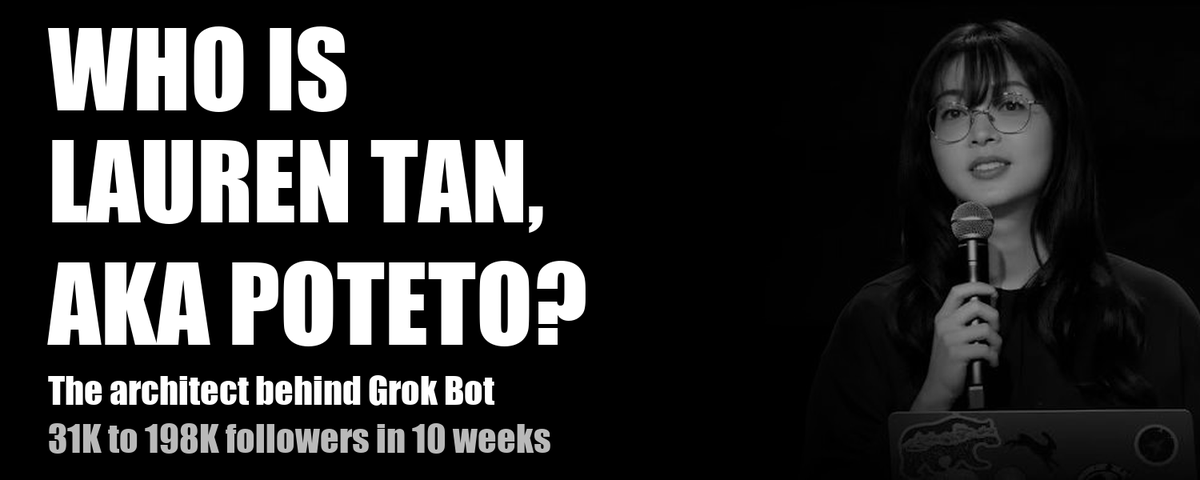
看完第一反应是,那它能不能去帮我跟房东谈房租😂 @mikepat711 让 Grok Bot 自己挣订阅费,它跑去把宽带一个月砍了 43 刀


better, and honestly they don't have a choice. making it worse just means more captchas, and agents will get past those too
I'd rather they just give agents a proper way in. I already have mine handle email and scheduling for me, and the day my bank or airline has a real API for it I'm never calling a support line again


我现在的办法是自己搭。日程、邮件、资料、每天的信息简报交给 Grok Bot,真要下单就去对应的 App 点一下。
原因是不管国内国外,personal agent 卡住的地方都一样,平台不让进。
Meta 的 Muse 上线不到半个月,就被亚马逊封了购物权限,理由是 agent 逛页面不亮明身份。说白了,agent 绕开了推荐位,平台的广告生意就没了。
国内的墙更明显:
1、豆包走读屏和模拟点击,155 款 App 直接拒了,腾讯、阿里、美团、银行都在名单里
2、同一批巨头对阶跃开了接口,但每家只给一扇窗,美团只开跑腿,微信本体不给
3、携程给外部 agent 开的只有查询,下不了单
要真找一个国内的可能就是千问了,千问生态最全,飞猪、高德、支付宝都是自家的,能直接下单。但我用下来感觉 agent 本身还差点意思,千问 Go 在内测了,可以再等等。

有点意外,大模型可能没我们想的那么"黑盒"。
@nickcammarata 这篇,大概就是讲:神经元本来大多就能看懂,是以前的工具和模型太老。同一层视觉神经元,InceptionV1 当年只解释了 5% 左右,换成同样大小的 ConvNeXt 到了 99%,Qwen3-32B 初步看下来也有 90% 左右。
这和 @AnthropicAI 这几年做的可解释性一直默认单个神经元看不懂,一个神经元里塞了好几个概念,所以才要另外训一个 SAE 去拆。Dario 去年那篇《The Urgency of Interpretability》里,原话就是绝大多数神经元是大杂烩。
好玩的是,那个又认猫脸又认车头、一直被当成"神经元很乱"代表的经典例子,当年就是 Nick 自己和 Chris Olah 发现的。现在他回头重看,说它其实只是在认 V 形,猫脸和车头刚好都有。
当然不是所有人都买账。@NeelNanda5 和 @livgorton 就觉得叠加还是存在的,模型记住的东西远比神经元多,而且 Nick 的技术论文还没出来。
但 Anthropic 那边也有点尴尬,他们自己 8 月的 CHIVE 研究发现,SAE 这类工具预测模型行为,并没比直接读对话记录强多少。

interpretability might be the most important scientific problem in the world right now, as I don't think we can solve alignment if we don't know what we're building. I think I have good news about it. I co-authored early work in mechanistic interpretability at OpenAI and came away pessimistic, because neural networks appeared to fold into arbitrary tangled knots. years later, I started openai's first large-scale automated interpretability project, finding about 2% of neurons legible with the primitive tools we had
with modern agentic tools and a much closer look, the picture looks totally different. the vast majority in models up to trillions of parameters are legible, and their circuits beautiful. many famous examples of tangled neurons turned out to be misunderstood. The roadblocks I expected mostly aren't there. I now think ambitious interpretability will be solved by the time we need it most, and possibly quite soon, as automated scientists keep improving. it may be a bitter lesson for interpretability: the simple thing, at absurd scale, works
already-clean.goodfire.com/


Claude Code 现在九成代码是 Claude 写的,回滚率反而降了四成。我觉得这套 Code Review 做法里,有三点最值得关注:
1. 人工审批按风险分级。低风险不用人看,中风险一个人,高风险两个人,由分类器来判。人的时间只花在真正危险的改动上。
2. 提 PR 之前先让 AI 自查。Claude 自己跑测试和构建,再开一个新的 agent 审一遍 diff,问题在进 review 之前就挡掉一大半。
3. AI 互审要设轮数上限。不然 agent 之间会无限互相挑刺,做多 Agent 产品的应该都遇到过。
最后一点很认同,bot 的批准不能替代人,谁驱动 agent 谁对改动负责。


Claude 工程负责人 Felix 这篇《How to be more ambitious》,中文圈基本都当提示词在收藏。我从做 AI Agent 的角度看,觉得它其实是在讲怎么给 AI 派活。
他把野心分成四个方向,Speed、Altitude、Depth、Range。快一点、目标定高一点、挖深一点、视角多一点,大概是这个意思。
我最有感觉的是 Altitude。他的例子是,别让 Claude 帮你修某个崩溃,直接让它负责 app 零崩溃。但说实话,光改这一句提示词没用,模型得能看到崩溃日志、版本信息,能上测试机跑。目标往上提,权限和工具也得一起给到,现在大家用 MCP 接工具其实就是在做这件事。
Depth 那段提示词,最后一问我觉得非常有价值:除了你和我,还有什么能证明结果是对的。做过 Agent 的应该都懂,让模型自己验收自己,基本靠不住。
HN 上也有人吐槽,目标定得越大,Claude 越容易跑偏,为了让测试通过而硬凑结果。这个我挺认同的,所以活可以往大了派,验收得找个模型碰不到的标准。
#Claude #AIAgent

Hi, I'm Felix. I'm an eng lead working on Claude. I love watching people take flight and do things they never thought possible.
We often describe that as "being more ambitious" when using AI, which is tricky advice to follow. I wrote a tutorial:
felixrieseberg.com/how-to-be…

DeepSeek 这次更新,我觉得最值得关注的不是跑分,而是两个信号:
1. 小模型也能干 Agent 的活了。
以前做 Agent,大家默认得上最贵的大模型。这次 Flash 档的 Terminal-Bench 从 31 涨到 42,说明"便宜模型跑多步任务"这件事开始靠谱了。很多做 Agent 产品的团队,成本结构可能要重算。
2. "输出更短"
Agent 是一步接一步地调用模型,每一步多输出一点,最后叠起来就是用户在等、你在付钱。同样的任务用更少的 token 完成,体验和成本是一起变好的。
还有个细节:这次专门为 DeepSeek Harness、腾讯 CodeBuddy 这些 Agent 工具做了优化。模型厂商开始和工具一起打磨体验,这可能是接下来的新趋势。

🚀 DeepSeek-V4.1-Flash-1017 is here!
Stronger benchmark performance, faster task completion, and shorter outputs than the previous version—a Pareto improvement in performance and cost. Now live on our website, app, and API.
🛠️ Optimized for @DeepSeekHarness, Tencent CodeBuddy, WorkBuddy, and more. Upgrade to DeepSeek Harness v0.2.1-rc.1 or later for the best experience with the new model.
1/4


The gap between image understanding and video understanding has been the quiet blocker for a lot of vision products. Most real inputs aren't static: they move, change angle, and get occluded.
If Glimpse holds up on motion and viewpoint changes outside the benchmarks, that opens up a lot of use cases that were previously only demo-able.

