

Trying to make the biotech jungle a little easier to navigate. Physician | Investor | AI & Biotech
Joined April 2026
- Tweets618
- Following178
- Followers1.2K
- Likes4K
What Happened in the Biotech World Today?
Thursday, November 26, 2026 | Biotech Explained
$GSK $IONS $HCM $AZN $NAMS $IBTB $HNSA
Wall Street was closed for Thanksgiving. Friday’s session ends at 1 p.m. ET
Five stories that mattered today
1. $GSK $IONS — China approves bepirovirsen for functional cure of chronic hepatitis B
Hibsago is approved as an add-on to standard antiviral therapy for selected adults without cirrhosis. Eligible patients must have been on antiviral therapy for at least six months, with HBV DNA below 90 IU/mL and hepatitis B surface antigen (HBsAg) at or below 3,000 IU/mL.
Why it matters. Across the two Phase 3 B-Well trials, 233 of 1,220 patients (19%) achieved a functional cure with bepirovirsen, compared with 0 of 614 on placebo. The rate reached 26% in patients whose baseline HBsAg was at or below 1,000 IU/mL. During treatment, grade 3 or higher adverse events occurred in 16% of patients on bepirovirsen versus 3% on placebo.
2. $HCM $AZN — China accepts a first-line lung cancer combination for review
The application is for savolitinib plus osimertinib in advanced non-small cell lung cancer with an activating EGFR mutation and MET overexpression.
Why it matters. In the randomized Phase 3 SANOVO trial, median progression-free survival was 24.9 months with the combination versus 13.8 months with osimertinib alone. Median overall survival, a secondary endpoint, was 44.5 versus 34.9 months. The results were presented at ESMO in October. Today’s milestone is China’s acceptance of the first-line application for review.
3. $NAMS — UK approves two obicetrapib treatments to lower LDL cholesterol
The MHRA approved two oral treatments from NewAmsterdam Pharma and its partner Menarini. Ubeslo contains obicetrapib, a CETP inhibitor. Evlarco combines it with ezetimibe in a single tablet.
Why it matters. These approvals add an oral option for patients who are still above their LDL target. In two 52-week trials, obicetrapib lowered LDL cholesterol by 36% and 33% versus placebo. The ongoing PREVAIL trial will test whether that reduction translates into fewer cardiovascular events.
4. $IBTB — IBP-9414 filed in Europe for very-low-birth-weight preterm infants
Infant Bacterial Therapeutics submitted an application to the EMA for its live biotherapeutic. The Phase 3 Connection trial enrolled 2,158 infants and missed both primary endpoints, which measured the incidence of necrotizing enterocolitis and the time to sustained feeding tolerance.
Why it matters. All-cause mortality was 6.2% with IBP-9414 versus 8.5% with placebo. That difference matters in this vulnerable population. Mortality was a secondary endpoint, and with both primary endpoints missed, the signal still needs confirmation.
5. $HNSA — SERB seeks standard EU approval for Idefirix in kidney transplantation
Idefirix (imlifidase), developed by Hansa, already has conditional EU approval. It rapidly breaks down IgG antibodies, which can allow a highly sensitized patient to receive a kidney from a deceased donor despite an initially positive compatibility test.
Why it matters. Finding a compatible donor can be the biggest obstacle for these patients. In the open-label PAES study, 45 of 50 treated patients were alive with a functioning graft at one year. Antibody-mediated rejection still occurred in 28 of the 50 patients during that first year.
News of the Day | $GSK $IONS — What a functional cure for hepatitis B means
Standard antivirals can keep hepatitis B under control for years while patients stay on treatment. B-Well tested what happens after all antiviral treatment stops.
With bepirovirsen, nearly one in five patients reached the trial’s definition of a functional cure. The viral surface antigen remained absent from the blood and HBV DNA stayed below the level the test could quantify for at least 24 weeks off treatment. Viral genetic material can still persist in the liver.
Bepirovirsen is an antisense oligonucleotide, or ASO. It binds to viral RNA and promotes its breakdown, reducing production of viral proteins including HBsAg.
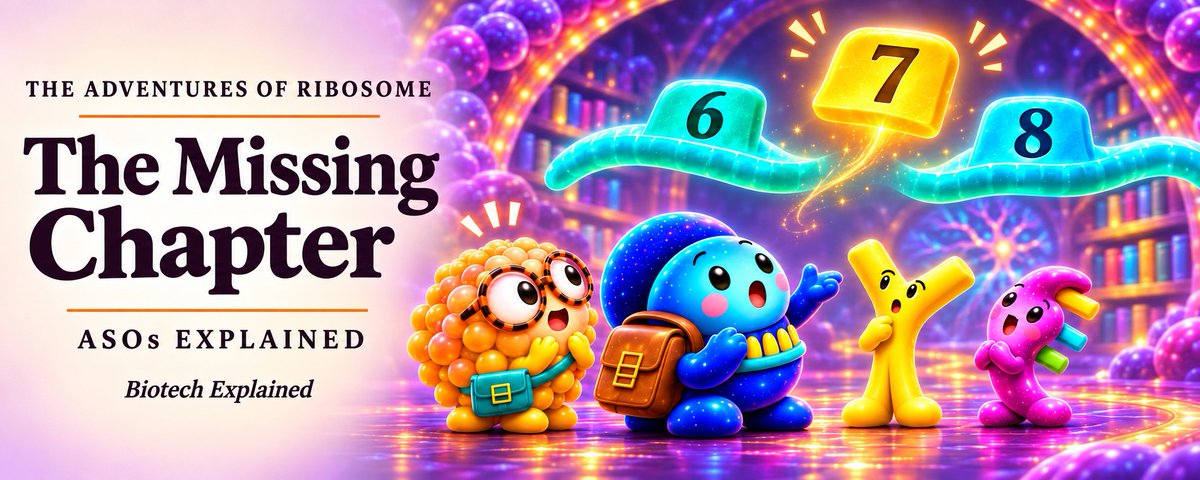
Our comic follows another ASO, nusinersen (Spinraza). It binds to a specific RNA sequence and changes how the cell splices the SMN2 RNA, allowing it to make the full-length SMN protein.
Read our comic “The Adventures of Ribosome — The Missing Chapter (ASO Explained)”
teapawt.org/Explainbiotech/status/…
Biotech Explained | Biotech for Everyone
🤖 Made with AI


7
839

$SMMT — HARMONi, explained.
To help you understand the different HARMONi trials, what each one tested, and what the results actually prove.

Okay, let’s try to apply our investment framework to a new case today: $SMMT.
We will do it the Biotech Explained way: by keeping things as clear as possible from beginning to end.
Summit Therapeutics is a particularly interesting case: convincing science, several clinical validations, and a $2 billion strategic investment from AstraZeneca—but also a high valuation and major risks that still remain.
$SMMT — INVESTMENT CASE
1. Understanding the drug
Summit is essentially a one-drug biotech.
Its future depends on ivonescimab, a bispecific antibody originally developed by the Chinese biotech company Akeso.
PD-1 and VEGF help cancer protect itself in two different ways.
PD-1 acts like a brake on certain immune cells. Tumors can exploit this brake to avoid being attacked.
One important point to remember: Keytruda, one of the most widely used cancer immunotherapies in the world, blocks PD-1 to release that immune brake.
We will soon see why this comparison matters.
But releasing the brake is not always enough.
VEGF helps tumors build blood vessels and create an environment that makes it harder for immune cells to enter and function properly.
Ivonescimab therefore tries to target both defenses with a single molecule:
block PD-1 to reactivate immune cells;
block VEGF to make the tumor environment less protective.
The simple version:
Keytruda releases the immune brake.
Ivonescimab tries to release that same brake while also weakening the tumor’s defenses.
It is not simply a copy of Keytruda. It is an attempt to build a new generation of anti-PD-1 immunotherapy.
In other words, the ambition is to create a kind of improved Keytruda—one of the most widely used cancer immunotherapies in the world.
2. What evidence do we have?
On paper, the idea is exciting.
But what happens in actual patients?
That is where the clinical results matter.
HARMONi-2: ivonescimab versus Keytruda
Now we get to the really interesting part.
Ivonescimab versus Keytruda: the head-to-head contest begins.
This Chinese Phase 3 study compared ivonescimab alone with Keytruda alone, without chemotherapy, in patients with PD-L1-positive non-small cell lung cancer.
Do not let the term PD-L1 confuse you.
PD-L1 is simply a protein found on the surface of some cancer cells. By binding to another protein called PD-1, which is found on T cells, it activates a brake that reduces the immune system’s attack against the tumor.
In HARMONi-2, at least 1% of the tumor cells had to express PD-L1.
The patients had not yet received any treatment for their advanced cancer. This was therefore a first-line treatment study.
So, in this first contest, we are looking at a specific group of patients whose tumors expressed PD-L1.
Ivonescimab beat Keytruda on both major measures:
Progression-free survival, or PFS — how long patients lived before their cancer worsened: 11.1 versus 5.8 months;
PFS hazard ratio — the relative risk of progression or death during the study: 0.51, meaning a 49% reduction;
Overall survival, or OS — how long patients lived: 30.8 versus 22.6 months;
OS hazard ratio — the relative risk of death during the study: 0.73, meaning a 27% reduction.
Among patients whose tumors had high PD-L1 expression, the OS hazard ratio reached 0.58.
This is important.
Ivonescimab did not merely delay progression compared with Keytruda. In this study, patients also lived longer.
But there is one major limitation:
HARMONi-2 was conducted entirely in China.
3. A second Phase 3 validation
Next comes the second contest.
This time, ivonescimab was not compared with Keytruda, but with another drug from the same family.
HARMONi-6 studied a different Chinese population with advanced squamous non-small cell lung cancer.
Ivonescimab plus chemotherapy beat tislelizumab plus chemotherapy.
Tislelizumab is another anti-PD-1 immunotherapy, similar to Keytruda.
The results were:
PFS: 11.1 versus 6.9 months;
PFS hazard ratio: 0.60;
OS: 27.9 versus 23.7 months;
OS hazard ratio: 0.66.
This strengthens the idea that blocking both PD-1 and VEGF may provide more benefit than blocking PD-1 alone.
However, HARMONi-6 was also conducted exclusively in China, and the comparator was not Keytruda.
4. What do we know about Western patients?
Summit already has international clinical data.
The global HARMONi study compared ivonescimab plus chemotherapy with placebo plus the same chemotherapy in patients with EGFR-mutated lung cancer after a third-generation EGFR inhibitor had stopped working.
Okay, are you getting lost among all the different HARMONi studies?
That is completely normal.
There are several of them, and each one evaluates ivonescimab in a different clinical situation.
I will post a simple recap of the different HARMONi trials in the replies.
For now, this study looked at ivonescimab plus chemotherapy in patients with EGFR-mutated lung cancer after a third-generation EGFR inhibitor had failed.
What does that mean?
It is actually quite simple.
EGFR is a protein that sends growth signals to cells.
In some lung cancers, the EGFR gene is mutated. The protein then remains abnormally active, like an accelerator stuck to the floor, continuously pushing cancer cells to multiply.
These patients are initially treated with a targeted EGFR inhibitor, often osimertinib.
This treatment blocks the signal and can control the cancer for a period of time.
But the tumor often develops resistance and begins to grow again.
In patients whose cancer was driven by an EGFR mutation and had started progressing again despite targeted therapy, the study clearly met its main progression-free-survival endpoint:
PFS: 6.8 versus 4.4 months;
hazard ratio: 0.52, meaning a 48% reduction in the risk of progression or death.
However, the primary overall-survival analysis narrowly missed statistical significance:
OS: 16.8 versus 14.0 months;
hazard ratio: 0.79, meaning an estimated 21% reduction in the risk of death;
p-value: 0.057.
= Patients lived a median of 16.8 months with ivonescimab versus 14.0 months without it. This suggested a 21% lower risk of death, but the result narrowly missed statistical significance (p = 0.057).
The conventional statistical threshold is 0.05.
Because 0.057 was slightly above that threshold, the trial did not formally prove a survival benefit in its primary analysis.
With longer follow-up, the OS hazard ratio improved to 0.76, suggesting a 24% reduction in the risk of death.
The survival signal was also consistent across Western and Asian patients.
That is reassuring: ivonescimab’s activity does not appear to be limited to Chinese patients.
But the later follow-up does not retroactively turn the original OS analysis into a statistically positive result.
The technically correct interpretation is:
The PFS benefit was demonstrated. The survival signal was favorable and strengthened with longer follow-up, but the primary OS analysis was not statistically positive.
PLAIN ENGLISH:
Ivonescimab clearly delayed the worsening of the cancer. Patients also appeared to live longer, but the evidence was not strong enough to say so with statistical certainty.
The Chinese studies have shown that ivonescimab can be a highly active drug.
The global program must still determine whether it can become a major Western commercial franchise.
5. HARMONi-3: the real global test
Okay, now we come to another HARMONi trial—but this is the big one.
HARMONi-3 compares two first-line treatments:
ivonescimab plus chemotherapy;
Keytruda plus chemotherapy.
We are back to the major head-to-head contest.
This test is more demanding than HARMONi-2 because both groups receive the same effective chemotherapy.
The trial is therefore asking whether replacing Keytruda with ivonescimab can still provide an additional benefit when the chemotherapy is identical in both groups.
An initial analysis of the squamous cohort was performed by an independent committee.
The actual numbers remained confidential. Summit, the investigators, and the patients have not seen them.
At first glance, the update was not particularly encouraging.
We only know that ivonescimab did not demonstrate enough statistical superiority in progression-free survival for the study to be declared positive at this interim analysis.
The announcement was released on May 1, 2026, and Summit’s stock fell by approximately 25% in one session.
The market’s reaction was understandable.
If ivonescimab’s advantage had been extremely large, the trial might have crossed this first statistical threshold.
But this was not a definitive failure.
The interim statistical threshold was intentionally very demanding.
The final analysis will include more events and use a less difficult statistical threshold.
The independent committee recommended that the study continue as planned, remain blinded, and undergo no changes. It also identified no new safety concerns.
However, Summit did not disclose the hazard ratio, the PFS curves, or how close the result came to the required threshold.
In plain English:
Summit has not published the numbers needed to determine whether ivonescimab narrowly missed showing superiority—or remained far away from doing so.
We therefore do not know whether ivonescimab was slightly better, made no difference, or performed worse at that stage.
The correct interpretation is:
Early success was not demonstrated. A positive final result remains possible, but the probability of overwhelming superiority has decreased.
The final analysis of the squamous cohort is expected in the second half of 2026.
Data from the non-squamous cohort are expected in the first half of 2027.
IN SUMMARY:
Ivonescimab did not show a large enough advantage for the study to be declared positive at this first analysis.
But the key question remains:
Could it still be modestly—but statistically significantly—better than Keytruda?
That is now the central issue.
6. The AstraZeneca deal
AstraZeneca has agreed to invest $2 billion in Summit.
But it is important to understand the exact structure.
This is not:
an acquisition of Summit;
an acquisition of ivonescimab;
or a commercial licensing deal for the drug.
AstraZeneca is purchasing convertible preferred shares in Summit at a price equivalent to $18.36 per common share.
If fully converted, AstraZeneca would own approximately:
12% of Summit’s currently outstanding common shares;
10.6% of the company on a fully diluted basis.
The conversion could create the equivalent of approximately 109 million additional common shares.
There is therefore real dilution for existing shareholders.
But Summit also receives $2 billion in cash at a price above the share price before the announcement.
7. Why is AstraZeneca investing?
The investment comes with a clinical collaboration.
The first program will combine:
ivonescimab;
sone-Ve, AstraZeneca’s CLDN18.2-targeting antibody-drug conjugate.
An antibody-drug conjugate, or ADC, is designed to carry a toxic payload directly to cancer cells expressing a specific target.
The combination will be studied in gastrointestinal cancers.
Each company will retain the rights to its own drug, and the clinical-trial costs will be shared.
A memorandum of understanding, or MOU, also outlines plans to explore ivonescimab with other AstraZeneca drugs and ADCs.
But this MOU is not yet a definitive agreement.
There are no additional milestone payments, royalties, or profit-sharing arrangements between AstraZeneca and Summit under the current collaboration.
The most reasonable interpretation is:
AstraZeneca is not acquiring ivonescimab. It is betting that PD-1 × VEGF blockade could become an important partner for its ADC portfolio.
This is serious strategic validation.
But it is not regulatory validation.
8. The less visible details of the deal
The preferred shares are non-voting and subject to a one-year lock-up period.
AstraZeneca also receives certain rights to participate in future share issuances so that it can maintain its ownership percentage.
If Summit considers a serious acquisition proposal from a third party, AstraZeneca must be notified and will have a limited window to submit its own proposal.
But AstraZeneca does not have:
a right of first refusal;
a matching right;
or a veto over an acquisition.
Finally, if Summit does not obtain authorization to increase its number of available common shares within 18 months, the preferred shares may have to be redeemed in cash under a formula linked to Summit’s share price.
That is probably not the central scenario, but it is a detail worth knowing.
9. So, what does the deal actually change?
The deal significantly changes Summit’s financial risk.
Summit had approximately $691 million in cash and investments as of June 30, 2026.
The additional $2 billion from AstraZeneca should allow the company to fund:
several large Phase 3 trials;
the commercial preparation for ivonescimab;
expansion into new indications;
future combinations with AstraZeneca drugs.
The risk of an urgent capital raise therefore falls substantially.
But the deal does not prove:
that the FDA will approve ivonescimab;
that HARMONi-3 will be positive;
that ivonescimab will beat Keytruda in a global population;
that the drug will become a standard of care;
or that Summit’s stock is cheap.
AstraZeneca has reduced the financing risk. It has not removed the clinical or valuation risk.
10. What do shareholders actually own?
Summit does not fully own ivonescimab.
The drug was discovered by Akeso, which retains the rights in China and certain other territories.
Summit owns the development and commercial rights across several major markets, including the United States, Europe, Japan, and Canada.
But Summit may still owe Akeso up to approximately $4.56 billion in regulatory and commercial milestone payments, as well as low-double-digit royalties on future sales.
An investment in Summit must therefore account for:
potential dilution from the AstraZeneca investment;
future milestone payments to Akeso;
royalties on sales;
the cost of a global commercial launch.
11. The valuation question
At the conversion price of $18.36, and including AstraZeneca’s potential shares, Summit’s fully diluted equity value approaches approximately $19 billion.
This is no longer the valuation of a small, overlooked biotech.
The market is already pricing in:
a meaningful probability of approval;
significant commercial success in lung cancer;
expansion into several indications;
the possibility that ivonescimab becomes a new therapeutic backbone.
The upside could still be considerable if ivonescimab genuinely becomes a major global cancer immunotherapy.
But a significant part of that future success is already reflected in the price.
12. The next catalysts
- November 14, 2026 — FDA decision
The FDA is expected to decide whether to approve ivonescimab plus chemotherapy for patients with EGFR-mutated, non-squamous lung cancer after a third-generation EGFR inhibitor has stopped working.
This decision is based on the global HARMONi study.
It is not an approval that would allow ivonescimab to broadly replace Keytruda in first-line lung cancer.
The requested indication is much narrower.
An approval would nevertheless validate:
the regulatory quality of the program;
Summit’s ability to launch ivonescimab in the United States;
the relevance of the clinical results obtained in Western patients.
- Second half of 2026 — HARMONi-3 squamous cohort
This is the main global test of ivonescimab plus chemotherapy against Keytruda plus chemotherapy.
After the inconclusive interim analysis, the final analysis will be particularly important.
First half of 2027 — HARMONi-3 non-squamous cohort
This population represents a major part of the global lung-cancer market.
HARMONi-7
HARMONi-7 directly compares ivonescimab alone with Keytruda alone in patients whose tumors have high PD-L1 expression.
This is the global study that comes closest to answering the same question as HARMONi-2:
Can ivonescimab truly beat Keytruda as a monotherapy outside China?
Expansion beyond lung cancer
Ivonescimab is also being developed in several other tumor types, including gastrointestinal, colorectal, bladder, kidney, and head-and-neck cancers.
These programs could turn ivonescimab into a broader therapeutic platform.
However, they remain much less clinically validated than the lung-cancer program.
13. What would strengthen the thesis?
The investment case would become stronger with:
FDA approval on November 14;
an acceptable regulatory and safety profile;
a positive final HARMONi-3 analysis;
demonstrated global superiority over a Keytruda-based regimen;
confirmation of a survival benefit across multiple populations;
convincing combinations with AstraZeneca’s ADCs;
successful expansion beyond lung cancer.
In that scenario, ivonescimab could become much more than a Keytruda competitor in one indication.
It could become a new treatment backbone used alone, with chemotherapy, or with antibody-drug conjugates.
14. What would break the thesis?
The main risks are:
FDA rejection or delay;
a narrower-than-expected US label;
a negative final HARMONi-3 result;
no confirmed survival benefit in global studies;
VEGF-related toxicity, including bleeding, hypertension, proteinuria, or thrombosis;
less impressive efficacy in Western patients;
competition from other PD-1 × VEGF antibodies, including AbbVie’s ABBV-1480;
economic pressure from the royalties and milestone payments owed to Akeso;
a valuation that is already too high relative to the available evidence.
Summit remains a company heavily concentrated around one molecule.
Even with an additional $2 billion and AstraZeneca on the shareholder register, a major failure of ivonescimab would have serious consequences.
Applying our framework
1/ Understand the science
Validated.
The biological rationale for blocking PD-1 and VEGF together is clear, credible, and supported by several randomized trials.
2 / Understand the evidence
Partially validated.
Ivonescimab has demonstrated clinical superiority in China and meaningful activity in a global study.
But global superiority over Keytruda-based standards of care still needs to be demonstrated.
3/ Understand the equity
More difficult.
AstraZeneca’s investment substantially reduces the financing risk, but it also creates meaningful potential dilution.
The current valuation already assumes major commercial success.
For investors who do not currently own the stock but are interested, one possible approach is to build the position as the evidence builds.
SMMT perfectly illustrates the biotech-investing dilemma.
Waiting for HARMONi-3 reduces clinical risk.
But if the trial is clearly positive, the stock could immediately become much more expensive.
Buying before the data offers greater upside, but it also exposes investors to a major loss if the program fails.
There is therefore no single answer that is right for every investor.
One possible approach is:
Start small before the proof.
Build the position as the evidence builds.
Size up after the proof only if the new valuation still offers attractive asymmetry.
Waiting can protect investors from failure.
But in biotech, waiting can also mean paying a much higher price once success becomes obvious.
Conclusion
Summit owns the rights to one of the most interesting oncology programs in the biotech sector.
Ivonescimab has already beaten Keytruda on both progression and survival in a Chinese Phase 3 trial.
AstraZeneca is now bringing $2 billion, serious strategic validation, and potential access to a broad portfolio of antibody-drug conjugates.
But the story is not fully de-risked.
US approval is not guaranteed.
Global superiority over Keytruda still needs to be demonstrated.
The HARMONi-3 interim analysis did not cross its statistical threshold.
And the current valuation already reflects a meaningful part of the bullish scenario.
The fairest conclusion is therefore:
Strong science. Major strategic validation.
Substantially reduced financing risk.
But essential global evidence is still needed—and the stock is no longer cheap.

For Biotech Newcomers #1 — Inhibrx ($INBX)
Welcome to For Biotech Newcomers—a series for anyone curious about biotech and unsure where to start.
No science background needed. We’ll explore what these companies are developing, how their treatments work, and why they matter, in a very simple way.
Already familiar with biotech? Feel free to add your insights or share this with someone getting started.
The idea is to make biotech easier to understand and help the community grow.
First up: Inhibrx and its two experimental cancer treatments.
Two ways to fight cancer: help immune cells attack, or activate cancer cells’ self-destruct machinery.
1/ INBRX-106: a “buff” for immune cells
Your immune system can recognise and attack cancer. But that attack can become too weak or be held back by braking signals.
If you play video games, you know what a “buff” is: a bonus that makes your character stronger during a fight. INBRX-106 aims to do something similar for certain immune cells already fighting cancer.
This antibody—a laboratory-made protein—activates OX40, a switch that can strengthen their activity.
It is being tested with pembrolizumab, better known as Keytruda, which removes one of the immune system’s braking signals
Keytruda removes an effect holding your fighters back; INBRX-106 aims to give them a power-up. But this combo does not guarantee a win.
One focus is advanced head and neck cancer, including cancers affecting the mouth and throat.
In a small randomised study, tumour shrinkage meeting the study’s response criteria occurred in about 48% of evaluable patients receiving the combination, versus 27% with Keytruda alone.
Encouraging, but more evidence is needed to establish how long the benefit lasts and whether it outweighs the side effects.
2 /Ozekibart: activating a self-destruct switch
Healthy cells have internal machinery that allows them to die when they need to be removed. Cancer cells can escape this process and keep growing.
Ozekibart, also called INBRX-109, is an antibody designed to activate death receptor 5, or DR5—a switch on the cell surface that can trigger this machinery.
One disease being studied is chondrosarcoma: a rare cancer usually found in bones that produces cartilage-like tissue. Treatment options are limited when surgery cannot remove it.
The goal is to shrink tumours or slow their growth. Activating this mechanism does not guarantee a response, and serious side effects, including liver injury, can occur.
The investment case: bear, base, bull
A concrete milestone: the FDA has accepted ozekibart’s Biologics License Application (BLA)—its application for marketing approval—for conventional chondrosarcoma that cannot be surgically removed or has spread.
The target FDA decision date is April 14, 2027. Acceptance means the application is being reviewed; it does not mean approval.
Bear: Ozekibart faces a rejection or delay, while further INBRX-106 results fail to establish a convincing benefit versus its risks. More spending and additional funding needs put pressure on shareholders.
Base: Ozekibart wins approval and builds a business in a small cancer market. INBRX-106 continues development, with further trials needed before assuming broader commercial success.
Bull: Ozekibart wins approval and later proves useful in additional cancers. INBRX-106 confirms a durable benefit with acceptable safety, opening a larger commercial opportunity and potential partnerships.
These are scenarios, not predictions. The key checkpoints are the FDA decision, subsequent sales if approved, and further clinical results.
Even a successful medicine can disappoint investors if the share price already assumes too much success.
Science first. Investment second.
Which biotech would you like us to explain next?
If this helped make biotech a little easier to understand, leave a like and follow for more explainers like this.
🤖 Made with AI

EDUCATIONAL POST
What does Iovance actually do—and why is $IOVA getting so much attention in biotech?
Let’s look at how the company turns a patient’s own tumour into a personalized cancer treatment.
$IOVA — making biotech easier to understand.
HOW IOVANCE TURNS A PATIENT’S TUMOUR INTO A MEDICINE
Most cancer drugs are manufactured before the patient is identified.
Amtagvi works differently.
Each treatment begins with the patient’s own tumour.
REMOVE A PIECE OF THE TUMOUR
Doctors surgically collect tumour tissue.
Inside it are immune cells that have already managed to enter the cancer.
They are called tumour-infiltrating lymphocytes, or TILs.
These cells have already found the enemy—but they are too few, exhausted or suppressed to defeat it.
SEND THE TUMOUR TO THE FACTORY
The tissue is shipped to Iovance’s manufacturing facility.
The tumour is divided into small fragments, allowing the TILs inside it to grow outside the body.
EXPAND THE TILs
Iovance multiplies this small population into billions of immune cells.
The current commercial manufacturing process takes about 22 days, with total turnaround generally around 31 days or less.
Amtagvi is not genetically modified.
The commercial product is a large, diverse population of the patient’s naturally occurring TILs.
PREPARE THE PATIENT
Before receiving the cells, the patient undergoes lymphodepleting chemotherapy.
In simple terms, this reduces competing immune cells and creates space for the incoming TILs.
RETURN THE CELLS
Billions of expanded TILs are infused back into the same patient.
The objective is to send a much larger immune army back against the tumour it has already encountered.
SUPPORT THEM WITH IL-2
After the infusion, the patient receives IL-2 to help the transferred immune cells survive and expand.
This is why Amtagvi is not simply “one infusion.”
It is an entire treatment journey involving surgery, personalized manufacturing, chemotherapy, cell infusion, IL-2 and hospital monitoring.
WHY THIS APPROACH IS INTERESTING
A tumour is not made of identical cells.
Because Amtagvi contains many different T-cell populations, it may recognize multiple tumour features at the same time.
This is called a polyclonal immune response.
WHY IT IS DIFFICULT TO SCALE
Every batch belongs to one patient.
One tumour.
One manufacturing journey.
One personalized product.
That creates a potential competitive moat—but also major logistical, manufacturing, safety and cost constraints.
Iovance has already shown that commercial TIL therapy can work in advanced melanoma.
The next test is whether the same platform can be expanded into lung cancer, earlier melanoma and other solid tumours.
Science first. Investment second.
$IOVA #Biotech #Cancer

8
476
$ARWR — why has the stock fallen from roughly $90 to the mid $60s while the news has been mostly positive?
The simple answer: the science improved, but expectations had moved even faster.
This looks more like a valuation reset than a broken biotech story.
First, much of the good news was already priced in.
The July rally followed strong SHASTA-3/4 results for plozasiran:
• Triglycerides reduced by about 80%
• Acute pancreatitis events reduced by 78% versus placebo
By August, investors were already expecting a major commercial opportunity.
The detailed congress presentation confirmed the strong results, but confirmation is not the same as a new surprise.
Once a stock is priced for excellent data, “excellent as expected” may not be enough to drive another re-rating.
That is the classic sell-the-news problem.
ARO-DIMER-PA was also scientifically encouraging.
One RNAi medicine reduced both PCSK9 and ApoC-III, leading to:
• LDL cholesterol −54%
• Triglycerides −73%
• ApoB −50%
But this was early Phase 1/2a data after one dose.
The market probably wanted proof of a future blockbuster.
What it received was proof that Arrowhead’s chemistry can silence two genes in one molecule.
That is important platform validation, but it does not yet establish durability, repeat-dose safety, superiority or protection against cardiovascular events.
Commercial and financial questions are also becoming more important.
Plozasiran still needs broader approval, reimbursement and adoption in severe hypertriglyceridemia. Ionis is already competing with olezarsen.
Arrowhead also has high spending and committed $215 million to a priority review voucher.
The more optimistic interpretation is that the underlying story has improved while the valuation has become less demanding.
Plozasiran has strong Phase 3 evidence. Zodasiran adds another late-stage asset. The dimer expands what the platform may eventually do.
That does not automatically make the stock cheap. But the decline appears driven more by expectations, timing and execution risk than by scientific failure.
At $90, investors were paying in advance for substantial success.
Around the mid $60s, Arrowhead still has to execute—but the entry point leaves more room for that execution to create value.
Science first. Investment second.
$ARWR #Biotech #RNAi #Cardiovascular


Making biotech easier to understand.
Why is everyone suddenly building PD-1 × VEGF antibodies?
Today, another drug in the class — OncoC4’s cesalatamig — received FDA Fast Track designation.
But forget the drug names for a minute.
The biology is actually pretty intuitive.
Cancer has two useful tricks.
1. Hide from the immune system.
PD-1 acts like a brake on T cells.
Tumors exploit this pathway to tell immune cells:
“Don’t attack me.”
Drugs like Keytruda block that brake.
The immune system can fight again.
2. Build a hostile neighborhood.
Tumors also release VEGF.
VEGF helps create abnormal blood vessels that feed the tumor — but it does more than that.
A VEGF-rich tumor environment can also make it harder for immune cells to enter and function properly.
So blocking VEGF may do two things:
→ attack the tumor’s abnormal blood supply
→ make the tumor microenvironment more immune-friendly
Now combine both ideas.
PD-1 blockade: release the immune brake.
VEGF blockade: improve the battlefield where those immune cells need to work.
That is the rationale behind PD-1 × VEGF bispecific antibodies: one molecule designed to hit both pathways, potentially concentrating both effects inside the tumor microenvironment.
The best-known example is ivonescimab, developed by Akeso and Summit $SMMT.
But it is no longer alone.
Pumitamig, ABBV-1480/RC148, cesalatamig and multiple other programs are pursuing the same basic strategy.
That matters.
PD-1 × VEGF is increasingly becoming a drug class, not a single-drug story.
But one important warning:
Same targets ≠ same drug.
Architecture, PD-1 vs PD-L1 targeting, VEGF affinity, valency, tumor localization, pharmacokinetics and safety may all matter.
And most competitors remain far less clinically mature than ivonescimab.
The real competition will be decided by things such as:
→ depth and durability of response
→ overall survival
→ safety
→ performance across different tumor types
→ whether one molecular design proves meaningfully better than another
For now, the important point is simpler:
PD-1 × VEGF has moved well beyond a single-program experiment.
Several companies are now betting that hitting the immune brake and the VEGF pathway together can improve cancer treatment.
Now we get to see which version actually delivers.
#Biotech #Oncology #PD1 #VEGF $SMMT

Making biotech easier to understand.
$IOVA
Yesterday, during its H.C. Wainwright presentation, Iovance reiterated its confidence in Amtagvi’s growth, pointed to a clearer path toward profitability, and confirmed that a larger lung cancer dataset is expected before year-end.
No new clinical data and no guidance increase—at least not yet.
But this is a good opportunity to step back and ask the essential questions: what does Iovance actually do, and why is its lung cancer programme being watched so closely?
$IOVA — Iovance, explained simply.
Our immune system sometimes already contains cells capable of recognising a tumour. Some have even managed to enter it. These are called tumour-infiltrating lymphocytes, or TILs.
The problem?
There are usually too few of them, or they have become too exhausted to win on their own.
Iovance removes a piece of the tumour, isolates those TILs, grows them into billions of cells in a laboratory, and gives them back to the patient after preparatory chemotherapy. Several doses of IL-2 then help the cells expand and remain active.
Amtagvi, its first treatment, is not genetically modified. It uses the patient’s own immune cells and is administered only once.
It is already approved for certain advanced melanomas following failure of an anti-PD-1 therapy.
In the trial that supported its approval:
• 31.5% of patients experienced significant tumour shrinkage
• some responses lasted for several years
• small real-world studies suggest higher response rates when the treatment is used earlier
Iovance is also becoming a real commercial company:
• $99.3M in Q2 2026 revenue
• approximately $91M from Amtagvi
• 56% gross margin
• more than 95 authorised treatment centres
• approximately $304M in cash
The next major test is lung cancer.
Initial IOV-LUN-202 data showed responses in approximately 26% of 39 patients, with median duration of response still not reached.
A much larger analysis, covering around 80 patients, is expected in Q4 2026.
If the signal is confirmed, Iovance plans to submit a supplemental approval application in 2027. According to the company, this market could be approximately seven times larger than the advanced melanoma opportunity it currently targets.
Iovance is also developing TIL therapies for sarcomas and endometrial cancer, alongside next-generation cells designed to attack more difficult tumours.
But the treatment remains demanding: surgery, personalised manufacturing, chemotherapy, hospitalisation, and significant toxicity.
The company is still losing money, and its approximately $4.2B valuation already assumes substantial future growth.
In summary:
Amtagvi proves that TIL therapy can become a real commercial medicine.
Melanoma provides the foundation. Lung cancer could transform the scale of the company.
The next major checkpoints are the updated 2026 revenue guidance and the larger lung cancer dataset expected in Q4.
Science first. Investment second.
#Biotech #IOVA

7
596
BIOTECH TERMS YOU NEED TO KNOW #2
How to read cancer trial results
“ORR 60%. DCR 85%. Median DoR not reached.”
These numbers may describe a meaningful treatment effect. But they answer different questions—and none tells the whole story alone.
Let’s unpack them.
FIRST: WHAT HAPPENED TO THE TUMOR?
CR — Complete Response
No detectable tumor remains according to the trial’s response criteria.
It does not necessarily mean the patient is cured. Cancer cells may remain below the limits of detection, and the disease can return.
PR — Partial Response
The tumor shrank enough to meet the predefined threshold for a response, but did not disappear.
In many solid-tumor trials using RECIST 1.1, this generally means at least a 30% decrease in the measured target lesions.
SD — Stable Disease
The cancer did not shrink enough to qualify as a partial response, but it also did not grow enough to qualify as progression.
Stable disease can still matter—especially in an aggressive cancer that would otherwise be expected to grow quickly.
PD — Progressive Disease
The cancer grew enough to meet the study’s progression criteria, or new lesions appeared.
The exact rules depend on the response criteria used by the trial.
HOW MANY PATIENTS RESPONDED?
ORR — Overall Response Rate
Usually:
ORR = CR + PR
If 10 patients have a complete response and 30 have a partial response among 100 patients, the ORR is 40%.
ORR tells you how many patients experienced qualifying tumor shrinkage.
It does not tell you:
• How long the responses lasted
• Whether symptoms improved
• Whether patients lived longer
• Whether the treatment was safe
Always check the denominator too.
An ORR calculated among “evaluable patients” may exclude people who enrolled but could not be assessed. That can produce a different percentage from an analysis including everyone treated.
DCR — Disease Control Rate
Usually:
DCR = CR + PR + SD
It measures how many patients had tumor shrinkage or avoided progression for the specified period.
DCR can be useful, particularly in diseases where slowing growth is valuable. But it can also look impressive because stable disease counts.
Ask:
• How was stable disease defined?
• How long did it last?
• How aggressive is the cancer without treatment?
• Was there a control group?
HOW LONG DID THE BENEFIT LAST?
DoR — Duration of Response
Among the patients who responded, how long did the response last?
The clock usually starts when the response is first documented—not when treatment begins—and ends when the cancer progresses or the patient dies, according to the study definition.
A 70% ORR with responses lasting two months is a very different result from a 70% ORR with responses lasting two years.
“Median DoR not reached” can be encouraging, but it can also mean the data are still immature.
Check the follow-up time and how many responders remain under observation.
PFS — Progression-Free Survival
How long patients live without the disease progressing or death occurring.
Unlike DoR, PFS generally includes all patients in the analysis—not only responders.
PFS captures more than tumor shrinkage: a treatment may delay progression even if relatively few tumors meet the formal threshold for a response.
But PFS is not the same as living longer. Its interpretation can also depend on scan timing, progression rules, censoring and whether an independent review was used.
DID PATIENTS LIVE LONGER?
OS — Overall Survival
How long patients live from the trial’s defined starting point until death from any cause.
OS is the most direct survival endpoint and does not depend on interpreting a scan as progression.
But it takes longer to measure. It can also be influenced by treatments received after progression or by patients switching from the control group to the experimental treatment.
THE QUESTIONS BEHIND THE ACRONYMS
CR / PR / SD / PD: What happened to the cancer?
ORR: How many patients had qualifying tumor shrinkage?
DCR: How many had shrinkage or stable disease?
DoR: Among responders, how long did the response last?
PFS: How long did patients avoid progression or death?
OS: How long did patients live?
Before trusting an impressive headline, also check:
• How many patients were studied?
• Which patients were included in the percentage?
• Was there a control group?
• How long was the follow-up?
• Were responses independently reviewed?
• What side effects occurred?
A high ORR can be exciting.
But it is the start of the analysis—not the end.
Science first. Investment second.
Next: median, hazard ratio, confidence interval, p-value, subgroups and censoring.
🤖 Made with AI

WCLC 2026 in Seoul is over. What should biotech investors actually remember?
#WCLC26
Here’s a clear, investor-friendly summary for biotech newcomers too.
The World Conference on Lung Cancer is one of the biggest lung-cancer meetings of the year.
If you’re new to biotech, a quick key before we start:
NSCLC = non-small cell lung cancer, the most common type
SCLC = small-cell lung cancer, a more aggressive type
PD-L1 = a protein tumors can use to suppress immune attack; its level can help guide immunotherapy
OS = overall survival — how long patients live
PFS = progression-free survival — how long before the cancer worsens
ORR = response rate — how often tumors shrink
HR = hazard ratio — below 1 generally favors the new treatment
ADC = antibody-drug conjugate — a targeted delivery system carrying a toxic payload to cancer cells
Here are my 5 main takeaways — science first, investment second.
1 — $SMMT: ivonescimab had its landmark moment
In HARMONi-2, ivonescimab beat Keytruda in first-line PD-L1-positive NSCLC.
• OS: 30.8 vs 22.6 months
• HR: 0.73
• PFS: 11.1 vs 5.8 months
In simple terms: patients lived longer and stayed progression-free longer with ivonescimab in this trial.
Why investors care:
Keytruda is one of the most important cancer drugs in the world. Showing a survival advantage against it is a much bigger deal than simply producing a high response rate.
The caveat is equally important: HARMONi-2 was conducted in China.
For Summit, the major question now is whether global trials can reproduce the result.
Investor takeaway: major de-risking of the ivonescimab story — but global validation still matters.
2 — B7-H3 went from “interesting target” toward “validated target”
Two different B7-H3 ADCs produced positive Phase 3 survival results in relapsed SCLC.
Ris-Rez
OS: 18.5 vs 10.3 months
HR: 0.46
Tam-Peli
OS: 13.3 vs 9.4 months
HR: 0.46
Think of an ADC as a guided missile:
find the cancer cell → attach → deliver the toxic payload.
Both drugs use B7-H3 as the address.
Why investors care:
One successful drug can sometimes be molecule-specific.
Two different drugs hitting the same target and both improving survival makes the underlying biology much more credible.
That matters for $GSK, Roche/$RHHBY and the broader B7-H3 pipeline.
It also matters indirectly for $SMMT, because GSK plans to test Ris-Rez together with ivonescimab.
Important: that combination itself is not yet proven.
3 — MAVERICK showed that “more treatment” is not always better
In SCLC, doctors have traditionally considered preventive brain radiation because these tumors frequently spread to the brain.
MAVERICK asked whether close MRI surveillance could replace that preventive radiation.
So far, MRI surveillance produced:
• better cognitive failure-free survival
• much less serious toxicity
• no clear survival penalty
Why investors care:
Not every practice-changing result creates a new blockbuster drug.
Sometimes a trial changes how existing treatments are used.
For biotech investors, this is a useful reminder that clinical value and investment value are not always the same thing.
al trends in oncology:
better biomarker selection can create smaller markets — but much stronger drugs within those markets.
That is why seemingly niche molecular subtypes can still support very valuable biotech assets. 👇
#WCLC26

$ARWR — two targets, one experimental RNA medicine.
Arrowhead reports interim Phase 1/2a results for ARO-DIMER-PA.
The idea: reduce production of two liver proteins to tackle both cholesterol and triglycerides.
PCSK9 → lower LDL (“bad”) cholesterol.
ApoC-III → lower triglycerides. (Arrowhead Pharmaceuticals, Inc.)
Mean maximal reductions reported after a single dose:
PCSK9: −72%
ApoC-III: −88%
LDL cholesterol: −54%
Triglycerides: −73%
ApoB: −50%. (Arrowhead Pharma)
An encouraging early signal for the dual-target approach — not yet proof of lasting cardiovascular protection.
These are peak reductions, not established long-term effects. Detailed cohort data and longer follow-up are still needed. (Arrowhead Pharma)
Same RNA interference approach. Now two targets in one drug.
#ARWR #Biotech #RNAi #Cardiovascular
