

Financial Data and Technology Association, a trade association coordinating the campaign for the delivery of #OpenBanking
Joined July 2018
- Tweets1.9K
- Following925
- Followers542
- Likes5.7K




FDATA retweeted

SCOOP: Major U.S. banks are detecting unauthorized third-party AI agents inside customer accounts, including some attempting to take actions that appear to be independent of user instructions, sources told Axios.
The findings have alarmed banking executives, who are racing to restrict access to their systems as AI moves at a velocity faster than financial institutions can respond, multiple industry and bank executives told Axios.
Several banks are now preparing for worst-case and even “day after” scenarios, including how to rapidly secure or restore customer accounts if things go wrong, the people said.
Several bank executives told Axios they're struggling to distinguish between human users and AI agents. One executive said banks also struggle to determine whether agents are authorized by customers or potentially operating without their permission, more akin to rogue agent behavior.
Read my latest for Axios here: axios.com/2026/10/22/ai-agen…

Why Section 1033 must go forward. Check out comments from our executive director Steve Boms: tinyurl.com/yz2ancms


This is the exact thing we’ve been warning about for years… AI agents with unrestrained access to your bank account and protected information. When consumer AI agents are accessing YOUR bank account or using YOUR credit card, they must be subject to fiduciary-like duties of care. We need to pass my AI AGENTS Act to get some basic guardrails in place.
Very aligned with our white paper on Agentic Fintech and Write Access: tinyurl.com/av9j3ppc


There’s a world of difference between user-authorized agents (Muse, Instinct, Grokbot, etc.) and true unauthorized/rogue agents that could constitute cyberattacks.
Most of the activity described in the Axios story appears to be the former: customers sharing credentials with agents so they can take actions on their behalf. This may violate bank terms requiring humans to log in themselves, but these are in no way cyberattacks.
The direction banks should go is to support user-directed agents. For example, Amex is an authorized connection in Muse, making it easy for users to grant, limit, and revoke access.
Read-only permission levels are a sensible interim step. Several banks already support or are moving toward them. Full write access (with user credentials) is a different risk category and should be approached carefully.
Frightening the public by blurring the line between user-authorized agentic behavior and cyberattacks is irresponsible.
Thanks for hosting, Steve. Great conversation!

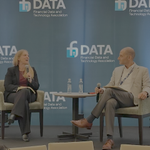
Agents that act on a consumer's behalf could turn a simple booking request into a payment liability dispute, says Steve Boms, Executive Director at @FDATAglobal.
Steve gave a scenario. A consumer tells an AI assistant like Claude they need one ticket to Sydney next week and asks it to monitor prices and buy the moment the fare drops below a set number. The next morning, the consumer finds 20 tickets booked on their account.
The first thing the consumer would do is call their bank and say they never authorized those purchases, because they asked for one ticket. The bank might then go to Anthropic and say it owes money, since the bank has a consent record from its customer. Anthropic could respond with the chat log, which says to buy as many tickets as are available.
That creates a dispute. Under Reg Z and Reg E, the US rules covering liability for credit card and electronic payment disputes, the fundamental question is whether the consumer gave their access credentials over for those purchases, yes or no.
FDATA retweeted

Steve Boms of @FDATAglobal says agentic AI tools are coming to market whether or not regulations keep pace, and Section 1033 is the building block for getting data privacy and security right.
He talks on the regulatory landscape with @RemyBlaireNews at #Money2020USA
Charging fees to access a consumers' data is "an anticompetitive move." That was our Steve Boms this morning on @FinTechTV. Steve discussed the ongoing debate over consumer data rights, and how regulatory uncertainty could shape financial innovation: lnkd.in/euq9ACQa

The Canadian Press talked to FDATA Executive Director after our 2026 Global Open Finance Summit about the open banking roll out in Canada. Boms said consumers could get access to open banking tools would be toward the end of 2027. Read the full story: tinyurl.com/4n7nw83y
FDATA retweeted

At the Global Open Finance Summit, Acting Superintendent Asrow discussed the evolving role of state regulators in reinforcing responsible data use.
As new technologies emerge, DFS is fostering innovation while advancing strong protections for consumers and the financial system.


In a fireside chat at our Global Open Finance Summit, our Executive Director Steve Boms and Kaitlin Asrow, Acting Superintendent at the New York Department of Financial Services (NYDFS), explored emerging state-level approaches to open banking and open finance, and more.

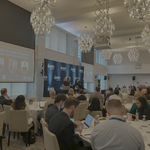
Our 2026 Global Open Finance Summit is underway! 100+ industry leaders have gathered in Ottawa for this information-packed event. Our Executive Director Steve Boms gave opening remarks followed by a fireside chat on Consumer-Driven Banking in Canada. Thanks to all who are here!

Competition & modernization are reshaping Canadian banking. In this month’s FDATA Member Spotlight, EQ Bank’s Dan Broten discusses consumer-driven banking, innovation & building a more consumer-first financial ecosystem: tinyurl.com/p449s3f8 #OpenFinance #Fintech #OpenBanking

Open Banking Expo UK and Europe returns to London, Oct. 13-14, 2026.
Join the organisations shaping what happens next: bit.ly/3hwIsu2
🎟️ Use 20% discount code: FDA20, which expires Sept. 15.
#OpenBanking #OpenFinance #SmartData

We’re excited to welcome @SpencerFane as a Silver Sponsor of the FDATA 2026 Global Open Finance Summit!
Greg Ewing will also join our panel on AI and write access in open finance.
📍 Toronto | September 17
🔗 fdata.global/summit/


FDATA is pleased to announce that Anne Butler, Managing Director of Payments, Supervision and Oversight at the @bankofcanada, will participate in a fireside chat at FDATA's 2026 Global Open Finance Summit. Anne will share insights on the evolving regulatory landscape.

📢 The agenda is here.
FDATA’s 2026 Global Open Finance Summit returns to Toronto on September 17, bringing together regulators, policymakers, financial institutions, fintechs, and technology leaders from around the world. Register here: lnkd.in/dTeStc_C

FDATA Exec. Director spoke with @BetaKit about Canada's progress toward #CDB and the need to ensure smaller fintechs can participate in the ecosystem, discussing FDATA's proposed sponsored fintech model, which would create an on-ramp for emerging firms. tinyurl.com/2w8unuat

🎙️ New podcast episode! FDATA Executive Director joined @FintechNewscast to discuss:
🔹 Section 1033 & the future of U.S. open finance
🔹 Why consumers should control their financial data
🔹 APIs vs. screen scraping
🔹 Canada's open finance progress
tinyurl.com/zz8bvcuz

FDATA retweeted

Who should control your financial data—you or your bank?
Steve Boms, Executive Director at @FDATAglobal , joins us to break down open finance, Section 1033, and the future of consumer data access
open.spotify.com/episode/2e5…

Canada has an opportunity to build a #CDB framework that promotes competition and innovation. In a recent interview with @DigMedia, FDATA discussed why proportional accreditation and clear implementation standards will be critical to getting it right. tinyurl.com/bvmwewm2

