
Senior Research Scientist @GoogleDeepMind Discovery Team. Previously PhD with @SchmidhuberAI. Working on Reinforcement Learning.
London, UK
Joined September 2018
- Tweets40
- Following367
- Followers1.2K
- Likes387





Francesco Faccio retweeted

This is an old hat. That's exactly what the neural fast weight programmers did in the 1990s (including the 1991 unnormalised linear Transformer). Overview with links to the original papers: people.idsia.ch/~juergen/fas…


We asked GPT-6 Astra to edit Qwen3.5-0.8B weights to improve math.
It directly changed only 0.016% of weights, fixing 0.8B's reasoning loops & improving math up to 6x and even instruction following 3x, without gradients or training.
We call this Weight-Space Programming: frontier LLMs can now natively read/write neural network weights! 🧵
Blog: rikiyat.github.io/blog/weigh…

Readers added context they thought people might want to know
LLM was given weights explicitly as text in prompt and used code/forward passes (per authors' logs) to ablate Qwen looping direction, a known thinking-mode issue per model card. Primarily fixed repetition in that mode, not general 'natively' improving weights/math.
rikiyat.github.io/blog/weight-sp…
github.com/RikiyaT/lm_und…
huggingface.co/Qwen/Qwen3.5-0…
huggingface.co/RikiyaT/Qwen3.…
Francesco Faccio retweeted

We’re excited to introduce Inherent, a lab designed from scratch to build AI agents that discover new knowledge.
The coming era of machine-driven scientific inquiry demands a new kind of research institution and a new kind of AI.
To achieve our mission, we live within the experiment, recursively self-improving the entire research organisation. We investigate questions including:
- What does ‘AI taste’ look like in the sciences, and how can we build an institution that embraces this new aesthetic of discovery?
- What new kinds of human-machine teaming will make the most of AI that can truly innovate?
- How can we build recursive self-improvement at the collective level that continually increases human agency over outcomes?
We have just closed a $50m seed round led by @IndexVentures and @radicalvcfund, with participation from other outstanding investors including NVentures (@nvidia's venture capital arm), @buildexante, Metaplanet, Macroscopic, @MythosVentures, Charlie Songhurst, @chalfs, @jluan, @dwarkesh_sp, @Thom_Wolf, @j_foerst and @maxjaderberg. We are advised by @matthewclifford.
Inherent is a Public Benefit Corporation headquartered in London.

Francesco Faccio retweeted

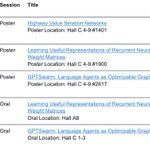
Excited to announce the 𝐁𝐞𝐬𝐭 𝐏𝐚𝐩𝐞𝐫 𝐀𝐰𝐚𝐫𝐝𝐬 (2 papers) and 𝐇𝐨𝐧𝐨𝐫𝐚𝐛𝐥𝐞 𝐌𝐞𝐧𝐭𝐢𝐨𝐧𝐬 (2 more papers) for our NeurIPS workshop R0-FoMo: Robustness of Few-shot & Zero-shot Learning in Foundation Models 🎉
Please join us in congratulating the authors 👏


Francesco Faccio retweeted

Excited to present “Contrastive Training of Complex-valued Autoencoders for Object Discovery“ at #NeurIPS2023. TL;DR -- We introduce architecture changes and a new contrastive training objective that greatly improve the state-of-the-art synchrony-based model. Explainer thread 👇:

Francesco Faccio retweeted

ArXiv arxiv.org/abs/2305.17066: NLP-based societies of minds via NNs like large language models that interact via language. Solves question answering, captioning, text-to-image synth., 3D gen., egocentric retrieval, task solving. Will new societies of NN minds as new AIs emerge?

Francesco Faccio retweeted
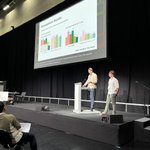
KAUST, the university with the highest impact per faculty, has 24 papers #NeurIPS2022. Visit Booth#415 of the @AI_KAUST Initiative! We are hiring on all levels.

Francesco Faccio retweeted

📢 Registrations for EWRL2022 are now Open!
📅 Sep 19-21, 2022
📍 Milan, Italy
Register at ewrl.wordpress.com/ewrl15-20…

Francesco Faccio retweeted

Do NNs learn solutions that are modular? Our #ICLR2021 paper investigates functional modularity in NNs and finds that although weights specialize, they are not reused to implement the same functionality elsewhere in the network. This limits certain types of generalization.

Francesco Faccio retweeted
How can we discover visually salient object-parts in an unsupervised way? Our #ICLR2021 paper addresses this by formulating a novel local spatial prediction problem that leverages the modularity of objects. RL agents using our keypoints outperform a number of baselines on Atari.
