

🌏︎ Founder of AttentionLabs (2.7B+ views). Advanced YouTube strategy for the largest personal-brands on YouTube (and sharing lessons).
Oxford, United Kingdom
Joined August 2015
- Tweets4.2K
- Following1.3K
- Followers5.3K
- Likes2.5K




pixar makes every film twice. first as story reels: rough sketches and scratch voices, watched, torn up and rebuilt many times. animation starts once the reel works.
before a big shoot, film the whole video on your phone in one take. watch it with a friend. fix the order there.

1
6
409
A YouTuber just asked me why their video wasn’t getting pushed out, despite having high CTR, and high AVD.
This was my answer:

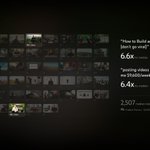
frederik pahuus is a solo consultant with 10,400 subscribers. his typical video gets about 2,500 views.
two of his titles spell out his whole strategy:
1. "how to build an audience of buyers (don't go viral)"
2. "posting videos on the internet makes me $9,600/week in profit"
both beat his usual views by more than 6x.
he makes no attempt to reach everyone. every title speaks to one person:
↳ a consultant who wants a business like his.
if you sell a service, you don't need a big channel. you need one your buyers watch.
write every title for the person who could hire you, and judge the channel by enquiries.

2
5
515

stop adding up everyone's income to get a bigger number.
"$900k a month coaching call" reads as fake. "$10 million coaching call" sounds like the call cost $10 million.
pin the number to one person: "what a $10 million sales manager's coaching call actually looks like".

2
4
534


in the late 1950s david ogilvy wrote a car ad with this headline:
"at 60 miles an hour the loudest noise in this new rolls-royce comes from the electric clock"
no engine specs. no horsepower. just a moment you could picture.
the technical detail was there, lower down, for the people who wanted it.
most creators title their videos with the engine: the tool, the method, the name of the framework.
the viewer wants the clock. what it will feel like when this works.
so on your next title:
1. write the method version
2. ask "what will they notice when it's working?"
3. put that in the title and save the method for the video
the feeling gets the click. the method earns the trust once they're in.


i looked at 48 youtube channels from y combinator startups, and found something REALLY interesting.
only 7 were consistently getting over 10,000 views per video.
and ALL 7 had something in common.
they had a founder on camera, making videos that almost NEVER mentioned their own product.
meanwhile, webflow has 222,000 subscribers and gets around 1,300 views a video.
so what's going on?
well, look at what most startup channels post:
- product tutorials
- feature announcements
- customer stories
- recordings of company events
which makes sense. they're trying to grow their companies.
but think about it from the viewer's perspective.
why would someone who's never heard of your company want to watch a video about its latest features?
now look at the 7 channels that actually get views.
theo from t3.gg covers ai coding news. another founder teaches people how to use claude code. garry tan makes videos about building startups.
i went through more than 130 titles from these channels, and only TWO mentioned their own products.
but here's where it gets interesting.
15 other founder-led channels still struggled to get views. most were talking about running their own startups or interviewing founders nobody had heard of.
so simply putting a founder on camera isn't enough.
the difference is WHAT they talk about.
the unsuccessful channels make videos about what their company wants people to know.
the successful ones make videos about what people ALREADY want to know.
and there's a pretty simple way to apply this to your own channel.
1) start with your ideal customer, NOT your product.
ask yourself: what would this person watch even if they'd never heard of our company?
2) study what they're already watching.
look beyond your competitors. what problems are they trying to solve? what news are they following? which videos are massively outperforming others?
3) make videos about those interests, using your own expertise.
your product can appear when it genuinely helps solve the problem, but it shouldn't be the reason the video exists.
because there's a big difference between making videos that advertise your company and making videos that attract people who might eventually buy from it.
and if nobody wants to watch the video in the first place, they'll never get far enough to discover what you're selling.

3
6
587
everything i know about getting clients from youtube, in 12 lines.
1. give away enough that someone could start without buying anything.
2. film the real work, like a live sales call or a whiteboard session on a call, rather than a talking head explaining it. watching you do the work is proof. hearing you explain it is a claim.
3. judge a client video by who watched, not how many. a video showing how you ran a known operator's sales team might get 200 views and still be one of your best for winning business, because the right 200 people saw proof.
4. the more specific the problem, the more satisfied the right viewer is when you solve it. hyper-personalised, niche dream-outcomes, with overly-specific mechanisms.
5. make one long free course covering the whole skill, point every other video to it, and pitch your paid offer at the end.
6. keep sending dms and looms alongside your videos for months. the videos build trust, and outreach creates the opening.
7. don't decide your offer before you start. watch what people keep asking for and how ready they are to buy, then bundle those asks into one offer.
1
11
650
steal the youtube inspiration clients pay me $8,500/mo for:
(outliers to blow-up any channel)


1
15
1,295
7 YouTube videos I'd steal if I was starting from zero.
They all make hard things easy. Up to 91x their normal views.


inside every niche, youtube sees several separate clusters of viewers.
take productivity.
beginner cluster: morning routines, pomodoro, hustle hacks. they also watch ali abdaal, thomas frank and ted talks.
insider cluster: ai personal operating systems, critiques of note-taking systems. they also watch tiago forte and mike schmitz.
from the outside it looks like one audience. inside it's different people, on different devices, with different watch histories.
and it depends on the topic. someone at level 5 in productivity can be level 1 in woodworking.
the mistake is mixing them: expert depth in a beginner thumbnail. youtube tests it on beginners, they leave, and the video dies before an insider ever sees it.
pick one cluster and point every part of the video at it: topic, title, pace, depth.

everything I know about youtube hiring (got me 4,526,269,015 views):
$500 a month
hire a junior editor at about $100 a video. ask for tight cuts only, because that's what this price buys.
hire a thumbnail designer at about $25 a thumbnail. they make the image. the idea still has to come from you.
the new problem is missed deadlines. giving feedback and chasing people starts eating the time you just freed.
$1,000 a month
hire a va at $10 to $20 an hour. they chase the editor, pass on feedback and track deadlines, so you stop doing it.
the new problem is that you're still writing every script and giving the editor notes on every cut.
$2,500 a month
add a script writer and researcher at about $250 a video.
swap the junior editor for a senior one. a senior editor has their own judgment, so they don't need your notes.
the new problem is that you now have a group of freelancers to keep in sync.
$10,000 a month
add more editors. make your senior editor the one who trains them and coordinates deadlines. they check every cut before you see it.
hire a full time writer.
hire a producer at about $5,000 a month. you only talk to them, and they deal with everyone else.
your job is now three things. keep your voice, make the big calls, and record.
the new problem is that you now have a real team to employ.
$20,000+ a month
you need hr, payroll and someone to recruit. most of your time goes on operations.
at every step, hire for the problem you have right now.
12
17
1,837
hormozi's *new* process for creating f*ck tons of content, fast:
1. pick formats that need almost no prep.
record a real call with a client or your team. record a real q&a, or a presentation you were giving anyway. there's no script to write because the questions already exist. the video stays deep because those questions came from real people.
2. batch your recording.
record four videos in one sitting. starting from cold is the hardest part of recording. so do it once instead of four times.
3. plan by the week, not the day.
a daily plan makes you pick your priorities again every morning. so whatever mood you're in that day decides them. and every day that doesn't go to plan counts as a small failure. a weekly plan survives a bad day. the week still has room to catch up.

4
480
if i wanted clients from youtube but had no case studies, i'd start with breakdowns.
i'd analyse the work of brands or creators my ideal client already recognises, even ones i've never worked with.
paddy galloway's channel has 33 videos. every one breaks down someone else's channel.
those videos got tens of millions of views, and he became the strategist the biggest creators hire.
here's how i'd approach it:
1. pick the target on purpose.
choose the exact kind of company you want to sign, not whoever is convenient. ideally, it's one your dream client already recognises. that way, they're watching you solve a problem for someone like them.
2. be specific, even when it's unflattering.
saying a brand is doing well doesn't show much. explaining exactly what it's getting wrong, and why, gives a prospect something to evaluate. don't critique for attention. make a diagnosis you can defend.
3. structure the thinking, not the performance.
i'd use a rough board of notes rather than write a full script, then talk through the analysis. the viewer needs to follow your reasoning, not admire your editing.
so if "i don't have case studies" is what's stopping you, don't pretend you have results you haven't earned.
show how you think about work your future client already knows. the breakdown itself is the proof.

4
33
1,468
7 YouTube ideas I'd send a client paying me $8,500/mo.
They're all just lists. Up to 134x their normal views.


1
7
878
There's a *really* interesting problem with originality on YouTube.
You can actually make an idea SO original that nobody wants to click on it.
And I've developed a pretty simple way to check for this.
You see, most YouTube ideas have two parts:
1) The GOAL. What the viewer wants to achieve.
2) The METHOD. How you're going to help them achieve it.
And ideally, only ONE of these should be new.
Think about it.
If the goal AND the method are familiar, why would anyone be particularly excited? They've probably seen the same video a dozen times.
But if BOTH are unfamiliar, the viewer has no idea why they should care.
So, the sweet spot is somewhere in between.
A familiar goal with a NEW method. Or a new goal with a FAMILIAR method.
The familiar part tells the viewer *this is something I care about*.
The unfamiliar part makes them think *I've never seen someone do it like THAT before*.
But how do you actually measure this?
Well, I use YouTube outliers.
And rather than researching the entire idea, I search for the goal and method SEPARATELY.
For example, imagine a video about growing a YouTube channel using a maths textbook.
When I searched for "get your first 1,000 subscribers", I found more than a dozen outliers in a single search.
But growing a channel using a maths textbook?
Not ONE relevant result.
So, the goal is clearly familiar. But the method appears to be completely new.
And that's exactly the combination I'm looking for.
Here's how I'd use this for your own ideas:
1) If BOTH parts have plenty of outliers, keep the goal and experiment with a more unusual method.
2) If NEITHER has outliers, replace one with something viewers already recognise and care about.
3) Then check the FORMAT. Whether it's a challenge, ranking, experiment, or something else. Look for outliers here too.
Because if your goal, method, AND format are all unfamiliar, you're asking the viewer to understand far too much before clicking.
The interesting thing is that originality isn't necessarily what makes an idea exciting.
It's the *contrast* between something the viewer already wants, and something they've never seen before.
You don't need to make EVERYTHING new.
You need to make ONE thing new enough to create curiosity, while keeping the rest familiar enough to matter.

2
28
1,553
There's something *really* interesting happening with long-form YouTube videos.
And I think most creators are learning the wrong lesson from it.
You see, Nick Saraev and Liam Ottley both teach AI automation on YouTube. And their biggest videos are THREE to SIX HOURS long.
So, naturally, you'd assume that longer videos are the secret.
But here's the strange part.
Both creators also publish livestreams, Q&As, and build-alongs that are just as long. And those videos get completely ordinary views.
So, what's actually happening?
Well, look at the videos that DO take off.
Saraev's four-hour Claude Code course is his biggest video by far. And Ottley's beginner's guide to AI agents follows the same pattern.
They're not just long videos. They're packaged as the ONE video you need to master a particular skill.
And that distinction is *huge*.
Think about it.
A 10-minute tutorial on Claude Code is competing with hundreds of other 10-minute tutorials.
But a FOUR-HOUR complete course?
Suddenly, you're not offering another tip. You're offering the entire education.
And the viewer understands this BEFORE they click.
The title promises a complete course. The thumbnail shows four hours of material. Together, they make the video feel like a definitive resource, rather than another tutorial.
Of course, there's a catch.
You can't just stretch 10 minutes of information into four hours and expect the same result. The video actually needs to DELIVER on that promise.
But when it does, something interesting happens.
That course becomes the reference point for an entire topic. And every shorter video you publish can point people back to it.
So, if you want to try this in your own niche, I'd focus on THREE things:
1) Pick ONE skill your audience desperately wants to learn.
2) Create the most COMPLETE explanation of that skill you possibly can.
3) Package it as the definitive resource, rather than another video on the topic.
Because the opportunity isn't necessarily to make LONGER videos.
It's to make videos that feel like they're the LAST one someone will ever need to watch on that subject.

3
9
808
There are three reasons why YouTube viewers click-off.
Your video becomes:
1. Too hard: Viewers try, then give up.
Fix: cut a step, add an example, or use plain words.
2. Too easy: Viewers already know it and look at their phone.
Fix: skip ahead, make it matter more, or share something new.
3. Too loud: Cuts, zooms, and sound effects make viewers tired and leave.
Fix: remove effects until the idea gets the most attention.

1
498