




Turmoil across global markets is now commonplace. Oil and natural gas surged as strikes on shipping in and around Hormuz ramped up and the Houthis extended their attacks on Saudi Arabia’s energy infrastructure (1/3)
Speculation mounted over a renewed US/Israeli military campaign against Iran after the midterms. Donald Trump extended his largess to US farmers, with another emergency assistance package taking government support closer to $80 billion over two years (2/3)
Yara posted lower Q3 net income, reported significant ammonia output cuts and pointed to deferred Q3 buying. #Fertilizer price movements were less pronounced than in recent weeks, with #nitrogen broadly firmer, while #phosphates, #sulphur and #potash moved slightly lower (3/3)
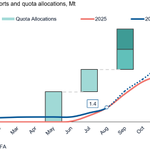
Our chart of the week shows the expected increase in China's #urea exports this year following recent quota allocation announcements #nitrogen #fertilizer

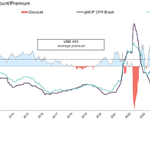
Our chart of the week shows the increased price premium for #MOP to the US over sales to Brazil, which is forecat to decrease but remain in line with historical acerages over coming months #potash #fertilizer

More crude oil is moving through the Strait of Hormuz than at any time since the outbreak of the US-Israeli conflict with Iran. Still, shipments of refined products and LNG remains severely restricted, and the standoff is fuelling global inflation (1/3)
European gas prices remain near their highest in three years and OCI #Nitrogen curtailed production in the Netherlands. Transit of #fertilizers and inputs appears lower down the priority list, though tonnes are still escaping the chokepoint (2/3)
China is set to play a major role in India’s latest #urea import tender this week following a fourth final round of quota export allocations. Despite a severe #sulphur supply crisis that has driven up production costs, DAP/MAP prices were largely stable (3/3) #fertilizer
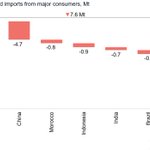
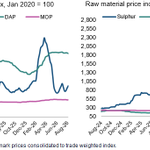
The reduction in #sulphur supply due to the conflict in the Middle East and the Hormuz closure (plus export restrictions from Kazakhstan and Russia) is evident in trade. Imports by major consumers for Q1-Q3 are estimated down nearly 40%, with the most severe drop in China

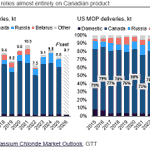
CRU's expectation, unchanged by last week’s announcements, is that Canada will remain the lowest-cost and most readily available source of US #potash supply over the medium term. Further tariffs or restrictions on Canadian imports would fall mostly on US farmers #MOP #fertilizer

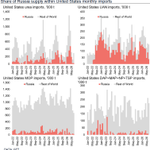
Donald Trump signed the Lindsey Graham Sanctioning Russia and Iran Act into law on 18 September. Uncertainty remains around potential treatment of #fertilizer under the legislation, but restriction on Russian supply could severely impact US pricing for #nitrogen #urea #UAN
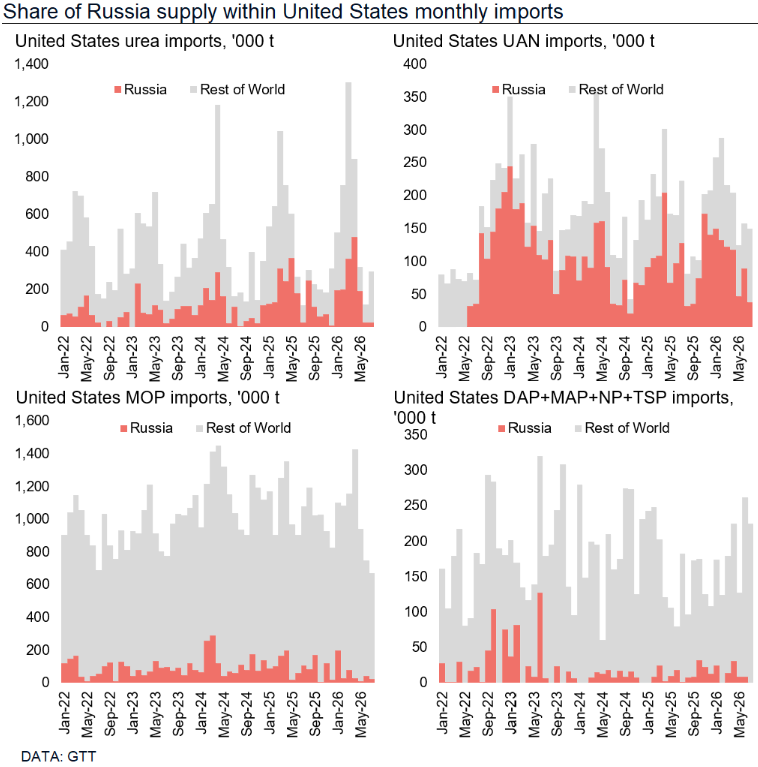
Still, around 190kt of Saudi #phosphates have exited Hormuz to date in September. The US passed sweeping new Russia sanctions legislation, potentially exposing Russian #fertilizer imports to additional tariffs (3/4)
#Urea extended is recent climb last week, with global prices up sharply. US #nitrogen, #phosphate and #potash prices all rose. #Sulphur is now falling from record highs as buyers step back and demand dries up (4/4) #fertilizer
China's #urea exports have spiked from their 2024 low. China exported 520 kt in August, preliminary customs data show. China has now released the third round of quota allocations, according to sources, with the total volume expected around 2 Mt #nitrogen #fertilizer

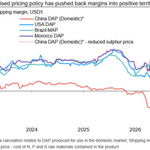
China's lower-priced domestic #sulphur supply allows margins for #phosphate producers to creep back into positive territory, even though China's producers are locked out of the export market and limited to lower-priced domestic sales #fertilizer

European natural-gas prices spiked to their highest in more than three years, with #fertilizer production costs for both feedstock and finished products surging in Europe. China is expected to float a third export quota allocation for #urea in the coming days (1/3)
Two vessels passed the Strait of Hormuz in the past week loaded with #phosphates, while DAP/MAP prices sank in India, Brazil and elsewhere but remained firm in the US. Middle East producers cut monthly #sulphur export prices, while other S benchmarks were largely unchanged (3/3)
