

The Fines and Fees Justice Center (FFJC) is a national hub for research, advocacy, and collaboration for the reform of fines and fees.
Joined April 2018
- Tweets6K
- Following1.5K
- Followers6.9K
- Likes13.8K
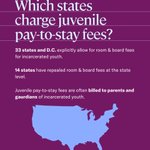







33 states and D.C. charge juvenile room and board fees, and only 14 states have repealed them.
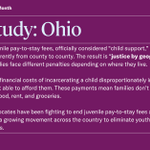
The justice system doesn’t have to be like this. Advocates in Ohio are pushing forth a campaign to end juvenile pay-to-stay fees.

In Ohio, parents are essentially charged child support for their detained kids. The state uses child support offices to collect money for care, support, maintenance, education, and medical care from parents, who often are low-income and disproportionately people of color.
Bree Easterling, Senior Project Coordinator at @PolicyMattersOH, authored a blog post about Youth Justice Action Month and the movement to end pay-to-stay fees in the juvenile justice system in Ohio. Check it out here: finesandfeesjusticecenter.or…

Pay-to-stay fees are devastating in the juvenile justice system. Youth often do not have jobs and a steady income, so the cost falls on their parents or guardians. This financial burden makes it difficult to afford the basic necessities like shelter, food, and medical costs.


The financial burdens of juvenile detention tend to fall heaviest on the families least equipped to handle them, further punishing the family of incarcerated young people.
Map Courtesy of @CampaignZero
The financial burdens of juvenile detention tend to fall heaviest on the families least equipped to handle them, further punishing the family of incarcerated young people.
Map Courtesy of @CampaignZero
October is Youth Justice Action Month. This month, we celebrate the youth advocates fighting to transform the juvenile justice system from something harmful into something supportive. In particular, we will explore a specific type of fee that affects people across the country.


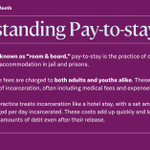
While these charges are sometimes automatically deducted from a person's wages or prison account, they frequently accrue and must be paid back as debt following completion of their sentence.
When over 85% of Americans drive to work and public transit falls short, taking away a license damages people’s lives and their wallets. A suspended license strips away an average of $12,700 in yearly earnings for nearly 6 years.
Real reform for fines and fees takes powerful partnerships. That’s why we’re proud to work with @RBI_Justice (RBIJ), to help unite businesses and advocates to build a justice system that powers safety and prosperity for everyone.
Learn more about RBIJ’s Reform Agenda for Safety and Prosperity: rbij.org/policy-agenda?utm_c…
Major criminal justice reform progress in Indianapolis! Criminal justice reform advocates have proposed eliminating ankle monitoring fees in Marion County, which generate minimal revenue while placing massive financial barriers on people working to re-enter society.
If eliminated, Indianapolis will join leading jurisdictions across the country in abolishing these predatory fees—following California's landmark 2021 repeal of 23 administrative criminal fees.
Ending these charges puts vital capital back into local communities and pushes city officials toward more sustainable, equitable funding models.
Ankle monitoring fees must be abolished. Read more at the link!
hoodline.com/2026/10/indiana…

Across the nation, thousands of individuals are burdened by monthly costs associated with parole and probation. In states like Mississippi, Alabama, and Louisiana, residents are placed in a precarious situation where failing to meet fee payments risks re-incarceration.
These costs accumulate alongside pre-existing court debt and judicial fees. Because supervision fees are frequently levied immediately upon release—before people can even secure stable housing or employment—they further disrupt the reentry process.
State and local governments must cease relying on supervised individuals as a revenue source.
Learn more about this practice in this article: mpbonline.org/blogs/news/the…
