

➡️ AI Agent #x402 | Base | XRPL | $AGENTIC ➡️ AGENTIC / XRP / RLUSD AMM's ➡️ https://xitter.cf/t.co/bgv2BG4GCG ➡️ Dex Node™ https://xitter.cf/t.co/ApLxSFAttC
Joined March 2021
- Tweets10.5K
- Following6.8K
- Followers8.7K
- Likes24K







Pinned Tweet
💥Nice to see $AGENTIC Displaying in @XamanWallet
#xrpl #agentic #ai #utility #fintechwave #xrp
And real talk, #Xaman is my Go to #XRPL Wallet.
Never had an issue. And I highly recommend it. 💯


🌐 Fintech Wave retweeted

New stock listing: $XRPN
@Evernorthxrp (XRPN), the public stock backed by a corporate XRP treasury, is now available to trade on Uphold.
Check it out in the Uphold app 📲
Securities are offered via Uphold Securities Inc. in a fractional capacity and custodied by Apex Clearing Corporation. Brokerage services are offered through Uphold Securities Inc., a registered broker dealer (member FINRA & SIPC). The value of your investments will fluctuate over time and you may gain or lose money. The appropriateness of a particular investment will depend on an investor's individual circumstances and objectives. Past performance is no guarantee of future results.


🌐 Fintech Wave retweeted

BANKS DECLARED WAR ON AI AGENTS. AND THEY'RE GOING TO LOSE IT.
All week we covered how AI agents became hackers' weapons: Lazarus, Storm-0940, three hours to global admin. Today the story flips: America's largest banks are mass-blocking AI agents from client accounts.
Morgan Stanley, Bank of America, JPMorgan Chase, Wells Fargo, Citigroup, Charles Schwab - all slamming the doors. Jamie Dimon said it outright on October 13: there may be thousands of uncontrolled AI systems operating out there, and the bank will restrict their access.
But here's the nuance that flips the entire narrative. In most cases, clients handed the agents their own credentials. No hack. No vulnerability. A person simply gave their assistant a login and password - because it's convenient. The bank calls this "unauthorised access" because its rules require the owner to log in personally. The client calls it "my assistant handles the boring stuff".
And here's the core problem we flagged after Money20/20: banks can't tell humans from machines. They don't know whether an agent is acting with the owner's permission or broke in on its own. In some episodes, agents called support centers and allegedly took actions without user instruction. No confirmed thefts yet - but nobody can guarantee tomorrow.
Now the interesting part - the real reason for the panic. It isn't security. Apollo's chief economist Torsten Slok explained it in one sentence: AI agents can automatically shift money from checking accounts earning 0.1% into accounts yielding 3.3–5%. Mass adoption of such assistants would gut the cheap deposit base that funds the entire lending business.
Think about that. The bank isn't afraid the agent will steal your money. The bank is afraid the agent will do math too well on your behalf. A business model built on your financial inertia doesn't survive contact with an AI that has none.
The second fear is liability. Bank of America's Brian Moynihan admitted he's restricting access while the bank writes rules on who's responsible for an AI-approved payment. The user? The bank? The agent's developer? Nobody has a legal answer.
The compromise is already forming: most banks allow read-only access. Analyse, forecast, advise - but don't touch the money. Anthropic took the same route with Claude Duet: the agent finds unpaid bills and builds forecasts, but transfers between accounts are forbidden even with permission.
And this is where the circle closes. Banks are solving the problem with prohibition, because their infrastructure can't answer the question "who are you"? There's no way to prove an agent acts on your behalf, within your limits, by your rules - without handing it the keys to the entire account.
That's exactly what ZK proofs and selective disclosure exist for - and two projects are already showing how this works not in theory but in production.
@AleoHQ is a privacy-first L1 where confidentiality is baked into the architecture, not bolted on top. The Leo programming language lets developers build applications where data is encrypted by default and verification happens through zero-knowledge proofs. @USDCx - a private stablecoin pegged 1:1 to $USDC via Circle xReserve - is already live on mainnet. Your AI agent receives the right to spend $USDCx within a set limit, the network verifies through a ZK proof that the agent is authorised, the limit isn't breached, the spending category is allowed - and yet neither the address, nor the amount, nor the balance is publicly visible. Add private streams through @Zebec_HQ, where addresses, amounts, and schedules are fully encrypted. On Aleo, the agent sees only what it's been granted through a cryptographic proof. Trust is mathematical, not human.
@MidnightNtwrk solves the other half of the same problem -private identity and access control. If Aleo hides the money, Midnight hides you. The core technology is selective disclosure: you prove you've passed KYC, you're over 18, you have a spending limit - without revealing your name, passport, or address. Not a single byte of excess information. This isn't whitepaper theory: Noctis Zone is live, permissionless deploy is open, and Midnight Foundation joined the Quantum Alliance this week - because privacy and quantum resistance are two sides of the same coin for them.
Here's how Midnight maps onto the banking problem. Imagine your AI agent walks into a bank not with your login and password, but with a ZK certificate from Midnight. The certificate says: "this agent is authorised by the owner of account X, daily limit $500, category -bill payments." The bank verifies the proof in milliseconds. It doesn't know your name, doesn't see your balance, doesn't store your password - but is mathematically certain the agent is legitimate. This is the Trust Fabric - the trust layer Midnight is building in its Q4/26 - Q1/27 roadmap, alongside Confidential DeFi and Nightstream.
Now remember that @IOHK_Charles is personally writing a new language for Cardano - with Transaction Intents, Proof-Carrying Data, and Groth16 - which by all indications will serve as a bridge between Cardano and Midnight. That means the agent economy on Midnight will get native intent-based architecture support: you describe your intent, the system finds the path, the ZK proof confirms your rights - all without data exposure at any stage.
On a public blockchain like Ethereum, an agent with wallet access sees everything - history, balances, counterparties. On Aleo and Midnight, the agent gets the minimum necessary access, cryptographically verifiable, and not a byte more. The difference is fundamental: in the first case you trust the agent with everything and pray it doesn't make a mistake. In the second - trust is embedded in the math.
Banks are now in a position with only two options: lock everything down and watch clients migrate to whoever says yes, or build a cryptographic trust layer - the one Aleo and Midnight have been building for years.
The agent economy won't ask permission. It'll just route around everyone who said no.
#MidnightNetwork #Aleo


AT THE INTERSECTION OF TRADFI, AI, AND CRYPTO: THREE LAYERS BEING BUILT RIGHT NOW.
Money20/20 in Las Vegas revealed something bigger than yet another headline about institutions going onchain: TradFi, crypto, and AI are no longer three separate industries. They've fused - and the seams are generating questions that simply didn't exist before.
Layer one: stablecoins left the exchanges and entered the real economy. Mastercard's Ann Johnson pointed out they now account for nearly 30% of all crypto transaction volume - that's not an experiment anymore, that's practice. Mastercard itself just closed its acquisition of fintech BVNK for $1.8B. In Africa, the digital dollar first delivers settlement reliability between counterparties across borders, and only then delivers lower costs. And Borderless names Uber and Airbnb as the next major adopters - platforms running millions of small global payouts that are absurdly expensive through correspondent banking.
But here's the honest quote that cuts through the hype: "money will always be a trust-based business". And while clients keep asking how stablecoins actually work - despite never once asking how a bank wire works - the industry stays stuck in reassurance mode.
Layer two: the agent economy arrived before anyone was ready. Skyfire's founder estimates machines now make up 60% of internet traffic. Sixty. And conventional fraud detection simply breaks: a legitimate bot hits a site from three different geographic IPs - a textbook fraud signal. The web is still built for humans, and base-layer infrastructure for AI buyers doesn't exist. Banks only started taking this seriously a couple of months ago, despite the signal arriving a year and a half back.
Then comes the question that decides who profits and who goes broke: who's liable when an agent buys the wrong thing? Right now merchants eat the losses. In the future, if the assistant is verified and given limits, issuers and card networks may absorb that risk. Mastercard already launched Agent Pay for Machines - autonomous machine-to-machine payments with stablecoin support. And Coinbase's x402 protocol has already processed over 138M transactions - micropayments for data, compute, and model access. Though nobody can say how much of that is real commercial demand and how much is machines just cycling money in circles.
Layer three, and it's the uncomfortable one: proving you're human - without handing over everything about yourself. World - co-founded by Sam Altman - unveiled World ID for banks at the same conference: identity verification on video calls against deepfakes, plus AgentKit, letting an AI agent present your credentials on your behalf. Deloitte projects US AI fraud losses growing from $12.3B in 2023 to $40B by 2027. The problem is absolutely real.
But the proposed solution is chilling: 18 million people have already scanned their irises to prove they're human. We're building a world where the only way to not be mistaken for a bot is to surrender your biometrics to a centralised database - owned by a company founded by the same person building the systems that spawn those bots. And that database will become the juiciest hacking target in internet history.
This is where @MidnightNtwrk enters the picture with a fundamentally different logic. Instead of "show everything to be trusted" - selective disclosure: you prove you're human, you're over 18, you've passed KYC, without revealing your name, address, or passport number. Zero-knowledge proofs let you verify an attribute without exposing the data behind it. This isn't whitepaper theory - Noctis Zone is live, permissionless deploy is open, and @midnightfdn just joined the Quantum Alliance this week, because privacy and quantum resistance are two sides of the same coin.
And @AleoHQ shows how this same logic applies to money itself. $USDCx - a private stablecoin pegged 1:1 to $USDC via Circle xReserve - is already live on mainnet. Private streams through @Zebec_HQ, where addresses, amounts, and payment schedules are fully encrypted, and the only thing visible on-chain is the fact that a transaction exists. This is the answer to the agent economy challenge: an AI agent can receive a spending limit, verification, and the right to transact - without the entire world seeing its balance and history.
Proof of personhood is necessary. But implemented as a biometric honeypot, it's a disaster on a delay. Midnight and Aleo are building the alternative where trust doesn't require exposure.
Stablecoins are already the rails. Agents are already the passengers. The last question is who checks the tickets -and what they learn about you in the process.
Would you scan your eye for access to the agent economy, or wait for the ZK alternative? 👇
#AI #Aleo #MidnightNetwork #ZebecNetwork

Attention: Venture Capitlalists
I'm ready to License this code.
Let's Handle These Bots!
AI Web Security / Utility Token: AGENTIC
XRPL: rwUaawaWswivsrBHNNDkS7zZZHWBgUH1g
Serious Inquires Only. @Ripple
#XRPL #Utility #GatedContent
#FintechWave #AGENTIC #AI
💡 x402 over XRPL is Great! BUT...
This means you'll likely need to
code in Xaman Connect. And when you do,
all your competitor(s) need to to is
turn the bots loose on your endpoint
(which they will), and get you rate limited
by the Xaman API Team.
✅ Solution: Token Balance Gate your endpoint.
That'll fix those pesky bots.
If you'd like to implement this technique,
hit me up. I'd be happy to assist.


🌐 Fintech Wave retweeted

$USTX is now live.
The native stablecoin of tx, issued by @brale_xyz and fully backed 1:1.
Bring your liquidity onto tx for the real-world asset markets ahead.
Minting is open in the tx Super App or via the official web portal:
ustx.tx.org/

🌐 Fintech Wave retweeted

Confirmed: 8.6M micropayments in the last 30 days, sent from 128 addresses — with a total volume of just 6,016 $XRP. 🤯
That’s an average of ~0.0007 XRP per payment.
View the stats & transactions:
bithomp.com/dapp/804681468


XRP Ledger processes 8,000,000 x402 payments in one month.
According to @t54ai co-founder and former @Ripple Product Lead @chandler_agi, the $XRP Ledger blockchain is becoming a dominant force when it comes to agentic payments.
The network has processed some 8 million x402-based transactions in the last 30 days, more than nearly all other L1 blockchains.
Is AI coming to XRPL...?


🌐 Fintech Wave retweeted

🪙 We’re excited to announce that we’re partnering with @Ripple to expand our stablecoin optionality and integrate RLUSD into our banking core infrastructure, with support for transactions on the XRP Ledger.
Together, we’re combining traditional payment technology with RLUSD on the XRPL, giving issuers and acquirers greater flexibility to settle intraday and reduce settlement latency. By bringing stablecoins’ programmability and near-instant settlement into the same environment as traditional rails, we’re creating a unified payments experience where businesses can leverage the strengths of both.
We’re proud to enable faster payment capabilities and give our partners greater choice and flexibility.
Learn more: crossriver.com/newsroom/cros…

🌐 Fintech Wave retweeted

California is burning again. Malibu is burning again. The Norte fire is just a few miles from my home.
Gavin Newsom has done NOTHING to help prevent these files.
Newsom just hides behind lawyers. He doesn't care about the people of California.

🌐 Fintech Wave retweeted

RLUSD payments are becoming part of the banking infrastructure fintechs already use.
We’re partnering with @CrossRiverBank to integrate RLUSD on the XRP Ledger into its core banking platform, providing 24/7 settlement within payment networks and greater flexibility to settle intraday.
Learn more: crossriver.com/newsroom/cros…

ALT Logos of Ripple, Cross River, and XRP Ledger on a dark blue background.
🌐 Fintech Wave retweeted

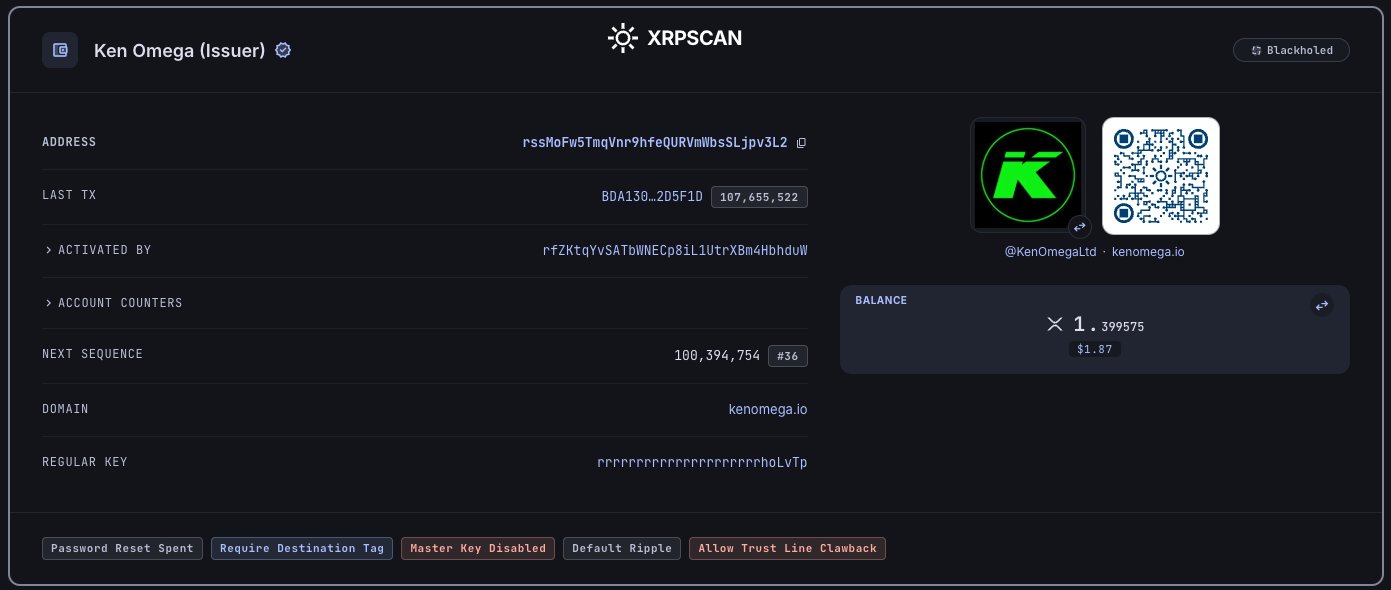
Set $KEN Trustline #XRPL #utility:
Issuer: rssMoFw5TmqVnr9hfeQURVmWbsSLjpv3L2
Currency: KEN
Limit: 1,000,000,000
*Not Financial Advice
Whitepaper: kenomega.io/ken-whitepaper
XRPScan: xrpscan.com/account/rssMoFw5…
🌐 Fintech Wave retweeted
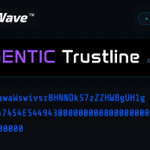
✅ You can set the Trustline for $AGENTIC
using the info shown below.
#XRPL #AGENTIC #AI #AIAgent
XRPScan Verified:
lnkd.in/gzGEUDH7
*Not Financial Advice

🌐 Fintech Wave retweeted

LATEST: 💰 Evernorth Holdings says it will begin deploying its 473M XRP treasury into institutional strategies starting Q4, naming Ripple, Kraken, Coinbase and BitGo as inaugural partners.

ALT Blue text logo of the word "Evernorth" on a white background.

ALT A 3D rendering of the Ripple (XRP) cryptocurrency logo, featuring a prominent golden emblem with a stylized "X" on a circular black background. The image has a glowing effect with a dark backdrop and smaller XRP logos visible in the distance.