

Real-time signal from X with AI Insights, Price targets & investment scores on every ticker. and AI recommendation. On Web, iPhone & Android.
San Francisco, CA
Joined December 2020
- Tweets19K
- Following339
- Followers7K
- Likes693



Nvidia ($NVDA) led an AI-driven selloff as the Nasdaq fell 2.5 percent into correction territory, with 489 new 52-week lows against just 51 highs.
• Intel faces a shareholder suit alleging it hid PC weakness before a 29 percent drop
• Neocloud names like IREN slid on funding worries and a weak Nebius outlook
• Tyson rose on quarterly results; Baidu says AI is now 53 percent of core revenue
Takeaway: breadth, not one stock, drove the damage.
259
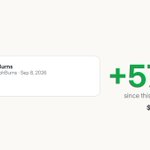
$ASO is up 57% since Sep 8, 2026 — and up another 3.9% today.
First call we saw on X: @SJosephBurns, Sep 8, 2026 at $44.71.
Worth a follow: @SJosephBurns.
Their full record: fintwit.ai/analyst?id=203652…

1
232
Paul Christiano warns America's lead over China is down to 12 hours after breaches at @OpenAI and @AnthropicAI:
“So again, both Anthropic and OpenAI in the very recent past have had extremely unsophisticated actors who appeared to have enough access to essentially extract the vast majority of algorithmic developments. Like they got access to Slack and can see where things were discussed, or they got access to the monorepo where most OpenAI code is shared and iterated on.
I think Hacktron within a couple of days of trying gained access to not only the ability to see OpenAI's internal source code, but the ability to make pull requests to OpenAI's monorepo. And then I think recently it was also announced that Cathedral, which is another just random cybersecurity startup within 12 hours was able to get access to all of Anthropic's Slack.
Where of course these algorithmic secrets are discussed and people often debate, are we eight months ahead of China or 12 months ahead of China or six months ahead of China? In reality, we're 12 hours ahead of China, right? Because if these secrets leak, then they are right at the frontier that the American companies are at.”
— Paul Christiano, Head of the Alignment Research Center; @OpenAI board member on @dwarkesh_sp
1
275
Watch the full pod:

.@paulfchristiano thinks that on the current trajectory (absent any slowing down), there is a 1 in 3 chance that we could have superintelligence powerful enough to overthrow the government within a year. (He articulates a concrete scenario).
He argues that the labs should pause further algorithmic progress until they can secure their weights and research secrets. Otherwise China could simply steal the superintelligence in the middle of the intelligence explosion, and the labs would no longer be able to slow down even if they saw their models going off the rails.
He also explains how AIs will be trained during the intelligence explosion, and why even a system trained entirely inside a data center could still have the capabilities profile such that humans would have very little chance of competing with it or controlling it.
And he discusses the plan for alignment - basically, making a superintelligence that actually does what we ask the way we mean it. Fixing reward hacks and building better graders will help up till the next few model generations, but he thinks that no single current approach has better than even odds of letting us control superintelligence. The hope is that the AIs figure out the solution to this problem during the intelligence explosion.
Paul is head of the Alignment Research Center. Previously, he was head of AI safety at the US AI Safety Institute. Before that, he led alignment at OpenAI, where he invented RLHF. He’s recently joined OpenAI’s board (though here he is speaking as a private citizen).
78
Economist Tyler Cowen asked Bay Area AI insiders which sectors could justify @AnthropicAI and @OpenAI's revenue numbers:
“I was in the Bay Area a few weeks ago, and many people were pushing very high revenue numbers on me. I asked them all the following question.
What are the other sectors that are going to grow sufficiently rapidly to justify the extreme revenue numbers you're giving me for Anthropic and OpenAI? And no one had an answer for that question. They didn't even try to give me answers.
So I think that means the extreme revenue numbers are false. That doesn't make me bearish on the sector as a whole. I'm still bullish.
You look at market data, whether it's real interest rates, stock prices, anything, market data still look pretty normal. And the whole world investing community is talking about AI.
So I trust the judgment of the market more than the judgment of the Bay Area people who don't think that carefully about social interactions.”
— Tyler Cowen, Economist on @a16z
1
244
Watch the full pod:

Will rapid AI capability improvements translate into runaway economic growth?
Economists Alex Imas and Tyler Cowen are skeptical. In this conversation with a16z's Erik Torenberg, they cover:
- Why smarter models can't automatically overcome economic bottlenecks
- Why slow-moving institutions can limit AI's impact on the economy
- How competition between AI labs is making powerful models cheaper to use
- Why AI's benefits to consumers could be much larger than GDP captures
- Why scientific advances and longer lifespans could be among AI's biggest benefits
00:00 Intro
00:58 Is AI progress speeding up?
04:44 Why Tyler is a sober voice
10:49 Could AI deliver double-digit economic growth?
19:02 Is GDP the right way to measure AI's impact?
23:51 What the Hugging Face hack teaches us
29:53 Why agents struggle to coordinate
33:45 What AI means for jobs and wages
39:29 Elections, data centers and AI politics
43:23 How Alex and Tyler got here
50:00 Rapid fire: AI predictions and higher ed
YouTube: youtu.be/g_67TmQ8lGY
@alexolegimas @tylercowen @eriktorenberg
71

$NVDA shares kept sliding Monday after CEO Jensen Huang resigned, as investors weigh the fallout from the sudden exit.

261
Nvidia ($NVDA) slid 13 percent last week, its biggest weekly drop since April 2025, after CEO Jensen Huang resigned.
• Nasdaq futures lead declines as AI stocks sell off ahead of Nvidia earnings
• Anthropic's IPO, targeting up to about 64 billion dollars, expected to price Wednesday
• Chime joins S&P MidCap 400 Wednesday; passive funds may need about 31 million shares
Key takeaway: Nvidia's Tuesday report is the next big test for the AI trade.
249
$NVDA is the most-talked-about stock on X right now.
Today's top 5 👇
Prices shown are pre-market.

1
318
4. $SPCX (Space Exploration Technologies Corp. Class A Common Stock). Sentiment on X: 62% bullish, 8% bearish.
1
100
Justin Fishner-Wolfson says Too much capital chases too few companies; a power law decides returns.
“There's a lot of capital that's flooding into certain categories, and there's not many companies, particularly in the growth stages, to back. So that just leads to pricing and market dynamics. In order to access these businesses you have to pay a certain price, and people are willing to clear it when there's just a lot of capital.
There was no shortage of capital that was flooding into fintech…”
@sourceryy @mollysoshea
1
1
306

Christian Garrett says SpaceX grew revenue 160% and posted $4.4B net income.
“The business is honestly just getting started. They obviously just had their Q3 earnings. And as you saw, a huge acceleration in the business, and they grew top line like 160%.
They posted $4.4 billion in net income, $8.8 billion of EBITDA. It's pretty wild given the just growth of the business. The core business, yes, it's still growing. You look at Starlink and that's moving way faster,…”
@sourceryy @mollysoshea
1
279
$DKNG — Michael Rubin says Sports betting is a crowded fight, and Fanatics wants in.
“I think you need to force yourself to be better, to innovate, to figure out how to be number one. I like, like, there's certain places where we're a real leader today. There's other places where, like in the betting and gaming business, we're a distant three today. I like that chance to figure out will we get to number one or not? Will we succeed or not? I like that. Like, that's fun to…”
@davidsenra
1
338
Watch the full pod:

.@MichaelRubin was hours away from losing his company. 3 years later, eBay bought it for $2.4 billion.
"I loved every bit of the experience. It wasn't scary to me. I liked the adrenaline of fighting for my life."
He opened his first business in his parents' basement at 13. Today, he runs @Fanatics: $14 billion in revenue this year, 22,000 employees, and the biggest seller of licensed sports products in the world.
Michael is a born entrepreneur with a deep love for the game. He could never be anything else and his only exit strategy is death. Those are my favorite type of founders and this is one of my favorite conversations. Unfiltered, funny, and full of fun, incredible insights.
0:00 Why so many billionaires are boring
3:47 Robert Kraft told him to sleep on it
8:25 How he almost went bankrupt at 16
11:44 Hours from being margined out in 2009
15:20 What a real entrepreneur is
17:21 "I'll stop playing when my heart stops beating"
21:03 The litigation, and why he loves the fight
25:12 "It's a currency of sports"
29:37 Selling more products to the fans they already have
32:42 "Number three is irrelevant, number two sucks, number one is everything"
33:48 "0.0 chance" he'd invest in prediction markets
35:49 $5.5 billion in collectibles
39:57 The debut patch: a $50 million card
45:14 "There was never an easier conversation"
50:00 "This is stupid": raising over $100 million and giving it back
53:26 "It's art for sports fans"
59:37 Winning the partnership, not the deal
1:06:19 "You saved me from something really dumb"
Includes paid partnerships.
64