

Assoc. Director and Sr. Policy Analyst, Frontier Group, part of @TPINNetwork. Transport, energy and climate policy, mostly.
Boston, MA
Joined August 2013
- Tweets13.4K
- Following1.3K
- Followers2.6K
- Likes10.3K



Pinned Tweet
Our 8th annual State of Renewable Energy dashboard w/@EnvAm is live! Check out how your state ranks in adoption of wind, solar, electric vehicles and more. frontiergroup.org/resources/…

Interesting discussion (and paper) but it misses a couple of key things, like:
a) Why, if supply restrictions juice producer profits, producers push for policies to expand, rather than contract, supply? heatmap.news/podcast/shift-k…

I'm not convinced at all that a strategy that hyper-charges energy production at the expense of core protections for water, species and communities is any more politically palatable than one focused on limiting fossil fuels (or a strategy that uses multiple tools and ...
Tony Dutzik retweeted

A bailed-out company in an R&D and capital intensive business, with a slate of mostly uncompetitive products, can't find anyplace to deploy $20 billion besides stock buybacks. Another sign the US auto industry is heading for the scrap heap wsj.com/business/autos/gener…

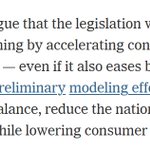
There is a kind of modeling that would be really useful right now: honest, unbiased scenario modeling that enables the public and decision-makers to explore the many “what ifs” of this deal, assess its risks and ID the factors that really matter. You won’t see this.

We’re used to treating models with 1-2 vaguely defined (or intentionally skewed) scenarios as predictive of complex policies in world that no longer operates by some of the old rules. But models can be useful for things other than prediction, if they are used correctly.
Tony Dutzik retweeted

Proponents arguing that Title IV isn't a serious risk are having it both ways. It can't be all powerful against Trump and a wet noodle against presidents that follow. To the contrary, the last word goes to whoever gives permission/authorization first. Trump bats first.
Tony Dutzik retweeted
I rarely take to X anymore, but the clean energy crowd still hangs out here I guess, so here goes... here's why BAJAA Title IV’s project certainty provisions are dangerously sloppy and an insane transfer of power to Trump and corporations.
Would love to see a response to this analysis of “permitting reform’s” potential corrosive effect on *all* federal regulation beyond “no, it won’t.” jeremysymons.substack.com/p/…
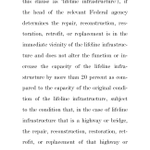
A provision of "permitting reform" that transportation folks should be aware of: The bill eliminates environmental review for repair or replacement projects in the "immediate vicinity" of existing infrastructure that do not increase capacity by >20%. epw.senate.gov/public/_cache…

Same thing is true of the I-5 Rose Quarter Improvement project in Portland. hdrinc.com/portfolio/i-5-ros…

Urbanists coming to this issue need to bear in mind that all of these provisions also apply to highway expansions in dense urban neighborhoods and other disruptive projects that are (unfortunately) much more common across the US than congestion pricing.

Remember those giant binders that blocked congestion pricing? BAAJA fixes that
- The bill would force agencies to finalize environmental assessments in one year.
- If the highway department dragged its feet like it did under Trump 1.0 NYC could sue them and get a court to compel action.
- The review would also be shorter: BAAJA gets rid of unnecessary alternatives analysis and the need for litigation proofing.
- If New Jersey (or anybody else) sued the NEPA review they wouldn't be able to delay or block congestion pricing.
- DOT would be barred from revoking any approval for congestion pricing & NYC could take legal action if they tried
xitter.cf/AidanRMackenzie/status…