

G2AI tracks the US-China(G2) AI stack
Joined April 2026
- Tweets505
- Following48
- Followers2.2K
- Likes167




NVIDIA / Megaspeed: U.S. confirms probe as WSJ ties Alice Huang associate to key decisions
Director of National Intelligence Jay Clayton said the U.S. is investigating Alice Huang and her former company Megaspeed, the Singapore-based cloud firm that ran data centers in Southeast Asia and joined Nvidia's Cloud Partner Program in Nov 2023. Commerce and Justice say the export-control probe began in 2024; Nvidia put Megaspeed on its "no sell" list in June 2025.
WSJ reports Chinese national Li Ming was "deeply involved" in Megaspeed's activities and major decisions. Li faces five charges in Singapore, including fraud by false representation to Super Micro over servers he said would be held and leased locally; the deals reportedly totaled about $140M. Megaspeed is not named in those charges.
Treasury Secretary Bessent said the administration wants answers from Nvidia on who oversaw compliance on China chip sales. Megaspeed says it is a lawful business and that Huang left in Aug 2025.
cnbc.com/2026/11/23/nvidia-m…

279
Ant Group / Simplexity Robotics: $100M pre-Series A at a $1.6B valuation
Ant Group led a $100M pre-Series A round in Chinese physical-AI and humanoid robot startup Simplexity Robotics, valuing the roughly 16-month-old company at $1.6B. Existing investors Alibaba, Tencent, HongShan and Lanchi Ventures also took part, chairman and co-founder Wang Kai told Bloomberg.
The raise comes as China's humanoid industry pulls ahead of US rivals: Chinese makers accounted for 97% of humanoid robots shipped in the first three quarters of 2026, according to Bloomberg.
runtimewire.com/article/simp…

1
308
Goldman Sachs expects DRAM and HBM to remain in short supply in 2027. It takes a more cautious view of 2028 as consumer electronics demand levels off and Chinese supply expands, but believes current share prices may already reflect a highly pessimistic scenario.
- Demand mix: AI servers require substantial amounts of memory. Growth in server demand could offset some of the weakness in PC and smartphone demand. The report expects the supply shortfall in HBM to be greater than in conventional DRAM.
- Concerns about 2028: Goldman Sachs believes the market is already pricing in a stress scenario of zero growth in AI capital expenditure and a further 40% drop in memory average selling prices. This is its assessment of market pricing, not its base-case forecast.
- Downside protection: The report highlights the role of long-term agreements (LTAs). In its scenario analysis for SK Hynix, revenue would remain 22% higher in 2027 and 49% higher in 2028 than in a scenario without LTAs, even if customers defaulted.
- Company views: Goldman Sachs is positive on Kioxia’s valuation and shareholder returns. It lowered its price targets for SK Hynix and Samsung to reflect its 2028 pricing outlook but maintained Buy ratings on both. It also maintained a Buy rating on CXMT as a way to gain exposure to China’s drive for a more self-reliant AI supply chain, despite near-term pricing pressure.

Goldman Sachs lowered its price target for CXMT but maintained its Buy rating.
CXMT has begun mass production of DDR5, with shipments expected to ramp up. The company is advancing its DDR6 and LPDDR6 technology and expanding into HBM. Goldman Sachs remains optimistic about AI investment in China and demand for domestically produced semiconductors.
However, weak smartphone and PC demand, combined with growing DRAM capacity, may make elevated prices for DDR5, LPDDR and HBM difficult to sustain. Goldman Sachs therefore lowered its product pricing and gross margin assumptions.
It cut its 2027 and 2028 revenue forecasts by 14% and 20%, respectively, and its net income forecasts by 18% and 27%. Its blended gross margin forecasts fell to 81.6% and 76.8%, respectively—3.0 and 6.5 percentage points below its previous estimates.

Anthropic: IPO filing shows gas-fired data centers and uncapped fuel costs
Anthropic's prospectus confirms that some planned data centers will run on dedicated on-site natural gas generation, with fuel costs passed through to Anthropic and no cost caps. Some power and data center deals run 20 years with annual escalators and take-or-pay compute payments that apply regardless of utilization. Anthropic also guaranteed up to $500M of a provider's power-purchase contract.
The filing gives no fuel mix. An outside estimate from the Better Data Center Project puts Anthropic's US contracted data centers at 87% gas and 11% coal in 2028, counting on-site gas and marginal grid supply.
runtimewire.com/article/anth…

1
2
372
Runway: open-weight 27B robot action model Praxis-1
Runway released Praxis-1, a 27.2B-parameter world action model for robots, under Apache 2.0, with weights on Hugging Face and fine-tuning code on GitHub. It is built on Runway's video foundation model: a 26.9B MoE backbone (about 2.8B active per token) plus a ~314M-parameter action expert.
Each call predicts the next chunk of video and 1.6 seconds of robot actions (24 steps at 15 Hz). Runway says the DROID-tuned version ranks #1 among world action models and open-source robot foundation models on NVIDIA's RoboLab-120 leaderboard, with checkpoints for single-arm Franka and bimanual YAM rigs.
The bet is that general video, not costly teleoperation data, can carry most of the pretraining load for robot control.
runway.com/research/praxis-1…

2
342
Anthropic IPO: banks were capped at four senior bankers and asked to accept six-month rival bans
Reuters reports that Anthropic told some of its 22 IPO underwriters to limit deal teams to four senior bankers. It also asked senior bank officers to sign documents barring core deal-team members from working with rivals including OpenAI, Cursor, DeepSeek and Hugging Face for six months after the listing.
Banks still earned more than half a billion dollars in fees on the record IPO. Like SpaceX, Anthropic negotiated a zero underwriting spread on the greenshoe shares. Deal documents were shared through NetRoadshow with per-banker watermarks to limit leaks.
investing.com/news/stock-mar…

1
4
735
AMD / Google: Gemini 4 Neon agent writes AMD kernels that nearly double Inkling 2 Mini decode speed
An AMD engineer used Google's Gemini 4 Neon as a coding agent with AMD's Loom toolkit to tune kernels for Thinking Machines' new open-weight Inkling 2 Mini on a Strix Halo (Radeon 8060S) machine. The agent took the unmodified GGUF to a package that passed correctness checks against llama.cpp in about 4.3 hours and ~490 tool calls.
Versus the best llama.cpp build: decode 44.8 tok/s vs 23.8 (1.88x), prefill up to 5.9x faster at an 18k-token prompt (1,465 vs 249 tok/s), and 1.86x aggregate throughput with 4 streams. Decode hit about 80% of the memory-bandwidth roofline.
llama.cpp's day-one support for the model is still early, so the gap should narrow. Still, it shows AI agents can close part of AMD's software gap on new model architectures within hours.
runtimewire.com/article/gemi…
6
10
1,357
NVIDIA / China chips: FT and NYT trace Alice Huang network that moved Nvidia chips into China
The Financial Times reported Saturday that Alice Huang, the former Megaspeed executive at the center of the Nvidia scandal, was part of a network of gaming investors and shell companies that made billions moving Nvidia chips into China. Megaspeed's Malaysian unit, Speedmatrix, declared about $4.6 billion of imports from Aivres, the former US unit of entity-listed Inspur, in the year to December 2025, according to trade data cited by the FT.
The New York Times, citing an analysis by Strider Technologies, said about $3.6 billion of Chinese state money flowed through companies tied to Huang's family or associates, funding projects including data centers with Nvidia chips. Shanghai-based Century Litong, which the FT describes as a key distributor of smuggled Nvidia chips, is owned by a group that also controls a maker of radar and missile parts.
House committee license files show Nvidia sought permission to sell more than 40,000 H200s to Century Litong's Hong Kong unit. Nvidia says it has stopped shipping H200s to China, never shipped to that firm, blocked Megaspeed in 2025 and restricted sales to Aivres. Megaspeed, Century Litong and Prince Group deny wrongdoing.
thenextweb.com/news/alice-hu…

2
638
White House: Trump floats ban or "tremendous tax" on US companies building data centers overseas
President Trump said he wants to stop US companies from building data centers in other countries, or charge them a "tremendous tax" if they go ahead, Axios reported. He said he had not yet discussed the idea with his cabinet or advisors. His stated reason is China: "We're not allowing data centers to go into other countries because China will take all of them." Chinese AI labs have been using overseas data centers to reach NVIDIA chips that are banned for export to China.
Trump also told communities to negotiate hard with hyperscalers that want to build locally: "They have plenty of money. Take it." Local pushback is already rising in the US, with data center moratoriums now above 500 nationwide, and New York State recommending towns ask for $1M of community investment per MW. Any new federal tax would need Congress to pass it.
tomshardware.com/tech-indust…

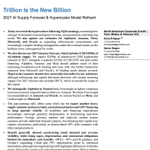
Goldman Sachs Weekly Summary: Liquidity Tightens as AI Investing Shifts from Buildout to Payoff
The central question: AI financing and capital spending remain enormous, but markets are asking when that investment will produce durable earnings. Tighter liquidity is amplifying equity volatility.
1. Liquidity is the immediate pressure. The dollar is strengthening and financial conditions are tightening. The author estimates that a rapid 100-basis-point tightening could reduce economic growth over the next year by roughly 50 basis points.
2. AI capex is not AI productivity. Building infrastructure requires vast investment; lasting value depends on deploying the technology profitably. Investors need to distinguish durable demand from spending that pulls future demand forward.
3. The opportunity is broadening. Crowded AI infrastructure trades have unwound. The author sees potential upside from AI adoption and lower energy costs in the UK and Europe, while cautioning that productivity gains still need to prove durable.
4. Earnings expectations remain high—and hedging matters. Goldman Sachs forecasts 18% adjusted S&P 500 EPS growth in 2027. The author believes the liquidity-driven selloff may be in its later stages, though further downside remains possible, and sees renewed value in long bonds as an equity hedge.


AI adoption is rising. Measurable productivity gains are harder to find. 🧵
1/6 HSBC analyzed earnings calls from 2,176 companies across 52 economies. Of those companies, 59% said they were actively implementing AI. Only 33% of the full sample described any AI-related productivity benefit.
2/6 Time savings dominate: 80% of companies describing a benefit mentioned saving time. But completing a task faster does not automatically mean producing more, earning more, or working fewer hours.
3/6 Across the full sample, 19% described an AI-related cost benefit, 16% a production benefit, and 13% a revenue benefit. These categories overlap; they should not be added together.
4/6 The gains may take time to develop. Among companies that had discussed AI productivity benefits since 2025, cost savings became more common in 2026. Clear gains in output and revenue remain less established.
5/6 IT and communications companies described the broadest benefits. UK companies frequently cited time savings, but their apparent lead over mainland Europe faded when HSBC excluded claims based solely on saved time.
6/6 The conclusion: AI investment is already visible in construction and chip demand, but a broad economy-wide productivity boost is harder to see. HSBC considers a major boost as early as 2027 unlikely.

AI’s trillion-dollar buildout: the credit story 🧵
1/7 J.P. Morgan estimates that Alphabet, Amazon, Meta, Microsoft, and Oracle will spend $1.27 trillion on capex in 2027. AI demand is growing. The question is how quickly that investment turns into cash.
2/7 It forecasts $450 billion of AI-related dollar financing in 2027: $225 billion of hyperscaler parent-level issuance and $225 billion of GPU and data center financing. The timing and size of project financing are less certain.
3/7 In the base case, the five companies face a combined $595 billion funding gap across 2027–28. That is a cash shortfall before new financing or use of existing liquidity—not a forecast for debt issuance.
4/7 The pivotal assumption is a spending slowdown: capex growth falls from 58% in 2027 to 14% in 2028. Every additional 10 percentage points of 2028 capex growth would add roughly $127 billion to that year’s funding gap.
5/7 The companies have different cushions. Amazon can draw on retail and advertising earnings. Alphabet’s cloud business is accelerating, while Search monetization remains a question. Meta’s clearest AI returns still come through advertising.
6/7 Microsoft generates positive free cash flow in the base case, though capex and shareholder returns create funding needs. Oracle has largely completed its AI funding plan; its next test is delivering capacity and converting contracted demand into cash.
7/7 The takeaway: strong demand does not guarantee strong near-term cash flow. Watch the pace of capex, AI monetization, lease obligations, and the terms on which GPU projects can raise money.

Oracle: says OpenAI contract is fully funded, reaffirms $30B+ FCF target for FY29
Oracle said it has secured all the funding it needs to deliver its OpenAI infrastructure contract. It said its final capital raise earlier this month made it the first hyperscaler fully funded for this investment cycle, and that the financing outlined at its October Investor Day, including vendor financing, is in place. Further talks with vendors are only extra options, and media reports saying otherwise are wrong, the company said.
On the buildout, Oracle said the Abilene campus is nearly complete. Shackelford, its next gigawatt-scale campus, is fully permitted, and handover of NVIDIA Vera Rubin racks there is on track for the coming weeks. Oracle still expects positive free cash flow in 2H FY28, targets more than $30B of FCF in FY29, and expects to self-fund growth from that year.
oracle.com/news/announcement…

SK / AWS: Ulsan AI data center gets presidential push, ~900 workers on site
South Korean President Lee Jae Myung toured SK Group's AI data center construction site in Ulsan on Saturday, saying "speed is vital" in the global AI race and that the project should draw more investment from global AI companies. He said the government will look at ways to ease a shortage of construction workers for chip fabs and data centers. About 900 people are working on the Ulsan site.
SK is building the campus jointly with Amazon Web Services. The science ministry estimated the cost at 7 trillion won (about $5.2B) through 2029. Initial capacity is 103MW by 2029, with plans to add nearly 900MW later. Operations are scheduled to start in 2H 2027.
channelnewsasia.com/business…

4
455
Anthropic: IPO closes at $93.5B after greenshoe, $119.5B including private placement
Anthropic's underwriters fully exercised the greenshoe, buying an extra 147M Class A shares at $83. That adds $12.2B to the $81.3B raised Wednesday, for $93.5B total from 1.127B shares sold, the largest IPO on record, ahead of SpaceX in June.
A concurrent $26B Class N private placement at the IPO price, with AMD, Google, Microsoft, Nvidia and others, brings total gross proceeds to $119.5B before expenses.
The stock is giving back its debut gains in the tech sell-off. ANT opened at $111.50 Thursday and closed at $97.17, then fell to about $87 late Friday, roughly 5% above the IPO price.
cnbc.com/2026/11/20/anthropi…

2
407
NVIDIA: stock drops 14%, seventh straight weekly loss, longest streak since 2008
NVIDIA shares fell 14% on Friday and closed lower for a seventh straight week, the longest such run since the 2008 financial crisis. The stock is down 46% over that stretch, about $2.6 trillion of market cap gone. At roughly $3 trillion, NVIDIA now ranks fourth behind Apple, Microsoft and Alphabet.
Selling picked up after Reuters reported the SEC is looking into potential accounting issues at the company, on top of the fallout from Jensen Huang's exit. The stock now trades at about 8.4x forward earnings, vs about 29x for AMD. That's despite a better-than-expected quarter and a higher fiscal 2028 outlook: interim CEO Colette Kress guided to 75% revenue growth next fiscal year.
cnbc.com/2026/11/20/nvidias-…
