

Cognitive Neuroscientist - Aging, Alzheimer's disease, Brain networks | Professor - UT Dallas @CVLneuro & UTSW Psychiatry
Dallas, TX
Joined June 2017
- Tweets928
- Following799
- Followers1.1K
- Likes1.6K





Pinned Tweet
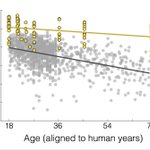
We know aging reorganizes large-scale brain networks in humans, with real consequences for cognition and dementia risk. What we haven't had is an animal model of this phenomenon — one that could help us figure out why it happens and how to intervene.
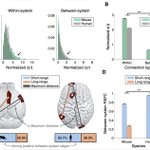
We’ve now mapped brain network changes over a wide range of the mouse adult lifespan.
The changes mirror key features of human brain aging, but not entirely, and the differences are just as interesting as the similarities.
New paper in @PNASNews 🧵
pnas.org/doi/10.1073/pnas.25…

Gagan Wig retweeted

ALERT:
Special Editorial focus issue on
"Stress-induced impaired health and accelerated aging"
Hosted by "Neurobiology of Stress" and "Neuroscience and Biobehavioral Reviews"
co-edited with Dr. Mathias V. Schmidt
Details here:
z.umn.edu/bkxb

Gagan Wig retweeted

Take-home: Combining data increases power, but a larger N won’t always improve inferences if data features differ across cohorts. When combining cohorts/studies (e.g., multiple lifespan segments of the HCP), data harmonization and reporting of how this was achieved is critical.
Gagan Wig retweeted
Harmonization can mitigate these HCP cohort differences, but implementation matters!
Example here shows harmonization correcting for ‘protocol’ was more optimal than correcting for ‘site.’

Gagan Wig retweeted
These young-adult dips and blips are not typical lifespan patterns, and we show this using two independent reference lifespan datasets: NKI-Rockland Sample (NKI) and Dallas Lifespan Brain Study (DLBS). Neither showed the marked young-adult deviation seen in the HCP data.

Gagan Wig retweeted
The cohort-level signal differences in HCP-YA distort measurements of brain network organization, resulting in surprising decreases and increases in multiple measure of brain organization during young-adulthood.

Gagan Wig retweeted
The human connectome project (HCP) is an amazing open resource that spans from development to old adulthood. But the scanners/protocol weren’t identical across cohorts, resulting in cohort-differences in signal-to-noise ratio in the functional scans (e.g., resting-state).

Gagan Wig retweeted
Combining data to study lifespan brain aging is tempting: more data and wider age range! But mixing data across scanners/protocols without proper harmonization can bias age effects, including studies using high-quality HCP data.
Imaging Neuroscience 🔔doi.org/10.1162/IMAG.a.1338

Gagan Wig retweeted

New paper in Imaging Neuroscience by Micaela Y. Chan, Liang Han, Gagan S. Wig:
Systematic fMRI signal differences across cohorts alter lifespan trajectories of functional brain networks
doi.org/10.1162/IMAG.a.1338

Examining lifespan differences in functional brain activity or network organization using HCP data? ➡️ Take a look below!
A reminder that even subtle differences in data acquisition between cohorts can change the conclusions we draw.
More broadly, I think the issue highlighted here will become increasingly important as the field moves toward pooled datasets, normative modeling, and imaging biomarkers.

Combining data to study lifespan brain aging is tempting: more data and wider age range! But mixing data across scanners/protocols without proper harmonization can bias age effects, including studies using high-quality HCP data.
Imaging Neuroscience 🔔doi.org/10.1162/IMAG.a.1338
Gagan Wig retweeted

There’s a puzzling paradox in anthropology: The larger a population gets, the better protected it should be from random fluctuations in births, deaths, and environmental conditions that could cause it to collapse. And yet, the archaeological record is rife with examples of large civilizations that have collapsed, like the Roman and Egyptian empires.
New research from SFI External Professor Marcus Hamilton, an anthropologist at the University of Texas at San Antonio, points to an unexpected culprit: cooperation.
santafe.edu/news-center/news…

Gagan Wig retweeted

Our new paper exploring the detailed morphological differences between mouse and human neurons is now online in Nature Neuroscience: nature.com/articles/s41593-0…

Gagan Wig retweeted

The science of human aging is flourishing, perhaps best exemplified by remarkable advances in organ and cellular clocks, tracked from proteins in the blood. These clocks tell us about the pace of aging within an individual and are linked to healthspan, longevity, and diseases.
@wysscoray and I reviewed the field of biological clocks, published today @NatureMedicine
free access
rdcu.be/fsZ3h

Heads up! The DACC (now the 'Development, Aging & Cognition Conference') will be taking place February 2027 in Dallas! Stay tuned and watch this space for more info 👇🏾

Save the date and set a reminder! Registration for the 2027 Development, Aging & Cognition Conference opens August 1. Take advantage of Early Bird pricing from 8/1/26–11/30/26. dacc.utdallas.edu/conference…

Gagan Wig retweeted
Just published @Nature
Very impressive study of gene expression and hallmarks of aging across 4 mammalian species (including humans), by @gladyshev_lab. Transcriptomic clocks add to epigenetic, organ and cellular clocks for predicting health outcomes. Example of a few proteins found with prediction of disease/event risk in Figure below
nature.com/articles/s41586-0…

Gagan Wig retweeted

This paper led by @SabrinaGClemens went back and reanalyzed task-fMRI data and incorporated more than a decade of subsequent cognitive testing. Individuals who were unimpaired, but later developed dementia, had greater evoked activity at baseline. academic.oup.com/braincomms/…

Gagan Wig retweeted

Findings from a paper led by @XiaqingJiang show that higher multimorbidity in midlife is associated with worse cognition and increased AD pathology, neurodegeneration, and small vessel disease in dementia-free adults. This supports targeting disease burden in AD risk reduction.
We're hiring! Full-time research assistant @ UT Dallas
Join our team to work on a longitudinal neuroimaging study of midlife brain aging. Project integrates MRI, behavioral testing, real-world health/lifestyle measures.
Strong opportunity for those interested in brain networks, aging, and Alzheimer’s disease risk.
Application deadline now May 15. Details: jobs.utdallas.edu/postings/3…
@CVLneuro @UTDResearch

Gagan Wig retweeted

Have a project related to animal models to study social aging?
We welcome applications from early-career scientists for both our Pilot & Feasibility awards and the Bruce McEwen Fellowship.
Applications are open until June 30. See details and apply here: animalsocialaging-network.or…
Gagan Wig retweeted

In 1986, John White published "The Mind of a Worm," the first complete wiring diagram of any animal's brain. 7,000+ synapses, mapped by hand.
This year, he was awarded the @WileyGlobal Prize in Biomedical Sciences.
He's donating his share to @OpenWorm.
Gagan Wig retweeted

Excited to share our latest HBM paper on Recon-any: a free tool for robust cortical surface analysis of low-field MRI of any contrast/resolution (also ex vivo!).
Toward accessible neuroimaging!
onlinelibrary.wiley.com/doi/…
Freely available on @FreeSurferMRI :
surfer.nmr.mgh.harvard.edu/f…
