

We are a women-led NGO working around women’s rights, equal opportunity for women, increased women's political participation & advancement of women voices
Abuja, Nigeria
Joined June 2022
- Tweets1.7K
- Following173
- Followers427
- Likes1.2K






Pinned Tweet
We're bursting with excitement and beaming with pride!
Your amazing support has earned us a prestigious recognition at the African Elites Awards, and we couldn't be more grateful!
This award is a powerful testament to the impactful work we do together, in making sure that the rights of women, girls and women with disabilities are protected, respected and included.
It fuels our passion to keep pushing for inclusivity, equality, and justice for our women.
Thank YOU for being a part of this incredible journey! Together, we are making a difference!
#africanelitesaward #awards #gsai

GSAI’s Women’s Weekly Dose this week focused on the topic “WHO CONTROLS THE NARRATIVE? Changing How Society Sees Women and Power.” It was indeed Insightful and powerful.
Speaking on GSAI's Women's Weekly Dose, Hon. Ummul-Kalthum Olajumoke Yusuf delivered a powerful message on women, power, and the urgent need to rewrite the narratives surrounding women’s leadership.
Her message was clear: women must stop waiting for permission to be seen, heard, and recognised. From confidently sharing their achievements to setting their own agendas, women must become the authors of their stories rather than remain subjects of narratives shaped by others.
She highlighted the difference between legitimate criticism and gender-based attacks, reminding us that leadership should be assessed by competence, performance, policies, and integrity, not appearance, marital status, or gender stereotypes.
She also challenged families to raise boys and girls with equal expectations of ambition and leadership, political parties to provide women with meaningful opportunities, the media to focus on women’s achievements, and citizens to vote beyond gender bias.
At GSAI, we believe that changing the narrative requires more than words; it demands deliberate action, inclusive systems, and a society willing to challenge the stereotypes that limit women’s potential.
Women do not need to wait for a seat at the table to begin shaping the conversation. They can set the agenda, tell their stories, and lead the change.
Missed the conversation? Listen herehttps://teapawt.org/i/spaces/1MKgNbRaOmYxL?s=20
Follow @Genderstrategy for more impactful discussions.
#GSAI #WomensWeeklyDose #WhoControlsTheNarrative #WomenInLeadership #InclusiveGovernance

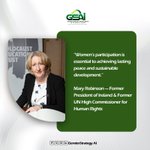
At Gender Strategy Advancement International (GSAI), we believe women must not simply be invited into the room; they must have meaningful opportunities to influence the decisions being made. From community dialogue to national governance, women’s participation is essential to building a peaceful, inclusive, and sustainable society.
As Mary Robinson said, “Women’s participation is essential to achieving lasting peace and sustainable development.”
Women are peacebuilders, community leaders, innovators, entrepreneurs, and advocates for change. They understand the realities affecting families and communities, and their experiences and perspectives can help shape more inclusive decisions and sustainable solutions.
Yet, women continue to face barriers that limit their participation in leadership, governance, peacebuilding, and development processes. These barriers must be addressed if we are to build societies where everyone has a fair opportunity to contribute and thrive.
When women participate, perspectives broaden. When women lead, new solutions emerge. And when women are included in decision-making, society has more opportunities to build a future that works for everyone.
Let us move beyond celebrating women’s contributions to creating the policies, institutions, and opportunities that enable them to make those contributions at every level.
Because lasting peace cannot be built on exclusion, and sustainable development cannot thrive when women are left behind.
At GSAI, we champion women’s voices, advance inclusive leadership, and advocate for a future where every woman has the opportunity to shape the peace and development of her community and nation.
#GSAI #WomenInLeadership #GenderEquality #InclusiveDevelopment

WHO CONTROLS THE NARRATIVE? Changing How Society Sees Women and Power. teapawt.org/i/spaces/1MKgNbRaOmYxL
This week on Women’s Weekly Dose, 🗓Join us tomorrow, Thursday, 29th October 2026 |⏰ 3PM | 📍 X (Twitter) Spaces – Virtual
As we dive deep into a powerful conversation that matters: “WHO CONTROLS THE NARRATIVE? Changing How Society Sees Women and Power.”
Joining us is Hon. Ummul-Kalthum Olajumoke Yusuf, Councilor of City Centre Ward, AMAC. The only female Councilor among the Area Councils of the Abuja Municipal Area Council (AMAC), her emergence represents not only a personal achievement, but an important milestone for women in leadership and grassroots governance.
Tomorrow, she will explore how we can move from narratives that limit women to narratives that recognize their leadership, competence, and contributions.
At Gender Strategy Advancement International (GSAI), we believe it is time to challenge the stereotypes, cultural assumptions, and media representations that reduce women’s achievements to their appearance, question their authority, or portray leadership as a space reserved for men.
Women are more than the labels society places on them. They are innovators, policymakers, entrepreneurs, advocates, decision-makers, and change makers. Their voices deserve to be heard, their achievements deserve recognition, and their leadership deserves to be assessed on merit, not gender.
When women are excluded from telling their own stories, stereotypes speak for them. When women reclaim their narratives, they challenge the assumptions that have limited their opportunities for far too long.
As Nigeria looks towards the 2027 elections and beyond, the question is not simply whether women will participate in leadership, but whether society is ready to recognise their ideas, respect their voices, and make room for their influence.
📲 Join the conversation LIVE on X (Twitter) Spaces
GSAI #WomensWeeklyDose #WhoControlsTheNarrative #WomenInLeadership #GenderEquality

At Gender Strategy Advancement International (GSAI), we believe that gender equality must move beyond words into meaningful action. It means protecting girls’ access to education, challenging harmful stereotypes, advancing women’s political participation, and building institutions where women’s voices are heard and their contributions valued.
As Hillary Rodham Clinton said, “Women’s rights are human rights.”
A woman’s right to education is a human right. Her right to safety, dignity, equal opportunity, and freedom from discrimination is a human right. Her right to lead, speak, participate in governance, and shape decisions that affect her life is a human right.
Women’s rights are not privileges to be granted, favours to be negotiated, or opportunities to be offered only when society approves. They are rights that every woman and girl deserves.
Yet, across communities, women and girls continue to face barriers that limit their opportunities, silence their voices, and challenge their freedom to live with dignity. These barriers must not be accepted as tradition or dismissed as the way things have always been.
Because a society cannot claim progress while half its population continues to fight for equal opportunities. There can be no true equality where women’s rights are questioned, no inclusive development where women are excluded, and no justice where discrimination is allowed to thrive.
When we defend women’s rights, we defend human dignity. When we empower girls, we strengthen the future. And when women are included, society moves closer to justice for all.
GSAI remains committed to advancing a society where every woman and girl can live freely, lead confidently, and thrive without discrimination.
#GSAI #WomensWeeklyDose #GenderEquality #EqualOpportunities #InclusiveSociety

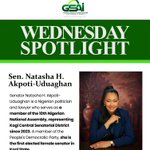
At Gender Strategy Advancement International (GSAI), we believe that women’s representation is not merely about occupying seats; it is about ensuring that women’s voices, experiences, and ideas contribute meaningfully to governance.
As the first elected female senator from Kogi State, Senator Natasha H. Akpoti-Uduaghan represents a significant milestone in women’s political representation in Nigeria.
A lawyer, social entrepreneur, and advocate for industrial development, her journey from championing reforms around the Ajaokuta Steel Mill to serving in the 10th National Assembly reflects the many pathways through which women can contribute to national development.
Her story reinforces an important truth: women are not limited to the roles society assigns them. They can challenge systems, influence policies, and occupy leadership spaces where decisions shape the future.
Senator Natasha’s milestone is a reminder that when women step forward, they help expand the possibilities for those who follow. But representation must go beyond individual achievements. It requires fair opportunities, inclusive political structures, and a society that recognizes women’s right to lead.
When a woman breaks a barrier, she helps make the path visible for another. When more women lead, the possibilities for inclusive governance grow.
GSAI remains committed to advancing women’s political participation, amplifying women’s voices, and building a future where leadership is determined by ability and opportunity, not gender.
#GSAI #WomenInLeadership #WomenInPolitics #GenderEquality #InclusiveGovernance


To advance this vision, Gender Strategy Advancement International (GSAI) conducted an advocacy visit to the Ministry of Education to advance conversations on girls’ education, women’s empowerment, and inclusive governance.
The journey towards a more inclusive Nigeria begins with two powerful commitments: ensuring every girl has access to quality education and creating opportunities for women to participate meaningfully in leadership and decision-making.
For GSAI, girls’ education is more than access to classrooms; it is an investment in confidence, opportunity, leadership, and the future of our society. Every girl who receives an education gains a stronger foundation to pursue her dreams, challenge limiting stereotypes, and contribute meaningfully to her community and nation.
Yet, education must be matched with opportunities for women to lead. We cannot educate girls to dream boldly and then build systems that prevent women from participating fully in shaping the decisions that affect their lives. From classrooms to council chambers, from community leadership to national governance, women and girls deserve spaces where their voices are heard, their contributions are valued, and their potential is not restricted by gender.
Through this advocacy engagement, GSAI continues to champion collaboration, institutional commitment, and practical action towards a society where girls can learn without barriers and women can lead without discrimination.
When a girl is educated, a future is strengthened. When a woman has a seat at the decision-making table, the voices and experiences she brings can help shape more inclusive policies and communities.
GSAI remains committed to advancing gender equality, amplifying women’s voices, and advocating for a Nigeria where every girl can learn, every woman can lead, and every individual has the opportunity to thrive.
Click the link below to read more on the Investigative Report done by GSAI, proudly supported by Wole Soyinka Center for Investigative Reporting and the MacArthur Foundation.
babayola.blogspot.com/2024/0…
#GSAI #GirlsEducation #WomenInLeadership #GenderEquality #InclusiveGovernance

At Gender Strategy Advancement International (GSAI), we believe no girl should be taught to shrink her ambitions, and no woman should be made to question her capacity to lead. Whether in education, entrepreneurship, public service, or politics, women and girls deserve the opportunity to dream boldly, develop their potential, and turn their aspirations into reality.
As Ellen Johnson Sirleaf said, “If your dreams do not scare you, they are not big enough.”
For women and girls, dreaming big has often meant daring to challenge expectations, confront stereotypes, and step into spaces where their presence has not always been welcomed. Yet history reminds us that progress begins when someone dares to imagine a future beyond the limitations of the present.
Your dream is not too big because the world has not seen it before. Your voice is not too powerful because it challenges the status quo. And your ambition is not a threat simply because it dares to break barriers.
But big dreams require more than courage. They need access to education, supportive communities, equal opportunities, inclusive policies, and institutions willing to open doors rather than reinforce barriers.
Let us raise girls who believe they can lead, support women who dare to make a difference, and build a society where ambition is encouraged, not silenced by gender stereotypes.
Dear woman, dear girl: do not make your dreams smaller to fit into a world that needs your greatness. Dare to imagine more. Dare to do more. Dare to become more.
At GSAI, we remain committed to advancing a future where every woman and girl has the freedom, opportunity, and support to pursue her dreams without limits.
#GSAI #WomenInLeadership #GenderEquality #BreakBarriers #WomenCanLead

At Gender Strategy Advancement International (GSAI), we believe advancing women’s leadership is essential to building a more inclusive and equitable society. This requires more than applause and encouraging words. It demands deliberate action: removing structural barriers, expanding opportunities, strengthening women’s voices, and ensuring that women are present where decisions are made.
As Phumzile Mlambo-Ngcuka said, “Women’s leadership is not a favour to women. It is a necessity for society.”
When women are excluded from leadership and decision-making, society loses valuable perspectives, experiences, ideas, and solutions. From communities and boardrooms to public institutions and governance, women must have meaningful opportunities to contribute, influence policies, and help shape decisions that affect everyone.
Yet, too often, women are still expected to prove themselves in systems that limit their access to power, resources, and opportunities. Their leadership is questioned, their contributions overlooked, and their ambitions constrained by barriers that should no longer define their possibilities.
The question is not whether society can afford to include women. It is how society can reach its full potential without them.
As conversations around leadership, governance, and the future of Nigeria continue, we must move beyond seeing women’s inclusion as an act of generosity. Women do not need permission to contribute to society’s progress; they need fair opportunities to lead and make a difference.
When women lead, society gains. When women are included, democracy becomes more representative. And when women’s leadership is supported, everyone has more opportunity to thrive.
#GSAI #WomensLeadership #GenderEquality #WomenInGovernance #InclusiveLeadership

At Gender Strategy Advancement International (GSAI), we believe that lasting change begins when we move beyond conversations and turn our convictions into action. Advancing women’s rights, strengthening women’s leadership, and creating opportunities for girls require consistency, courage, and a collective commitment to progress.
A new week brings a fresh opportunity to challenge limitations, amplify unheard voices, and take meaningful steps towards a more inclusive world.
Every barrier we challenge creates room for possibility. Every woman we encourage strengthens the journey towards equality. Every girl who dares to dream reminds us why the work of building an inclusive society must continue.
This week, let us be intentional about the change we want to see. Let us speak up where silence sustains exclusion, create opportunities where barriers exist, and support women and girls as they pursue their aspirations.
Remember, you do not have to change the entire world in one day. Sometimes, one bold conversation, one meaningful action, or one voice raised in support of another woman can begin
May this week bring fresh ideas, purposeful action, and new opportunities to make a difference. Together, let us keep pushing boundaries, opening doors, and building a future where every woman and girl has the opportunity to thrive.
#GSAI #HappyNewWeek #GenderEquality #WomenInLeadership #AmplifyingVoices

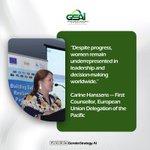
At Gender Strategy Advancement International (GSAI), we believe that progress must be measured not only by how many barriers women have broken, but also by how many opportunities have been opened for others to follow.
As Carine Hanssens said, “Despite progress, women remain underrepresented in leadership and decision-making worldwide.”
How far have we truly come if women continue to be missing from the tables where decisions are made, policies are shaped, and the future is determined?
Yes, progress has been made. Women are breaking barriers, challenging stereotypes, and proving their capacity to lead across sectors. Yet, the journey towards equal representation remains unfinished when women’s voices are still insufficiently reflected in positions of authority and influence.
Representation is not just about occupying a seat. It is about having a voice, shaping decisions, and influencing outcomes.
When women are excluded from leadership, their experiences and perspectives risk being overlooked in decisions that affect families, communities, institutions, and entire nations. True inclusion requires more than celebrating a few success stories; it demands systems that create fair opportunities for women to lead, participate, and contribute meaningfully.
As Nigeria looks towards the 2027 elections, the conversation must move beyond acknowledging women’s potential. Political parties, institutions, communities, and other stakeholders must examine the barriers that limit women’s access to leadership and take deliberate steps to remove them.
#GSAI #WomenInLeadership #GenderEquality #InclusiveGovernance #WomenInPolitics #Nigeria2027

GSAI’s Women’s Weekly Dose this week focused on the topic “FROM ASPIRATION TO ELECTION: What Must Change for More Nigerian Women to Win in 2027?” It was indeed Insightful and educational.
Speaking on GSAI's Women's Weekly Dose, Aare Oladeinde Ariyo highlighted a critical reality: political participation comes at a cost. From posters, campaign adverts, transportation, and mobilisation to traditional and digital media coverage, every step requires financial resources.
As he explained, media platforms also have operating costs, making free publicity difficult to sustain. For women aspirants already facing financial constraints, these expenses can become another barrier to visibility and electoral competitiveness.
His reflections raise an important question: How can more women confidently enter the race when campaign costs can limit their ability to reach voters?
Political parties, stakeholders, and relevant institutions must look beyond encouraging women to run and consider practical support, such as campaign logistics, transparent funding mechanisms, media access, and stronger mobilisation networks.
At Gender Strategy Advancement International (GSAI), we believe women’s political participation must be supported with more than words. Building an inclusive electoral system requires confronting the financial and structural barriers that can prevent qualified women from competing effectively.
Ambition may inspire a woman to run, but fair access to resources can help ensure she has a genuine opportunity to compete.
As Nigeria looks towards 2027, the conversation must move from “Women should contest” to “What practical support will enable women to compete fairly?”
Missed the conversation? Listen here: teapawt.org/i/spaces/1rGmqpMeoavGy…
Follow @Genderstrategy for more impactful discussions.
#GSAI #WomensWeeklyDose #WomenInPolitics #Nigeria2027 #WomenInLeadership #GenderEquality

FROM ASPIRATION TO ELECTION: What Must Change for More Nigerian Women to Win in 2027? teapawt.org/i/spaces/1rGmqpMeoavGy
At Gender Strategy Advancement International (GSAI), we believe that advancing women’s leadership means more than celebrating successful women. It means challenging exclusion, strengthening opportunities, amplifying women’s voices, and building systems where women can participate meaningfully and lead without unnecessary barriers.
As Sima Bahous says, “When women lead, the world is better for all people and the planet.”
What becomes possible when women are not only given a voice but are trusted with the power to lead, influence decisions, and shape the future? A world where leadership draws on diverse experiences, communities have a stronger voice, and the needs of women and girls are better reflected in the decisions that affect their lives.
From boardrooms to community spaces, from local governance to national decision-making, women bring ideas, experiences, and perspectives that enrich leadership and broaden the possibilities for progress. Their participation matters in conversations about education, healthcare, economic opportunity, climate action, peacebuilding, and inclusive development.
Yet, too many women and girls continue to face barriers that limit their opportunities to lead. Gender stereotypes, unequal access to resources, exclusion from decision-making, and restrictive social norms continue to narrow the space available for their contributions.
A better future cannot be built by limiting the leadership potential of half the population. It requires us to create opportunities for women and girls to contribute their ideas, exercise their agency, and help shape solutions for people and the planet.
The call, therefore, is not simply to make room for women at the table. It is to ensure that their voices are heard, their contributions are valued, and their leadership can make a meaningful difference.
#GSAI #WomenInLeadership #GenderEquality #InclusiveLeadership #InclusiveGovernance

This week on Women’s Weekly Dose, 🗓Join us tomorrow, Thursday, 22nd October 2026 |⏰ 3PM | 📍 X (Twitter) Spaces – Virtual
As we dive deep into a powerful conversation that matters, ”FROM ASPIRATION TO ELECTION: What Must Change for More Nigerian Women to Win in 2027?”
Joining us is Aare Oladeinde Ariyo, Government Policies and Public Affairs Analyst, Global Peace and Conflict Management Scholar, and a Herbal Nutritionist.
Tomorrow, he will be exploring the changes required, identifying practical actions stakeholders can take, and considering how we can collectively create a fairer electoral environment for Nigerian women.
At Gender Strategy Advancement International (GSAI), we believe that women’s political leadership deserves more than applause and promises. It requires deliberate advocacy, inclusive political structures, equal opportunities, protection from violence, and sustained support for women who choose to serve.
Across communities, women are organising, mobilising, advocating, and preparing to take up leadership positions. They have the ideas, the experience, the vision, and the determination to contribute to national development. Yet, for many women, the journey from aspiration to elected office remains filled with barriers that go beyond competence and ambition.
The challenges are complex. The high cost of campaigns can place women at a disadvantage. Party structures and candidate-selection processes can limit their opportunities. Gender stereotypes continue to influence perceptions of women’s leadership, while intimidation, harassment, and political violence can make participation unsafe
As Nigeria approaches the 2027 general elections, the conversation must move beyond encouraging women to participate. We must ask whether political parties are creating fair opportunities, whether campaign financing is accessible, whether institutions are protecting women candidates, and whether voters have the information and freedom to assess candidates on their ideas, integrity, and capacity to serve.
📲 Join the conversation LIVE on X (Twitter) Spaces
#GSAI #WomensWeeklyDose #WomenInPolitics #WomenInLeadership #InclusiveGovernance

At Gender Strategy Advancement International (GSAI), we believe that advancing women in leadership means recognising their capabilities, expanding opportunities for their participation, and ensuring that their contributions are visible across public service, law, governance, business, and community development.
Leadership is more than holding a position. It is about transforming systems, strengthening institutions, and creating opportunities for others to thrive.
For Dr. Zainab Marwa, a barrister, management consultant, and gender specialist, a career spanning more than two decades reflects a commitment to institutional reform, public service, policy development, and organisational transformation.
As Chief Executive Officer and Chief Transformation Strategist of Zawram Consulting Limited, and a Partner at Arinze Mba & Associates (Deiz Attorneys), she brings together legal expertise, strategic leadership, and a passion for building institutions that serve people effectively.
Dr. Marwa’s leadership journey also extends to women’s empowerment and the documentation of women’s achievements. As Founder and President of the Aspire Women Forum and author of 101 Nigerian Women of Impact, she contributes to a broader conversation about women’s leadership, visibility, and influence.
Her journey invites us to reflect on an important question: How can women’s expertise, experience, and leadership be better recognised and harnessed in the institutions that shape our society?
Women’s leadership stories matter because they challenge limiting assumptions, inspire emerging leaders, and remind the next generation that expertise and service can create pathways to influence.
Dr. Zainab Marwa’s journey reminds us that when women bring their knowledge to the table, they bring the opportunity to strengthen institutions, influence decisions, and inspire others to lead.
#GSAI #WomenInLeadership #GenderEquality #WomenOfImpact #InclusiveLeadership


At Gender Strategy Advancement International (GSAI), we believe that women’s political participation must be protected, respected, and strengthened. Representation cannot flourish where fear prevails, and leadership cannot thrive where intimidation is tolerated.
As Hazel Gooding says, “Violence against women in politics weakens democracy by silencing voices and deterring future leaders.”
When a woman is threatened for speaking up, democracy loses a voice. When she is intimidated for seeking leadership, society loses a potential changemaker. And when violence forces women out of politics, the future of inclusive governance is put at risk.
From intimidation and harassment to threats, physical attacks, and online abuse, women who participate in public life can face hostility that undermines their safety, confidence, and freedom to lead. These experiences can discourage women from contesting elections, expressing their views, or remaining active in political spaces.
But no woman should have to choose between her safety and her right to lead.
Democracy must be a space where ideas compete, not where intimidation determines whose voice is heard. Women must be able to campaign, organise, advocate, challenge policies, and seek public office without fear of violence or retaliation.
As Nigeria moves toward the 2027 electoral cycle, creating safer and more inclusive political spaces must be a shared responsibility. Political parties must address harassment within their structures. Relevant institutions must respond to threats and investigate reported abuses. The media and civil society must amplify women’s experiences, challenge harmful narratives, and promote accountability. Citizens, too, have a role in rejecting the normalisation of violence against women in public life.
We must build a political culture where women are judged by their ideas, policies, and contributions, not targeted because of their gender.
A woman’s voice is not a threat to democracy. Silencing her is a barrier to it.
#GSAI #WomenInPolitics #GenderEquality #InclusiveGovernance #WomenInLeadership

At Gender Strategy Advancement International (GSAI), we believe that advancing women’s rights requires sustained advocacy, inclusive policies, equal opportunities, and a collective commitment to dismantling the barriers that hold women and girls back.
As Manal al-Sharif said, “Women driving is just the first step; we have a long way to go.
Every milestone matters. Every barrier broken is a victory. But one breakthrough must never become an excuse to stop demanding more.
When women gain the freedom to drive, it represents more than mobility; it represents autonomy, choice, and the right to participate fully in society. Yet, true equality goes far beyond the freedom to move. It includes the freedom to learn, work, lead, own property, make decisions, and shape the systems that govern our lives.
Across communities, women and girls continue to challenge limitations imposed by discriminatory practices, unequal opportunities, harmful social norms, and exclusion from positions of power. Their progress deserves celebration, but the work of building a fairer society cannot end with a single achievement.
Because freedom in one area does not erase inequality in another. And progress for some women must inspire progress for all.
Let us celebrate every step forward, confront every barrier that remains, and keep moving until equality is not an exception for a few women, but a reality for every woman and girl.
The first step opens the door. Sustained action changes the world beyond it.
#GSAI #WomensRights #GenderEquality #EqualOpportunities #InclusiveLeadership

At Gender Strategy Advancement International (GSAI), we remain committed to advancing women’s participation in governance, amplifying women’s voices, and promoting inclusive leadership that reflects the diversity and aspirations of our society.
From the community level to the highest corridors of power, women contribute ideas, drive development, mobilise communities, and champion solutions to society’s most pressing challenges. Yet, their contributions must translate into meaningful representation in the institutions where policies are made, resources are allocated, and the future is determined.
Women’s representation in governance is not just about occupying seats; it is about ensuring that women have a voice in shaping decisions, influencing policies, and contributing to the direction of our nation.
When women participate meaningfully in governance, they bring diverse experiences, perspectives, and priorities to public decision-making. Their inclusion strengthens the conversation about accountability, social development, equal opportunities, and the needs of communities often left unheard.
But representation does not happen by chance. It requires deliberate action: political parties must create inclusive pathways for women, institutions must address structural barriers, and society must challenge the stereotypes that continue to question women’s place in leadership.
As Nigeria looks toward the 2027 electoral cycle, the conversation about women’s political representation must move beyond encouragement to practical commitments.
A nation cannot reach its full potential by leaving women on the margins of power. When women have a meaningful place in governance, democracy has more voices to hear, more perspectives to consider, and more opportunities to serve everyone.
Click the link below to read more on the Investigative Report done by GSAI, proudly supported by Wole Soyinka Center for Investigative Reporting and the MacArthur Foundation.
medium.com/@anifaras18/group…
#GSAI #WomenInGovernance #WomenInPolitics #InclusiveGovernance #GenderEquality

At Gender Strategy Advancement International (GSAI), we believe that gender equality is not achieved by giving women permission to participate. It is achieved by building systems where women can lead, influence decisions, challenge injustice, and exercise power on equal terms.
As Sima Bahous said, “That promise cannot be fulfilled until women have an equal share of voice, leadership, and power.”
What does a better world truly mean if women are still excluded from the decisions that shape their lives? What does progress mean if women can speak but are not heard, participate but cannot influence, and lead but are denied the power to transform?
Equality without power is an unfinished promise. Representation without influence is an incomplete victory. And a voice without the opportunity to shape decisions is not enough.
Across politics, governance, business, and community leadership, women continue to challenge barriers, break stereotypes, and demand their rightful place in decision-making. Yet, the journey toward equality requires more than celebrating women’s achievements. It demands that we dismantle the structures that silence their voices, limit their leadership, and deny them equal access to power.
Women must not simply be invited into the room; they must have the authority to influence what happens in it. Their perspectives must shape policies, their leadership must drive institutional change, and their participation must translate into meaningful outcomes for women, girls, and society at large.
As Nigeria looks toward a more inclusive democratic future, the call is clear: we must move beyond visibility to influence, beyond participation to leadership, and beyond promises to action.
The promise of equality must be reflected in our institutions, our policies, our political systems, and our everyday realities.
Because a better world is not possible when women are present but powerless. It becomes possible when women have an equal voice, equal leadership opportunities, and an equal share of power.
#GSAI #GenderEquality #WomensLeadership #WomenInPolitics #InclusiveGovernance
