
Tourism & Hospitality Adviser. Previously Special Adviser to Min. Hanekom. Prior Grant Thornton Head of Advisory in SA.
Johannesburg, South Africa
Joined September 2010
- Tweets5.3K
- Following434
- Followers850
- Likes12K





Gillian Saunders🇿🇦 retweeted

‘Our rights should not be bargained’ says @Fawziakoofi77 about the ‘normalisation’ of basic rights being stripped away from her fellow women and girls in Afghanistan

Indeed, women in Afghanistan have been systematically erased from public life. UN experts have warned that this may amount to crimes against humanity, including gender apartheid.
We appreciate France’s firm support to us in many front throughout our history including their support of Afghanistan case with ICC and the independent mechanism.
No nation committed to human rights and equality should normalize this reality or engage unconditionally with those denying fundamental rights to half the population.
We reiterated this position in our meeting with H.E. @jnbarrot today. Our rights should not be bargained.
@PorteParoleMEAE
Gillian Saunders🇿🇦 retweeted

It's early, there's a lot of hours to go and it needs to persist, but in hour 1, we are on a trajectory of higher suburban turnout than what has been assumed in the polling.
Gillian Saunders🇿🇦 retweeted

We wanted to invest R70m in Howick, KZN, but the municipality turned us down and opted to work with a company that wants invest R2 million, we still cannot get the reason for rejecting a R70m project that would have transformed the Howick Falls into something spectacular.


Gillian Saunders🇿🇦 retweeted

My only elections advice South Africa is this - just turn up and vote! There’s no perfect party, councillor or mayoral candidate. Local election is the most important because you’re choosing the level and quality of basic service delivery you want right at your home and in your community. You only get one chance, one say, and you’ll have to live with the result for the next five years.

Gillian Saunders🇿🇦 retweeted

#SouthAfrica🇿🇦....! What an incredible country.
Gillian Saunders🇿🇦 retweeted
One concerning thing I've heard people say is: 'Party X always wins this ward, so it doesn't matter if I go vote'
THIS IS WRONG.
Every single vote (ward and PR) gets put into the overal seat % calculation. So EVERY VOTE matters in EVERY WARD. TURN OUT. GO VOTE ON WEDNESDAY!


Gillian Saunders🇿🇦 retweeted

Durban Chosen As Preferred Olympics Host City
The South African Sports Confederation and Olympic Committee (Sascoc) has selected Durban as the preferred host city for the planned 2036 to 2040 Summer Olympic and Paralympic games.
Durban was previously stripped of the Commonwealth Games hosting rights

Gillian Saunders🇿🇦 retweeted

Why the best-laid plans for SA’s broken metros won’t work — and what will dailymaverick.co.za/opinioni…

😥

Unemployed doctors ready to serve public health system that ‘cannot afford to hire them’ dailymaverick.co.za/article/…

Gillian Saunders🇿🇦 retweeted

In the past, countries designed national tourism strategy with three main moves:
- Audit raw assets (which had typically accumulated over years)
- Build infrastructure to convert the asset into a polished experience (the more "shiny luxury-looking" the more you could charge)
- Then deploy heavy CNN-style marketing
Times have changed.
Doha's Hamad Airport shows how some countries are taking the leap.
Checkout the video for "The Orchard". It is a "tropical rainforest" tucked into Hamad Airport.
Featuring over 300 sustainable trees, 25,000 plants, a 575-square-meter bio-pond water thingy, and a sweeping 85-meter grid-shell glass roof, this spot is a hit with overstressed travelers looking for an oasis.
Traditionally, an airport was just the gate. You got marks for how quickly you could process people out.
Qatar's Orchard flips this narrative by positioning the airport as the first touchpoint of the destination brand.
It also says that luxury is no longer defined by "shiny". It is defined by wellness, space, and feelings of wholesomeness. How best to deliver that than through a connection to nature (biophilic design)?
National tourism strategy must recognise changing trends.
First, national tourism brands are built from the bottom up via social proof. "Ordinary people" experiencing the flow and spreading the word.
A country’s brand is no longer what the Ministry of Tourism puts on a poster. It grows from the raw unedited footage that spreads across social media.
Second, that makes CREATIVITY central. Concepts must aim for distinction, memorability, authenticity, and connection. You can't just hire a top agency to do a brilliant one-off ad and move on.
In Bangkok airport, they have blended national cultural imagery with authentic Thai dance displays (see pictures in the thread.)
The right concept breathes, it evolves, it grows on you.
(Now, let me ruin this with a small political jab: that is why Ghana's National Cathedral was so unpopular in certain quarters. 😉 It lacked creative sophistication and distinction.)
Gillian Saunders🇿🇦 retweeted
Weekly reminder:
1) There is a critical mass of votes leaning very marginally/floating
2) The pollsters are assuming turnout (& it's crucial) - TURN OUT TO VOTE
3) Headlines roughly right in JHB - DA biggest, but coalition needed
But 33/38/43 is still up in the air - TURN OUT
Gillian Saunders🇿🇦 retweeted
How the Middle East conflict is reshaping the multipolar global order dailymaverick.co.za/opinioni…

Gillian Saunders🇿🇦 retweeted

For many years, South Africa made it almost impossible for asylum-seekers to get legal status. Refugee offices were closely illegally. Court rulings were simply ignored. Crucial background for understanding the ConCourt ruling and the current crisis:
dailymaverick.co.za/opinioni…

Gillian Saunders🇿🇦 retweeted

South Africa's 66-year #NobelPeacePrize @NobelPrize history in a single frame.
1960 - Albert Luthuli
1984 - Desmond Tutu
1993 - Nelson Mandela & FW De Klerk
2026 - Judge Navi Pillay
#SABC
#sabcnews

Gillian Saunders🇿🇦 retweeted

“I don’t believe it until I hear it from you!”
Listen to an exclusive call with our newest peace laureate Navi Pillay.
Pillay couldn't believe that she had been awarded the 2026 Nobel Peace Prize. Kristian Berg Harpviken, Director of the Norwegian Nobel Institute, was happy to confirm that the news was true.
Gillian Saunders🇿🇦 retweeted
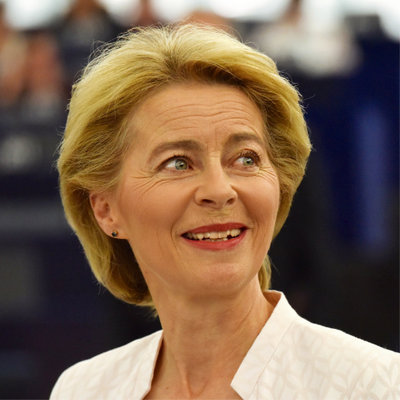
Congratulations to lawyer and human rights activist Navanethem “Navi” Pillay on her Nobel Peace Prize.
Few have devoted their lives to justice, peace and human dignity like she did.
From the violence of apartheid in South Africa to the horrors of the Rwandan genocide, she has confronted some of humanity’s darkest chapters.
She has looked the brutality of injustice in the eye and never looked away.
She is the defender of the persecuted, the vulnerable, the voiceless and the excluded.
Of the rule of law over the right of might.
In a world that needs justice more than ever, her courage and moral clarity are a precious compass.

BREAKING NEWS
The Norwegian Nobel Committee has decided to award the 2026 #NobelPeacePrize to Navanethem “Navi” Pillay for her efforts to promote peace and international law.
#NobelPrize

Gillian Saunders🇿🇦 retweeted

Announcement, Nobel Peace Prize 2026 | @NobelPrize
9 October 2026
The Nobel Peace Prize for 2026 goes to a person who with exceptional courage and integrity has led the way towards a more comprehensive global legal order. This year’s laureate has been instrumental in ensuring that war crimes, crimes against humanity and genocide are prosecuted.
The Norwegian Nobel Committee has decided to award the Nobel Peace Prize for 2026 to Navanethem “Navi” Pillay for her efforts to promote peace and international law.
Navi Pillay’s commitment to universal legal principles and her firm moral compass are constants in a long career. Born into a family of Indian Tamil origin under apartheid in Durban, South Africa, Pillay became a lawyer and legal pioneer, confronting deep structural discrimination, segregation and exclusion. A common thread runs from her early work defending Nelson Mandela and others who stood up against apartheid to her service as a judge in some of the key international court cases of our time.
This year’s laureate has significantly enlarged the scope and impact of international law. She has served as a judge on the High Court in South Africa, the International Criminal Tribunal for Rwanda and the International Criminal Court. She was the United Nations High Commissioner for Human Rights and, until recently, she chaired the UN Independent International Commission of Inquiry on the Occupied Palestinian Territory. Today Navi Pillay is a judge on the International Court of Justice in the case where Myanmar stands accused of genocide.
In historic international court cases, she has shown that legal measures can help prevent acts of war and violence. Navi Pillay has also contributed to strengthen the institutions of international law. Her independence, expertise and steadfastness have made her one of the most respected international jurists of our time.
The first Nobel Peace Prize was awarded 125 years ago. Already then, the Norwegian Nobel Committee underscored the importance of resolving conflicts through international law – a theme that has remained prominent throughout the history of the peace prize. The reach of international law expanded after the Second World War, in particular with the creation of the UN institutions. The key insight was that lasting peace must be built on legal principles, not on the will of the strong or a fragile balance of power. Additional legal mechanisms were introduced in the post-war decades, and momentum picked up further after the end of the Cold War.
However, the rules-based international order has never been perfect. The greatest powers have often evaded responsibility. In practice, cases brought under international law have produced different results depending on who is the perpetrator and who is the victim.
Nonetheless, we have seen that more and more conflicts are being addressed through diplomacy, treaties and legal mechanisms, rather than threats, violence and warfare. Leaders and populations alike have come to the same conclusion: international law is a foundation for a more peaceful world.
At a time of existential challenges – including more wars and conflicts than the world has seen in a long time – international law is no longer just a supplement to peace and security. It is an absolute necessity.
And yet, the system of international law is under tremendous pressure, and its institutions are under attack. We see a shift towards power politics at the expense of legal frameworks and global respect for law and justice. Whenever might overtakes right, it undermines stability, trust and peaceful co-existence.
In awarding this year’s Nobel Peace Prize, the Norwegian Nobel Committee wants to remind the world that the rule of law – national and international – underpins the system we have set up to ensure peace and resolve conflicts non-violently. Peace requires justice.
History has shown that a world operating without the rule of law is unjust, unwise and inhumane. The judges – those who guard the thin red line between order and chaos – are therefore highly deserving of our praise. But today, as these same judges are sanctioned, and their institutions are attacked, we need people of courage, vision and determination – qualities that Navi Pillay demonstrates in her work on the bench.
Navi Pillay has held states and national leaders accountable and brought hope to victims of violence and conflict. In all the positions she has held, she has stressed the responsibility of individuals and states to comply with the rule of law. She has also helped define the relevant norms and legal principles. When the International Criminal Tribunal for Rwanda established that rape and sexual violence could constitute a crime against humanity – as well as genocide – her influence was a significant factor. In the same case, Ms Pillay was instrumental in a separate legal breakthrough: for the first time, a defendant faced charges of incitement to commit genocide purely on the basis of spreading propaganda.
The Nobel Peace Prize for 2026 springs directly from Alfred Nobel’s will. Navi Pillay strengthens fraternity between nations and – by systematically advancing the use of tribunals for peace and justice – she provides substance, direction and motivation for peace conferences in their modern form.
Navi Pillay is one of the great defenders of international legal principles in our time. Her distinguished career reminds us of the need to support, fortify and expand the global rule of law. Navi Pillay’s commitment to justice and human dignity is a source of hope and inspiration to all who seek to bring about a more peaceful world.
🔗 nobelprize.org/prizes/peace/…
