

Adding Clarity to Decision Making in a Complex World. Experts in Global Issues and Maritime Security Risk Management.
London, England
Joined January 2019
- Tweets3.6K
- Following2.4K
- Followers6K
- Likes1.3K





The risk starts before the vessel reaches port.
Recent drone attacks near Romania’s Sulina Canal highlight the exposure facing commercial vessels waiting at the gateway to Danube trade.
Three ships were reported struck during the night of 14–15 November. The incidents follow earlier attacks in the area and reinforce a critical consideration for maritime teams: waiting time belongs in the voyage risk assessment.
For shipowners, operators and charterers, the questions are immediate:
▪ What has changed around the planned anchorage?
▪ Could congestion extend vessel exposure?
▪ Does the latest threat picture change the port-call decision?
Our latest analysis explores what the Sulina attacks mean for Black Sea shipping and the Danube trade corridor.
Verihelm brings incidents, regional threats, voyage risk and port intelligence together helping teams understand where changing conditions could affect their operations.
Book a demo and see what Verihelm can bring to your next voyage decision:
hubs.la/Q04FtBgF0
#MaritimeSecurity #BlackSea #Shipping #MaritimeIntelligence #Verihelm

Your next cyber incident may first look like an operational problem.
An unreliable position. A supplier connection you cannot account for. A bridge command that does not produce the expected response.
Dryad Global’s refreshed Cyber METIS explores how digital risk can affect vessel operations, using the original Cyber-SHIP simulation alongside updated guidance and practical readiness questions for ship
operators.
The simulation is a scenario for preparedness, not a reported vessel hijacking. Its value is the question it puts to your team: could you recognise the problem and keep the vessel safe?
Request the report and discuss your fleet’s cyber security needs: [email protected]
#MaritimeCyberSecurity #ShipManagement #DryadGlobal

2
165
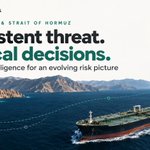
A vessel can complete its transit through the Strait of Hormuz while the risk picture continues to deteriorate.
Early-November reporting highlights the pressure on commercial shipping: repeated tanker incidents around Musandam, crew evacuation following a vessel fire, and U.S. action to disable the bulk carrier Huda in the Gulf of Oman.
Dryad Global’s assessment points to sustained pressure over the coming month. Continued attacks and disruption remain a serious concern, even without a major escalation.
For operators, insurers and cargo interests, the question is practical: what does the evolving threat change for your next decision?
Our blog examines the incidents, the outlook and the implications for maritime operations.
Read the analysis: channel16.dryadglobal.com/st…
🤖 Made with AI

Tres escenarios de guerra golpean al comercio marítimo mundial elpais.com/internacional/202… via @el_pais

175
When pirates seize a vessel, the risk can extend well beyond those aboard.
A captured ship can become a mothership supporting further attacks and extending pirates’ reach into commercial shipping routes.
What is driving the resurgence of Somali piracy, and what does it mean for your maritime exposure?
Dryad Global’s report examines the changing threat across the Gulf of Aden and Somali Basin, including:
▪ The hijackings and incidents shaping the regional risk picture.
▪ Somali state weakness and competing demands on international naval resources.
▪ Reported links between pirate groups, the Houthis, Al-Shabaab and Iranian logistics networks.
▪ The implications for owners, operators, charterers and underwriters.
Written by Joshua Harrison, Dryad Global Analyst, the report combines incident analysis, regional maps and an assessment of the drivers behind renewed pirate activity.
Access Maritime disruption in the Gulf of Aden and Somali Basin, 2025–26 to inform your next voyage or exposure assessment.
📥 dryadglobal.com/voyage-trans…
#MaritimeSecurity #SomaliPiracy #Shipping #MaritimeRisk #DryadGlobal
🤖 Made with AI


A hijacked fishing vessel can become a launch platform for attacks on commercial shipping.
The seizure of AZINI off northeastern Somalia on 29 October illustrates that risk. Before Indian forces recovered the vessel on 2 November, MSCIO warned that it was approaching a maritime traffic lane and could be used as a pirate mothership.
The incident came alongside suspicious activity in the Gulf of Aden, including a craft carrying ladders and a hook, and a reported armed skiff approach to a merchant vessel.
For owners, operators, charterers and underwriters, these developments reinforce the need to reassess voyage exposure as conditions change.
The end of the southwest monsoon has reopened opportunities for small-boat operations further offshore. Dryad Global’s assessment places this seasonal change within a broader rise in suspected Somali pirate activity during 2026.
Our forthcoming analysis will examine the drivers of this resurgence and its implications for maritime operations.
Need support assessing your vessel’s exposure? Contact Dryad Global for maritime security intelligence and voyage risk support.
hubs.la/Q04DfMbq0
#MaritimeSecurity #SomaliPiracy #Shipping #MaritimeRisk #DryadGlobal

The most dangerous gap in a maritime risk assessment may be the one the platform does not show.
AIS coverage can disappear. GNSS interference can corrupt vessel positions across an entire region. Sanctions lists, ownership records and incident reports update at different speeds. Cyber incidents can compromise the systems producing the data itself.
The result may still look complete.
But an apparently confident assessment can conceal missing, delayed or manipulated information, affecting a routing decision, compliance check or insurance exposure calculation.
Closing these gaps requires more than adding another data feed. It means:
• Comparing signals from multiple sources
• Identifying stale, conflicting or incomplete information
• Making uncertainty visible
• Preserving source provenance and assessment timing
• Applying experienced analyst judgement where automation cannot resolve ambiguity
Verihelm brings incidents, threat context, vessel information and Dryad Global’s analyst-reviewed intelligence together so users can see not only what the data indicates, but where the picture may still be incomplete.
Our latest article examines where maritime risk assessment gaps originate, what they can cost and why credible intelligence must surface uncertainty rather than hide it behind a confident-looking score.
Read the full analysis: hubs.ly/Q04xWkSh0
Explore Verihelm: hubs.ly/Q04xWkR20
#MaritimeRisk #MaritimeIntelligence #AIS #GNSS #SanctionsCompliance #Verihelm

What happens when a yacht loses navigation and guest networks 48 hours before a charter?
That fictional scenario is at the heart of “Ransomware at anchor”, the Dryad Global workshop led by CEO Corey Ranslem at the 7th Super Yacht Americas 2026.
Corey and Erik Speyer, our Director of Technical Sales, will also contribute to the conversation about the yacht as a power plant and a data centre, where future technology meets practical cyber readiness.
Join us in Fort Lauderdale on 28 October to discuss safer, better-informed yacht operations and explore Verihelm™, Dryad Global’s maritime risk intelligence platform, for voyage and destination planning.
Meet the team and bring your questions.
Programme and registration:
hubs.la/Q04zgyQy0
#Superyachts #Verihelm #DryadGlobal

186
A confirmed booking doesn’t guarantee a confirmed route.
Dryad Global’s Corey Ranslem contributed to Hannah Kohr’s latest article in The Supply Chainer, examining how disruption around Bab el-Mandeb exposes critical gaps in cargo visibility.
As Corey explains:
“Shippers therefore need to understand the regional threat as well as the capabilities and protection measures employed by the vessel carrying their cargo.”
Routing decisions can be made at the last minute, often between the vessel owner and chartering party. Diversions around the Cape can add up to 25 days, depending on departure, destination and weather with consequences for inventory, production schedules and customer commitments.
For shippers, the practical questions are clear:
• Which vessel is actually carrying your cargo?
• Has its route changed?
• What threats could it face, and what protection measures are in place?
The article reinforces why vessel-level visibility and maritime risk intelligence need to work together. Knowing where cargo is gives you only part of the information needed to assess its exposure.
Read “Bab el-Mandeb Disruption Exposes a Vessel-Level Visibility Gap” in The Supply Chainer: hubs.la/Q04xDqgQ0
#DryadGlobal #MaritimeSecurity #SupplyChain #BabElMandeb

Movement data answers where. Risk intelligence should explain why the change matters.
For maritime data and information providers, the problem is rarely a shortage of signals. It is turning incidents, vessel movement, port conditions, weather and war-risk information into context for a specific route and vessel.
Dryad Global's Voyage and Transit Risk Assessment organises that picture leg by leg. It identifies where exposure changes, explains the drivers and states the validity and triggers that would require reassessment. Human judgement is applied where the evidence or consequence requires it.
The result complements movement, port and market data with a governed voyage-level view, without adding another unqualified alert stream.
Explore the assessment: hubs.ly/Q04wFjFj0
Maritime intelligence, human-verified.
#MaritimeData #RiskIntelligence #AIS #ShippingTechnology

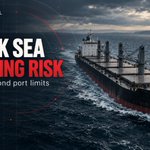
Black Sea shipping risk extends beyond port limits.
The sinking of the Royad Mammadov on 5 October, with two fatalities reported by Romanian authorities, brings the human cost into sharp focus.
For shipowners, operators and charterers, the implications reach across the voyage:
• Offshore passages and waiting areas need active risk assessment.
• Vessel trading history and commercial affiliations warrant scrutiny.
• War-risk notifications and cover should be confirmed before sailing.
• Crew emergency readiness must remain central to operational decisions.
One distinction matters: Romania’s exclusive economic zone is not its territorial sea. The territorial-water exclusions in the expanded Black Sea war-risk listing do not extend across neighbouring EEZs.
Dryad Global’s latest update examines the changing threat and the implications for commercial shipping.
Read the analysis: hubs.la/Q04zgkFL0
#MaritimeSecurity #BlackSea #Shipping #DryadGlobal

Regional emergency plan for petroleum products on the agenda of Gulf energy ministers in Bahrain voiceofemirates.com/en/busin… via @voe_ourmedia

Port intelligence should not stop at the dashboard.
The person making the decision may not be the person logged into the platform.
A Master may need a pre-arrival brief. A security manager may need to update senior leadership. A charterer or underwriter may need an assessment in the file. Operations may need a common reference for the next call.
Verihelm port assessments can be downloaded as structured PDF reports, carrying the assessment summary, operating context, relevant security information and recommended considerations into the workflow where they are needed.
The port picture can also be reviewed regularly and updated when incidents materially change the context. That means the output is designed to support a real decision window, not sit as a static map layer.
Portal view when you need to explore. Downloadable report when the intelligence needs to travel.
Request a Verihelm demo.
Maritime intelligence, human verified.

A vessel moving on schedule can still be carrying a changing risk picture.
For multinational supply-chain teams, the operational question is not only where the ship is. It is whether threat, port, weather or war-risk conditions along the route could alter delivery assumptions, increase cost or trigger contingency review.
Dryad Global's Voyage and Transit Risk Assessment shows exposure across the full waypoint sequence. It explains what is driving the risk, adds vessel and port context, and records the validity and triggers that would require another look.
That gives logistics, procurement, security, finance and continuity teams a shared maritime evidence base before disruption compounds across the business.
See where disruption changes the voyage: hubs.la/Q04wDPGg0
Maritime intelligence, human-verified.
#SupplyChainRisk #BusinessContinuity #GlobalLogistics #MaritimeRisk

Arctic energy shipping is growing, but the risk picture is becoming more complex.
By mid-September, Bellona had recorded more shadow-fleet oil tankers and LNG carriers on Russia’s Northern Sea Route than it did throughout 2025. At the same time, Greenland, Denmark and the United States have signed an agreement that could expand allied defence activity around Greenland and the North Atlantic.
For commercial shipping, the practical questions are voyage-specific: Is the vessel suited to the ice conditions?
Are its ownership, cargo and insurance arrangements clear?
How might navigational notices and security activity affect the route?
Our latest analysis examines both developments and what operators should monitor as the Greenland agreement moves toward implementation.
Assess your next voyage with Dryad Global: hubs.la/Q04yvcL60
#ArcticShipping #MaritimeRisk #NorthernSeaRoute #Greenland #Shipping

2
227
Saudi Arabia’s East–West pipeline offers an alternative to the Strait of Hormuz. But getting oil to the Red Sea is only part of the export challenge.
As @Reuters' Jonathan Saul reports, quoted war risk premiums for Saudi-linked tankers calling at Yanbu have tripled in recent weeks. The threat environment around Bab el-Mandeb is shaping whether vessels can move, what it costs to insure them, and which routes remain viable.
Dryad Global CEO Corey Ranslem contributed to the article, highlighting how limited tanker traffic through Bab el-Mandeb remains.
Read the Reuters article: reuters.com/business/energy/…
#MaritimeSecurity #Shipping #EnergySecurity #RedSea

Undersea infrastructure is becoming harder to protect as specialist systems gain the ability to operate at greater depths.
Corey Ranslem discusses reported Russian capabilities, Chinese development of deep-sea cable-cutting technology and why the threat to communications infrastructure is expected to continue evolving.
Capability does not by itself prove deployment or responsibility for a particular incident. But it is an important factor when assessing future maritime risk.
Explore Dryad Global’s maritime intelligence:
dryadglobal.com/
#MaritimeIntelligence #China #Russia #UnderseaCables #CriticalInfrastructure
Why could recovery take weeks?
Drone strikes forced a shutdown of the pipeline on 11 September and halted loadings at Yanbu. The line had been moving roughly 4 million barrels per day from Saudi Arabia’s eastern oilfields to the Red Sea, offering an alternative to exports through the Strait of Hormuz.
The pipeline restarted at a low rate on 22 September. Reuters reported that three pumping stations had sustained damage. One source estimated six to eight weeks for a full restart; another estimated up to six weeks. These are recovery estimates, not confirmed dates for sustained export volumes.
Early flows are expected to serve refineries on Saudi Arabia’s west coast. Yanbu exports may resume alongside those deliveries, but one tanker loading would not establish that the terminal can sustain its previous schedule. Operators need to watch whether loadings continue—and at what volumes—as pipeline rates rise. Dryad Global’s earlier assessment of the restart explains why repairs to the pumping stations matter.
Saudi Arabia’s East–West pipeline is moving crude again after the September drone attacks. That is an important step for exports through the Red Sea, but a restarted pipeline and a dependable loading programme at Yanbu are different milestones.
In a CNBC interview, Dryad Global CEO Corey Ranslem addressed a recovery that could still take six to eight weeks. For shipowners, charterers, traders and insurers, the question is how much crude can move consistently during that period and what security exposure accompanies each cargo.
East-West pipeline could still take six to eight weeks to recover to full capacity. Corey Ranslem, CEO of Dryad Global, discusses what a potential re-start of Saudi Arabia’s East-West pipeline means for the industry cnb.cx/4xHGXxn

