

A global ecologist who strives to understand the impacts of climate change and human activities on the Earth’s biosphere and the feedbacks to the climate
University of New Hampshire
Joined December 2011
- Tweets1.4K
- Following232
- Followers1.6K
- Likes1.7K

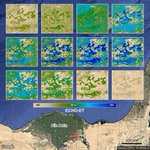






Our new paper in @NatCities, led by Shengli Tao’s group, maps land subsidence at 40 m resolution across 465 cities in 107 countries using Sentinel-1 radar data (2014–2023). Subsidence has slowed in some cities but accelerated in others.
nature.com/articles/s44284-0…

Jingfeng Xiao retweeted

Article: Vertically compound soil moisture droughts—when all soil layers are depleted—have intensified worldwide
nature.com/articles/s41561-0…

Jingfeng Xiao retweeted

It's time to apply for the New Phytologist #TansleyMedal!
The prestigious prize is awarded annually to early career scientists that have made an outstanding contribution to #PlantScience.
Deadline: 1 November 2026. Apply now: newphytologist.org/grants-aw…

Jingfeng Xiao retweeted

🚨 Our first peer-reviewed paper on the challenges and opportunities of automating science with AI is now available at the Proceedings of the National Academy of Sciences. Read the full paper here: pnas.org/doi/epdf/10.1073/pn…


2026 is the year of AI Scientists, among many other things. At Carnegie Mellon University, we‘re conducting some exciting research on the performance and safety of AI scientists.
Our first paper “The more you automate, the less you see: hidden pitfalls of AI scientist systems” is revised and available for reading. Our work has been coverred by undark too; links to the paper and coverage here:
arxiv.org/pdf/2509.08713?
undark.org/2026/01/26/ai-sci…

Jingfeng Xiao retweeted

The Colorado River is shrinking. And cities like Las Vegas and Phoenix are investing billions in water recycling, conservation, and new infrastructure as they race to prepare for a future with less water.
➡️Explore the story from #ClimateCentral: climatecentral.org/video/as-…


Mandatory cuts imposed by the federal government on water from the Colorado River will soon take effect in Arizona, Nevada, and California.
Now, some water managers in the region are spending billions to prepare for a drier future.
Special correspondent Ben Tracy with Climate Central (@ClimateCentral) reports for our series, Tipping Point.


Jingfeng Xiao retweeted
The El Niño twins: 2026 and 1997.
There’s more warm water in the equatorial Pacific this year, but the evolution and overall pattern bear a striking resemblance to 1997.
That should set the stage for some similar global weather impacts from this year into next.
Jingfeng Xiao retweeted

France’s ongoing drought has once again pushed soil moisture further below historical levels than any previously recorded drought.
Uncharted territory.


Our new paper is out in @GlobalChangeBio! We find increasingly widespread extreme negative vegetation responses, driven largely by drought and its compound events with heat and wildfire.
Led by Haoxiang Zhao & Bin He.
doi.org/10.1111/gcb.71136

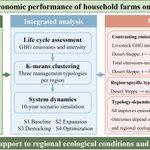
Our new paper is out in Agricultural Systems! Using surveys of 400 farms in Inner Mongolia, we show that more efficient livestock production can increase income while reducing GHG emissions intensity.
Led by Lulu Wang, co-advised by Changliang Shao and me!
sciencedirect.com/science/ar…

Jingfeng Xiao retweeted

RESEARCH ARTICLE
Decadal Resampling Reveals Widespread Increases in Soil Microbial Diversity Associated With Nitrogen Deposition
🔗 buff.ly/lqLlZRO

Jingfeng Xiao retweeted

According to a new @ScienceAdvances study, Earth became significantly less dusty during the 20 years after 2003.
Global atmospheric mineral dust levels fell approximately 10%, a decline which may have slightly amplified recent global warming. scim.ag/4xrNRGH

Jingfeng Xiao retweeted

Fun fact, the IPCC (Intergovernmental Panel on Climat Change) Working Group 3 Lead Author meeting starts tomorrow in Bangkok, amidst one of the worst climate change disasters ever to hit the city. JFC.


Jingfeng Xiao retweeted

There is growing concern that AI can blunt memory and reasoning. Science shows ways to keep the brain sharp
go.nature.com/3ThSJjT

Jingfeng Xiao retweeted
As the planet warms and forests burn, can we replant them with new trees that will thrive in the decades ahead?
Learn more: scim.ag/4dURU7s @NewsfromScience

ALT Bar chart showing forest area burned in high-severity burns from 1984 to 2021. Each bar has a black dot with error bars, representing the estimated planting need and middle 50% of estimates. Since 2000, the average annual area burned in high-severity fires has increased fivefold, relative to 1984 to 1999.
This is certainly a bad news to many families in the New England region.
