

Information Security and Data Protection Expert with 21 years of experience servicing the needs of global enterprises
United States
Joined September 2019
- Tweets1K
- Following68
- Followers81
- Likes145



Pinned Tweet
Five centuries apart, two histories reveal a recurring pattern:
Separation from Rome is followed by further fragmentation.
HISTORY IS WARNING US AGAIN! Luther and Lefebvre confronted REAL problems and may sincerely have sought reform—but separation from Rome was NOT the solution: the Reformation multiplied divisions, and even the SSPX’s own followers later split into competing traditionalist movements who now disagree among themselves over papal authority, liturgy, and even each other’s episcopal legitimacy.
Do not repeat history—reform the Church without tearing apart Christ’s Church!
#SSPX #FSSPX #TLM #CATHOLIC

May our loving and merciful God continue to bless us with balanced, faithful teaching like this.
I love the TLM and attend ICKSP weekly, but I refuse to reduce authentic Catholic traditionalism to one liturgical rite or use it to belittle the Novus Ordo or those who attend it.

Is the Ordinary Form Mass, the Mass in the vernacular defective? Invalid? Fr Imbarrato xitter.cf/i/broadcasts/1AJEmvgmP…

Wonderful and encouraging news from the Vatican! 🙏
Pope Leo XIV continues to show steady improvement following surgery, with positive medical results.
Thanks be to God! Let us remain united in prayer for our Holy Father's complete recovery, renewed strength, and continued service to Christ and His Church.
Ad multos annos, Holy Father! ❤️
#PopeLeoXIV #Vatican #PrayForThePope
vaticannews.va/en/pope/news/…

St. Teresa of Ávila, PRAY FOR US!
Amid the Protestant Reformation and ecclesial conflict, Teresa pursued renewal WITHIN the Church, not apart from her—distinguishing her divine mission from the failings of her members.
Her lesson: Union with God is measured not by extraordinary experiences, but by humility, charity, obedience, and service.
Three famous quotes:
- “Let nothing disturb you. Let nothing frighten you. God alone suffices.”
— Nada te turbe
- “The important thing is not to think much, but to love much.”
— Interior Castle, IV.1
- “Love consists, not in the extent of our happiness, but in the firmness of our determination to try to please God in everything.”
— Interior Castle, IV.1
Two lesser-known gems:
- “Perfection does not consist in consolation but in greater love.”
— Interior Castle, III.2
- “I submit in all things to the teachings of the holy Catholic Roman Church.”
— Interior Castle, Conclusion
PAX

Jorge Gonzales retweeted

Pope Leo XIV urged students and faculty at Rome’s pontifical universities during a Mass Thursday marking the opening of the academic year to “guard your hearts” and warned against reducing intellectual activity to the collection of data.
ewtnnews.com/vatican/pope-le…

Jorge Gonzales retweeted
Pope Leo XIV on Wednesday urged bishops from around the world gathered at the Vatican for a meeting on the family to face with “courage” the challenge of learning from and responding to families marked by hardship and “apparent failure.”
ewtnnews.com/vatican/pope-le…


Jorge Gonzales retweeted

VATICAN CITY — Pope Leo XIV on Wednesday called on Christians to be capable of “viewing the world in a positive light,” while urging them to be actively committed to transforming society according to the spirit of the Gospel, without watering down the Christian message.
“It is certainly not by watering down the content or softening the demands that Christianity can be made attractive,” he recalled on Wednesday, citing the address he delivered to the plenary assembly of the Dicastery for Evangelization, Section on Fundamental Questions Regarding Evangelization in the World, on May 28.
During the general audience held in St. Peter’s Square on Oct. 7, the pontiff resumed his catechetical series dedicated to the texts of the Second Vatican Council, following last week’s pause, when he reflected on his apostolic journey to France.
Leo thus continued his catechesis on the conciliar constitution Gaudium et Spes. In particular, he focused his reflection on Chapter 4 of the first part of the document, which is devoted to the Church’s mission in the contemporary world.
“It is the task of the whole people of God, especially pastors and theologians, to discern what in the cultures of our time is worthy of consideration, always taking the word of God and the tradition of the Church as the supreme criteria for discernment. This requires a balanced mind, free from cultural trends, capable of viewing the world in a positive light whilst remaining steadfast in preserving and presenting the Gospel message in its entirety,” he said.
Before thousands of pilgrims gathered in St. Peter’s Square, Leo XIV reflected on the vocation of the lay faithful in the world and recalled that Vatican II fostered a new awareness of the responsibility of all the baptized in the Church’s mission.
Referring to the concrete demands of the Christian faith, Leo XIV said that, by worshipping Christ, “the believer cannot accept the oppression of the weak and the poor, nor the unjust structures that perpetuate conditions of dependence and injustice.”
“The social doctrine of the Church guides the actions of Christians, who collaborate with all people of goodwill in promoting the common good,” he added.
The principal settings for this evangelizing mission, the Holy Father recalled, are the family and the workplace, though it extends to every sphere of life.
More: ewtnnews.com/vatican/pope-wa…

Jorge Gonzales retweeted

Breaking: Pope Leo warns Catholics not to water down the demands of the Catholic faith.


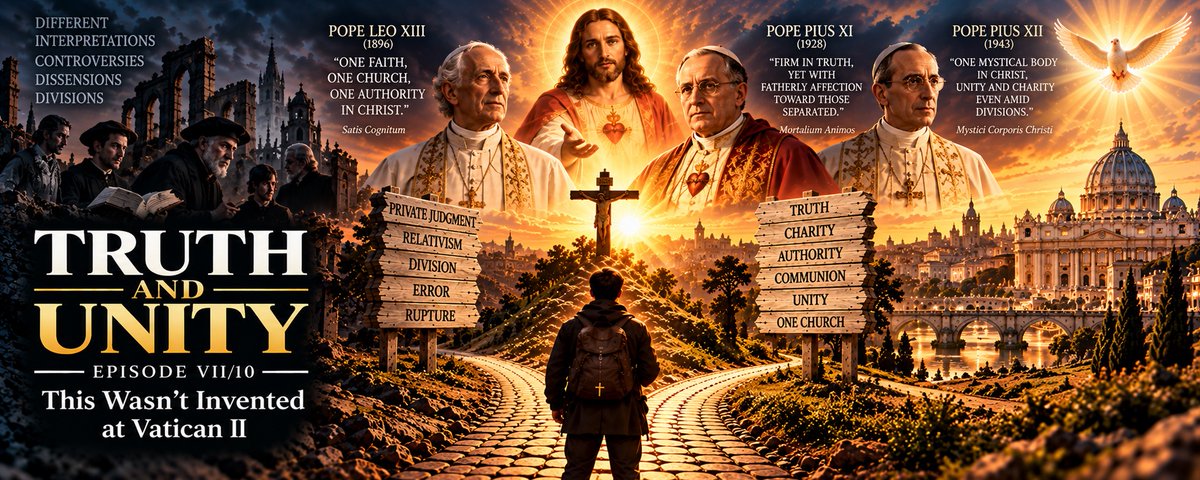
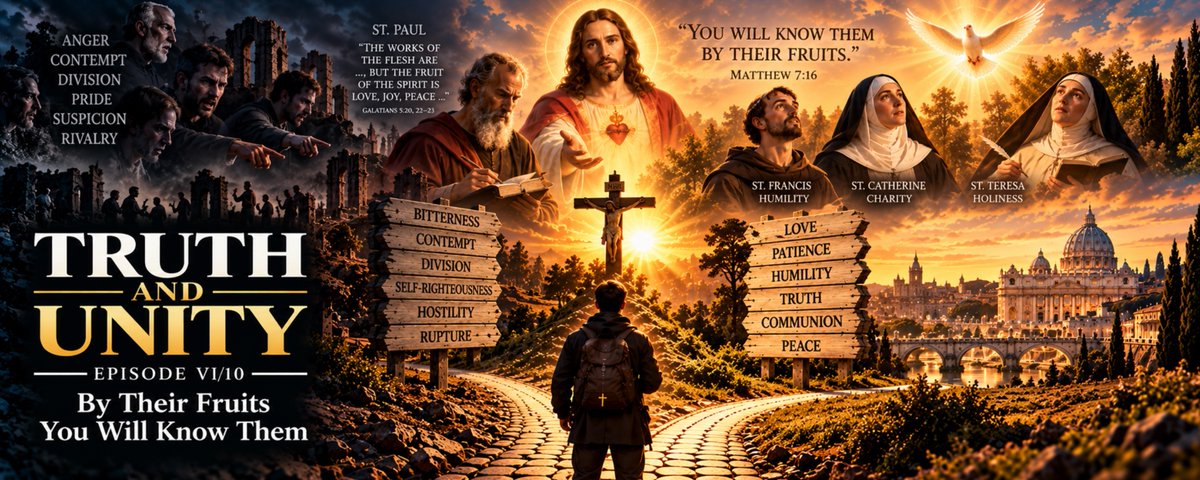
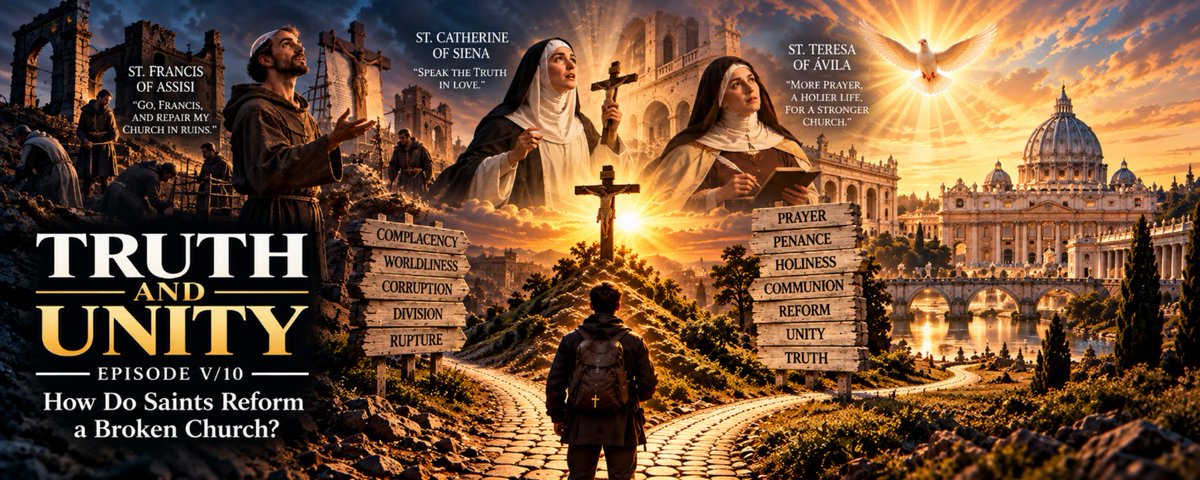
Using the screen to help turn our hearts toward God 📱✝️
Prayer. Scripture. Liturgy of the Hours/Divine Office. Fasting. Sacred Tradition. Formation.
These Catholic apps have genuinely enriched my journey and have been a blessing from God.
Technology can distract the soul ... but ... it can also help lead it toward God.
👇 What’s inside my Catholic folders?

How I use these tools 📱✝️
• DivineOffice — Liturgy of the Hours with excellent audio; especially helpful for praying along.
• iBreviary — Liturgy of the Hours, daily Mass texts, readings and Catholic prayers.
• Verbum — serious Scripture study, theology, Church Fathers, Magisterium and an enormous Catholic research library.
• FORMED — Catholic formation through courses, documentaries, talks, books and other media.
• ECPubs — Eastern Catholic rite. The beauty of the Eastern Catholic prayers and resources.
• New Jerusalem Bible — Scripture readily available for reading and study.
• ICC — Catholic catechetical and formation resources.
And in my 1962/traditional folder:
• Officium — traditional Roman Divine Office.
• Neumz — Gregorian chant and sung monastic Liturgy of the Hours prayer; excellent for learning and praying with the Church’s chant tradition.
• Sanctifica — One of my FAVORITES. Abundant prayers and devotions in Latin. Traditional calendar, devotions, fasting/abstinence reminders and other traditional Catholic resources.
• Introibo — resources connected with the traditional Roman liturgy and calendar.
• Fast Days — helps track traditional Catholic fasting and abstinence practices.
None of these replaces Mass, the Sacraments, Scripture, real Christian community or personal prayer.
They are simply tools—and technology placed at the service of God can become a remarkable aid to the spiritual life.
Spiritual weapons to enrich our journey ... right within our reach.
Fasting is for grandma and grandpa ... right?
Not so 'fast' (pun intended)
Jesus fasted. Jesus expected His disciples to fast. And the Apostolic Church fasted.
Jesus → Apostles → Early Church → Fathers
Do you think Christians have lost something valuable by fasting less?
👇 Biblical & ancient Christian evidence below.
FASTING IS DEEPLY ROOTED IN CHRISTIANITY
1. Jesus fasted—and expected His disciples to fast.
“When you fast…” — Mt 6:16
“Then they will fast.” — Mt 9:15
2. The Apostolic Church fasted with prayer and discernment.
“While they were worshiping the Lord and fasting…” — Acts 13:2
Paul and Barnabas appointed presbyters with “prayer and fasting.” — Acts 14:23
3. Fasting accompanies conversion and self-mastery.
“Return to me with all your heart, with fasting…” — Joel 2:12
“I discipline my body and keep it under control.” — 1 Cor 9:27
And the ancient Church continued the practice:
Didache (c. AD 100):
“Fast on the fourth day and the Preparation [Friday].”
Shepherd of Hermas (2nd century):
True fasting is joined to conversion, self-denial, obedience to God, and charity toward the needy.
St. Augustine (4th–5th century):
“Fasting chastens your own self…”
But Augustine warns that fasting should not remain isolated: it should accompany prayer and charity toward others.
This is much more than simply eating less:
Fasting → self-mastery → conversion → prayer → charity → deeper life with God.
It belongs to the ancient Christian way of life.
PAX et BONUM
Why do Catholics pray NOVENAS?
Nine days. The Apostles. Mary. Persevering in prayer. Awaiting the Holy Spirit. (Acts 1:14)
The Church has treasured these devotions for centuries while continually helping us understand their proper place within the fullness of Catholic prayer.
And Pope Leo XIV is calling us to rediscover something increasingly lost: PRAYER ITSELF, including its transmission within Christian families.
Why does this matter? 👇
The Bible does not say, “the Apostles prayed a novena for nine days.”
Acts tells us that Christ appeared for 40 days, ascended, and the disciples then persevered in prayer with Mary (Acts 1:3, 12–14). Pentecost is the 50th day of Easter.
The Church therefore identifies the nine days between Ascension and Pentecost as the event from which the Pentecost novena developed (Directory on Popular Piety §155).
And this teaches something beautiful: a novena isn't repetition intended to force God to give us what we want. The repetition forms US (you and I), teaching perseverance, patience, hope and surrender to God's will.
The Church treasures popular devotions while integrating them with her liturgical life. Vatican II called them “highly commended” (SC §13), and the Catechism beautifully summarizes their place: they “extend the liturgical life of the Church, but do not replace it” (CCC 1675).
Pope Leo XIV now reminds us why recovering prayer matters: “even in many Christian families, the tradition of prayer is no longer passed on.” Prayer, he says, is “worth rediscovering in its true form.”
Liturgy AND devotion.
Scripture AND Tradition.
Prayer in church AND prayer at home.
One Catholic life of prayer: received, deepened and handed on.
Pope Leo XIV:
vatican.va/content/leo-xiv/e…