Passion. Purpose. Power. That's what it means to Go Red for Women. Join us as we unite against the No. 1 killer of women, cardiovascular disease.

Joined December 2008
Menopause can raise a woman’s risk for developing heart disease and stroke. Here’s how you can help lower your risk.
1
1
94
When she first had chest pains, Shanelle Dawes didn't seek medical help. When the pains returned a week later, the 35-year-old went to the hospital and needed emergency open-heart surgery. Her message: She wants women to recognize the symptoms of a heart attack and call 911 immediately if they don't feel right.
2
172
Nearly half of American adults have high blood pressure and many don't know it. Getting your blood pressure checked is the first step to protecting your heart and brain. Use this chart to see where your numbers fall and talk with your health care professional. #NWBPAW
124
Hot flashes 🔥 and night sweats 🥵 may be common around menopause, but they could be more than just an uncomfortable symptom. Research suggests they may also be a sign of increased risk for future heart problems. If you're experiencing them, talk with your doctor about your overall heart health.
1
3
5
238
We all want to live our healthiest, happiest lives. But for women, every stage of life, from pregnancy to menopause, brings unique heart and brain health challenges. The American Heart Association's Life's Essential 8 for Women are key to protecting your heart at every age: 1️⃣ Embrace healthy eating 2️⃣ Move your body 3️⃣ Don't be toxic. Quit tobacco. 4️⃣ Sleep like a star 5️⃣ Stay well with weight 6️⃣ Be a cholesterol freak 7️⃣ Keep blood pressure in check 8️⃣ Know the blood pressure basics Small steps today can make a big difference tomorrow.
4
10
205
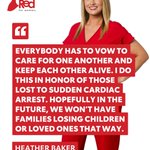
Heather Baker was a healthy woman in her late 20s when she suffered sudden cardiac arrest. While waiting for help, co-workers used CPR and AED skills they had recently learned to save her life. Heather knows how lucky she is to be alive because so few bystanders are trained or willing to perform CPR, especially on a woman. A survey shows that only half of Americans would perform bystander CPR. Heather has taught CPR to more than 5,000 people.
1
2
5
466
Stephanie Austin's heart stopped when she was sleeping. Stephanie's husband recognized his wife's distress and began CPR. Now Stephanie teaches others the lifesaving skill that saved her life.
1
194
Kristen’s son knows you don’t need to be a medical professional to perform CPR. Two years before, he’d learned the skills that would help him save his mom’s life.
2
2
516
Emilee Sparks survived sudden cardiac arrest as a high school senior and a heart transplant eight months later. Now, the college student inspires young women with heart conditions.
1
4
276
You don’t need to be a medical professional to save a life. Anyone can perform CPR. Even you. Just know two simple steps. If a teen or adult collapses, call 911 and push hard and fast in the center of the chest.
3
1
6
298
Christine felt alone and scared after open-heart surgery. She wants to make sure other survivors never do. Join Christine on the Support Network, where you can share your experiences to help others, or find support from people who have been there. supportnetwork.heart.org
1
2
157
Christine felt alone and scared after open-heart surgery. She wants to make sure other survivors never do. Join Christine on the Support Network, where you can share your experiences to help others, or find support from people who have been there.
1
4
155
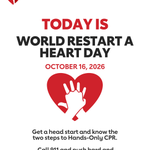
It’s always a good day to learn to save a life. Because when seconds matter, you have the power to help. Get a jump on World Restart a Heart Day by learning the two steps of Hands-Only CPR: If a teen or adult collapses, call 911 and push hard and fast in the center of the chest.
2
167
🚫 Myth: Heart health only matters after menopause. ✅ Fact: The years leading up to menopause are a critical window for prevention. Healthy habits now can help lower cardiovascular risk for years to come. Talk with your doctor about lifestyle changes that can support your heart health.
118
Hands-Only CPR can save lives. ❤️ La RCP solo con las manos puede salvar vidas.
3
1,608
Cardiovascular disease is the leading cause of death for women, and breast cancer remains a major health concern for women too. Sometimes, they can even be connected, with many breast cancer survivors later developing heart issues from treatment. The good news? You may lower your risk for both with a few lifestyle changes: ❤️ Eat a balanced, nutritious diet ❤️ Stay at a healthy weight ❤️ Make regular exercise part of your routine ❤️ Quit smoking or never start Your family history also plays a significant role in your risk for heart disease and breast cancer. It's important to discuss your personal health factors with your doctor to develop a plan that's right for you. When it comes to your health, stay informed, stay proactive.
1
2
152
Everything was falling into place for Marcella Prokop. She’d earned her journalism degree and was planning a move to her own apartment in Sioux Falls, South Dakota, where she had gone to college. She dreamed of working in New York City someday. “I was on top of the world,” Marcella said. Then a stroke changed it all. Marcella had to relearn how to walk and perform other basic daily activities. After the hospital, she moved in with her parents. Three times a week, her mom drove her an hour each way to work with a speech therapist. Marcella’s short-term memory all but disappeared. Ever determined, though, she improved enough to return to Sioux Falls. A year later, Marcella moved to Chicago. When seizures threw her another setback, she realized it was time to pursue new dreams. Marcella moved back to Sioux Falls. She married and started working as a creative writing instructor while earning her master’s degree. “I still wanted to be involved in storytelling, hearing other people’s stories and helping tell them,” she said. “Telling the story of my stroke was helping me heal; it gave me a sense of control over my life.” Marcella’s Colombian heritage through her mother is another important part of the story she tells, especially during Hispanic Heritage Month. Cardiovascular disease is the leading cause of death among Hispanic and Latino adults in the United States. Now 44, Marcella lives on an apple orchard near Sioux Falls with her husband, Sean, and their 8-year-old son, Cedar. She works as director of access and workforce opportunity at a technical college. She has published a book of poetry, is writing a memoir of life after her stroke, and is working on a doctorate focused on the positive effects of writing, especially when people have gone through life-altering experiences such as hers. “I had no idea there would be a happy ending, but there has definitely been one,” she said. “I get to use my story, not just for my healing, but for others to recognize there can be life after stroke.”
1
2
618
“At 6 o 'clock in the morning, my husband received a phone call, a work call. And that awoke him, so thankfully he was able to hear me take my final breath.” Stephanie Austin, then 35, was in her prime when she had a cardiac arrest. Her husband Matt, an orthopedic surgeon, heard her gasp and called her name, but she didn’t respond. He rolled her over and saw Stephanie’s face was blue. He called 911 and performed CPR until help arrived.
4
11
2,966
Getting a good night's sleep every night is vital to your heart and brain health. Here's why.
6
7
338
There's no shortage of menopause myths. Here's the truth: menopause itself does not cause heart disease, but changing hormone levels can contribute to risk factors like high cholesterol, high blood pressure and changes in blood sugar. That's why this stage of life is an important time to prioritize heart health. Understanding what's happening in your body and knowing your key health numbers can help you take steps to protect your heart for years to come.
2
4
191