

I find where Shopify stores leak revenue. Then I fix it. 90-day CRO Sprints for DTC brands in the US & UK. 200+ stores audited & optimized https://xitter.cf/t.co/GMwaqaeKhM
Shopify BFCM ready 👉
Joined September 2010
- Tweets10.7K
- Following1.3K
- Followers3.7K
- Likes22.7K







Pinned Tweet
You wake up.
It's 2012.
Shopify has 40,000 stores.
You know everything you know now.
What are you selling?
your compare-at price used to be a design choice. now it’s data.
since october, shopify shares compare-at prices with AI shopping agents through its catalog.
a human sees “was $3,700, now $1,850” and feels a deal.
an agent sees a product that’s been 50% off all year, and can check every other store selling the same thing in a second.
nobody knows exactly how agents weigh it yet. but a permanent fake sale is a bad bet when the shopper can verify every price instantly.
before BFCM: if your compare-at was never a real price, remove it. anchor against something true.
how long has your “sale” been running?
some of your BFCM sales won’t show up where you’re looking for them.
shopify auto-enrolled eligible stores into its AI shopping channels this month. it’s on by default.
purchases made through those channels may not fire your GA4 or custom pixels.
adobe expects AI traffic to retail sites to grow 130% this holiday season, and 159% on Thanksgiving.
so on the busiest week of the year, part of your revenue could come from a channel your dashboards can’t see.
before BFCM:
→ check which sales channels are switched on in your admin
→ compare shopify’s order count to GA4’s for october. know the gap now so you recognise it in november
→ decide on purpose whether agents can check out. don’t leave it to a default
do you know how many orders came from an AI agent last month?
Let's play a game.
Drop your store URL.
I'll tell you if it looks like:
A) A store I'd buy from
B) A store I'd bookmark and forget
C) A store I'd close in 3 seconds
Mobile. First impression only.
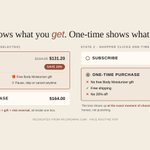
the best subscription box I’ve seen on a Shopify PDP this month: Wild Roman’s face routine posted by @SahilBloom
most brands make subscribe “the discount option.”
they make one-time “the what-you’re-giving-up option.”
the subscribe box stacks 5 things:
→ pre-selected by default
→ $164 crossed out, $131.20, SAVE 20%
→ priced per month ($65.60), not per order
→ a free $30 body moisturizer, only on subscribe
→ “pause, skip or cancel anytime” inside the box
then the clever part. click one-time and it shows:
✕ no free body moisturizer gift
✓ free shipping
✕ no 20% off
the shopper sees what they lose at the exact moment they choose to lose it.
and the ✓ on shipping keeps it honest. it doesn’t punish one-time buyers, it just makes the trade-off visible.
if your subscribe option is a radio button and a percentage, steal this.
does your PDP show one-time buyers what they’re giving up?

half the shopify timeline spent last week checking which apps got delisted.
cart drawers, upsells, free shipping bars, wishlists. the exact stack most brands lean on for conversion.
the uncomfortable part: every app that renders on your storefront runs code you don’t control, from a server you’ve never seen.
most of that stack doesn’t need to be an app.
→ free shipping bar: a few dozen lines of liquid
→ trust strip: a theme section
→ sticky add to cart: a theme section
→ size guide, FAQ accordion: native blocks
we build these straight into the theme. no extra script, no third-party login, nothing that can get delisted 5 weeks before BFCM.
how many apps are rendering on your storefront right now?
most BFCM discounts are picked by gut. 20% because last year was 20%.
here’s how we set spend-more-save-more tiers from data instead:
→ pull your AOV from the last 90 days. say it’s $80
→ tier 1, ~25% above AOV: spend $100, get 10% off
→ tier 2, ~60% above: spend $130, get 15% off
→ tier 3, 2x AOV: spend $160, get 20% off
tier 1 has to be reachable with one extra item. if it takes three, nobody climbs.
then check margin at every tier. if tier 3 loses money after shipping, cap it.
a flat 20% off rewards people for buying what they were already going to buy.
tiers make them buy more to earn it.
we ran a deep storewide discount on a client store. conversion up 572%, AOV down 24.7%. tiers are the fix.
asked what you’d sell if you woke up in 2012.
19,000 people saw it. the answers: wallets, fidget spinners, supplements, tools for other store owners, SaaS.
notice what nobody said: “I’d build a better store.”
every answer was a timing bet. get into the category before everyone else.
that edge is gone in 2026. every category is crowded, ads cost far more, and the same product sits on dozens of stores.
what’s left is what happens after the click. how fast a stranger trusts you. how quickly they see the price. whether checkout surprises them.
in 2012 you won by being early.
in 2026 you win by converting the traffic you already pay for.
what’s the last change on your store that actually moved sales?

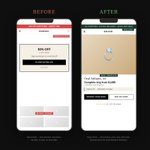
met a jewelry founder at an event last month.
lab-grown engagement rings, US market, $1,500–$5,000 per order. most of his traffic is mobile.
his mobile homepage is losing sales he’s already paid for 👇

what I’d ship in week 1:
→ popup fires at 50% scroll, not on load
→ hero = one named ring, real photo, full price shown
→ “order by X, delivered by Y” above the fold
→ IGI + duties included + 30-day returns in the top bar
→ monthly payment option under the price
Great strategy by Pascal.
Reviews, testimonials and social proof is how you make your products differentiate and win ecomm.
You can never beat anyone on just pricing

35% of holiday shoppers won't buy the cheapest option.
(Shopify's own 2026 holiday report)
which means the brands racing to the bottom with discounts are fighting over a shrinking 65%, while the other 35% is sitting on the table — waiting for a product page that tells them why yours is worth the extra $20.
the lever most brands ignore in Q4:
→ a "why us vs the cheaper option" block above the fold on PDP
→ specific ingredient / material / build quality callouts, not vague "premium" copy
→ real customer quotes about why they switched from a cheaper brand
discount depth is a race. differentiation is a moat.
are you discounting harder than you need to this year?
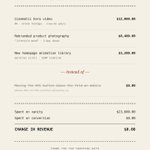
~17% of your BFCM revenue isn't real yet.
that's the average return rate on holiday sales.
and from Oct 23, Shopify Tax starts charging tax on return shipping too — so every refund costs more than it did last year.
the brands winning Q1 aren't the ones with the biggest November. they're the ones that built exchange-first flows in October:
→ default to "exchange" over "refund" at the request step
→ offer store credit at 110% of order value as the top option
→ gate free returns behind a $ threshold
a 20% drop in return rate on a $500k BFCM = $100k in revenue that actually stays booked.
what % of your BFCM revenue came back last year?

a page with 250 visitors a month can't be A/B tested.
the math doesn't work. you need thousands of sessions per variant to hit statistical significance, and most small Shopify stores never get there.
so what do you do instead?
→ sequential testing, not parallel. ship a change, measure 2 weeks before vs 2 weeks after, control for seasonality
→ heatmaps + session recordings on 100 sessions beats a split test on 2,000
→ qualitative wins (exit surveys, 5-user interviews) move the needle faster than waiting 4 months for p<0.05
→ copy and offer changes before layout changes — bigger lift, lower cost
CRO at small scale is detective work, not science. the "we need more data" trap is why most SMB Shopify stores plateau.
are you testing against yourself or against the clock?
Going to be exciting to see how buyer’s utilise shop [dot] md
I personally think it’s going be a small % of buyers who’d adopt it.
From a merchant pov, you should definitely use this channel. It would be great new way for users to discover your products.

Turn any existing Agent into the world's best personal shopper for you.
The new shop skill: shop.md/
Add the skill & connect your Shop account & finally find the thing that you always wanted