

GRAPPA - Group for Research and Assessment of Psoriasis and Psoriatic Arthritis is an international collaboration aiming to improve the care of Pso/PsA patients
Joined July 2021
- Tweets1.2K
- Following140
- Followers1.4K
- Likes318






📣 GRAPPA Members: Help Shape the Future of GRAPPA Education!
Your voice matters! 🌍
The GRAPPA Education Committee is conducting a global educational needs assessment to better understand the learning needs, priorities, and preferences of our diverse membership.
Whether you prefer in-person meetings, virtual learning, interactive workshops, or regional educational programs, we want to hear from you!
Your feedback will help us:
🔹 Identify key educational priorities across regions 🔹 Better understand preferred learning formats
🔹 Address gaps in educational opportunities
🔹 Shape future GRAPPA educational programming and resources
Please take a few minutes to share your perspective: surveymonkey.com/r/83DJ7Y6
Together, we can help ensure GRAPPA's educational initiatives continue to meet the evolving needs of our global community.
Thank you for helping shape the future of GRAPPA education!
#GRAPPA #PsoriaticDisease #MedicalEducation #Rheumatology #Dermatology

📣 Upcoming Webinar: SIR-Young & Young GRAPPA Collaboration!
Join SIR-Young and Young GRAPPA (Y-GRAPPA) on November 4 for an engaging collaborative webinar focused on:
🔬 Difficult-to-Treat and Complex Psoriatic Arthritis: Clinical Challenges and Solutions
Managing difficult-to-treat psoriatic arthritis presents unique challenges, from treatment resistance and comorbidities to complex clinical decision-making.
This educational session will bring together experts to explore:
🔹 Defining difficult-to-treat psoriatic arthritis
🔹 Innovative therapeutic approaches
🔹 Managing comorbidities and treatment challenges
🔹 Multidisciplinary strategies for complex cases
Designed with young specialists in mind, this webinar offers an excellent opportunity to gain practical insights and learn from international colleagues.
📅 Wednesday, November 4, 2026
⏰ 17:00–18:30 CET
💻 Virtual | Registration Required
🔗 Register today: rheumatologywardround.it/4no…
We look forward to bringing our communities together for this exciting educational collaboration!
#YoungGRAPPA #GRAPPA #PsoriaticArthritis #Rheumatology #MedicalEducation

📣 Calling All Young GRAPPA Members: Get Involved and Make an Impact!
Young GRAPPA (Y-GRAPPA) is excited to announce its 2026 Call for Subcommittee Applications!
Are you passionate about advancing psoriatic disease research, education, and collaboration? This is your opportunity to take a more active role in Y-GRAPPA, connect with colleagues from around the world, and help shape the future of our growing community.
We are currently accepting applications for subcommittee members, as well as three Subcommittee Chair positions:
🔹 Derm-Rheum
🔹 Education
🔹 Newsletter
Whether you're interested in contributing your ideas or stepping into a leadership role, we encourage you to apply!
📅 Application Deadline: November 8, 2026
🔗 Learn more about the available positions and application process: grappanetwork.org/young-grap…
Help us continue building an engaged, collaborative, and dynamic Young GRAPPA community!
#YoungGRAPPA #GRAPPA #PsoriaticDisease #MedicalEducation #Leadership

🌟 Trainee Abstract Oral Presentation Highlight from the GRAPPA Trainee Symposium at the 2026 Annual Meeting in Lisbon 🌟
Jingya Gao, MD, from West China Hospital of Sichuan University, China, delivered the following oral presentation:
"GRAPPA versus EULAR definitions for difficult to treat psoriatic arthritis: concordance and baseline predictors based on the PARWCH cohort"
Lay Summary: Psoriatic arthritis (PsA) can sometimes be very difficult to treat, even with modern medicines. Doctors use international guidelines from GRAPPA and EULAR to define which patients should be classified as "complex" or "refractory". However, it was not entirely clear if these two sets of rules identify the exact same patients in real-world clinics.
To make sense of this, we followed 343 patients with PsA to see how well these definitions match up in everyday practice. We found that the EULAR and GRAPPA frameworks agree with each other quite well, proving to be reliable, complementary tools for identifying complex or refractory cases.
Importantly, we looked beyond these definitions to ask: which patients are at the highest risk of developing such complex-to-manage conditions in the first place? We discovered that factors such as early signs of bone erosion in small joints (found using ultrasound) and obesity played a major role. Patients with either of these baseline factors were significantly more likely to develop difficult-to-treat PsA over time.
These findings are an important step toward better, more proactive care in PsA. They suggest that actively managing body weight and using early ultrasound checks to find hidden bone erosion can help doctors tailor treatment plans right from the start, potentially preventing the disease from becoming resistant and protecting joint health for the long term.
Congratulations to Jingya on this exciting work and thank you for contributing to the future of psoriatic disease research!
#GRAPPA2026 #GRAPPAAnnualMeeting #PsoriaticDisease #MedicalResearch


👏 Please join us in welcoming Donal O’Kane from Belfast, Northern Ireland, to GRAPPA!
Donal is a Consultant Dermatologist with extensive experience in adult and pediatric psoriasis care. He leads a combined psoriatic disease clinic alongside rheumatology colleagues and has a strong interest in advancing collaborative approaches to managing psoriatic disease.
We are delighted to welcome him to the GRAPPA community! 🌎
#GRAPPA #PsoriaticDisease

How closely does your approach to psoriasis and obesity align with expert practice?
Join us October 27 for an interactive virtual webinar with Philip J. Mease, MD, MACR, FRCP, and Luis Puig Sanz, MD, PhD to explore the connection between psoriasis and obesity, benchmark your clinical approach against expert assessments, and gain practical strategies for integrating obesity screening and management into compassionate, culturally sensitive care.
📅 October 27 | 10:00–11:00 AM ET | Virtual
Register Now: smpl.is/ank8h
#Psoriasis #Obesity #Dermatology #CME #ScientificActivation #EvidenceToAction #Decode

Celebrating the 2026 Verna Wright Prize 🏆
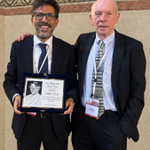
The Seventh Edition of the Verna Wright Prize was celebrated on September 17, 2026, during the GRAPPA Workshop on Psoriatic Arthritis in Reggio Emilia, Italy. Two honors were presented: the 2026 Verna Wright Prize to Alberto Cauli and a Special Memorial Award honoring the late Prof. Ignazio Olivieri.
Established in memory of Verna Wright, the prize recognizes individuals who have made significant contributions to the field of psoriatic arthritis.
Prof. Alberto Cauli is a Full Professor of Rheumatology and Director of the Clinical Unit at the University of Cagliari and the Director of the Specialization School (residents training programme) in Rheumatology and Head of the MD Degree in Medicine and Surgery, University of Cagliari (UNICA). He is also the President of the Italian Foundation for Rheumatology Research (FIRA), Milan, Italy and is recognized for his significant contributions to the field. Prof. Cauli has been an active contributing member of GRAPPA since 2004.
Prof. Ignazio Olivieri was a highly respected figure in Italian rheumatology and a dedicated supporter of GRAPPA who passed away in July 2017. Prof. Olivieri played an important role in GRAPPA's early years, hosting several meetings in his hometown of Matera. Remembered for his warmth, collaboration, and dedication to advancing psoriatic arthritis research, his award was accepted by his wife, Angela Padula.
GRAPPA extends its warmest congratulations to Prof. Cauli and proudly joins colleagues in celebrating the lasting legacy of Prof. Olivieri. Both individuals exemplify the dedication, collaboration, and scientific excellence that continue to advance the field of psoriatic disease.


Will you be attending the upcoming APLAR Congress in Seoul, Republic of Korea? We invite you to join GRAPPA for two exciting educational opportunities focused on psoriatic disease!
📅 Thursday, October 29
🔹 GRAPPA Pre-Congress Workshop
⏰ 10:45–15:00
📅 Friday, October 30
🔹 GRAPPA Symposium at APLAR 2026
⏰ 16:10–17:25
These sessions offer a valuable opportunity to learn from GRAPPA experts, explore important topics in psoriatic disease, and connect with colleagues from across the Asia-Pacific region and beyond.
We look forward to engaging with the rheumatology community and continuing to advance education and collaboration in psoriatic disease.
📍 Seoul, Republic of Korea
If you're attending APLAR 2026, we hope you'll make plans to join us! smpl.is/ankaw
#GRAPPA #APLAR2026 #PsoriaticDisease #Rheumatology #MedicalEducation

🌟 Trainee Abstract Poster Highlight from the GRAPPA Trainee Symposium at the 2026 Annual Meeting in Lisbon 🌟
Neethu Kunjumon from University Health Network, Canada, presented the following poster:
"Frequency and Predictors of Drug Free Remission in Psoriatic Arthritis: Insights from a Longitudinal Cohort"
Lay Summary: Patients with psoriatic arthritis (PsA) frequently ask whether their disease can be “cured” or if treatment can eventually be stopped. This study aimed to evaluate how often drug‑free remission (DFR) occurs and which patients are most likely to achieve it.
We analyzed data from approximately 1,500 patients followed longitudinally. DFR was achievable but uncommon. About 13% of patients achieved DFR using a definition focused on objective inflammation, while only 6% achieved DFR when using a broader definition that included patient‑reported outcomes such as pain and fatigue.
Patients who achieved DFR had lower disease activity at baseline, including fewer swollen and tender joints, less skin involvement, less structural damage, and better functional status. Key predictors included lower BMI, older age, less structural damage, and HLA-B27 negativity.
Importantly, remission rates vary depending on the definition used. Many patients who met inflammation-based remission did not meet broader criteria due to persistent symptoms. These symptoms may be influenced by non‑inflammatory factors, such as fibromyalgia, which is common in PsA and can elevate pain and global scores despite well‑controlled inflammation.
Overall, these findings suggest that DFR is achievable in a selected subgroup of patients, particularly those with milder disease early in the course, supporting a personalised approach to treatment tapering and withdrawal in clinical practice.
Congratulations to Neethu on this exciting work and thank you for contributing to the future of psoriatic disease research!
#GRAPPA2026 #GRAPPAAnnualMeeting #PsoriaticDisease #MedicalResearch


We're just 3 weeks away from GRAPPA Adjacent to ACR 2026!
Join us in Orlando, Florida, on Sunday, November 8, as the GRAPPA community comes together for an evening of education, collaboration, and engaging discussions focused on psoriatic disease.
This is a wonderful opportunity to connect with colleagues, exchange ideas, and explore important developments in psoriatic disease research and clinical care alongside experts from around the world.
📅 Sunday, November 8, 2026
⏰ 6:00–8:00 PM
📍 Hyatt Regency Orlando | Orlando, Florida
We look forward to seeing familiar faces and welcoming new colleagues!
🔗 Register today at grappanetwork.org/events/ and make plans to join us! #GRAPPA #ACR2026
#PsoriaticDisease #Rheumatology #MedicalEducation

Can two targeted therapies play a role in refractory PsA?
The IPART cohort describes real-world experience with dual b/tsDMARD therapy, including numerical changes in clinical outcomes and reported adverse events.
Further research is needed.
🔗 acrjournals.onlinelibrary.wi…
#GRAPPA #PsA

📣 Young GRAPPA Members: Don't Miss Next Week's Mentor-Mentee Meeting!
Join us on Thursday, October 22, for an exclusive virtual networking and mentorship opportunity featuring Dr. Alexis Ogdie, Professor of Medicine and Epidemiology at the University of Pennsylvania.
This interactive session offers Young GRAPPA members the opportunity to gain valuable insights into careers in academic medicine, explore the latest research in psoriatic disease, and connect with experienced leaders in the field.
The discussion will be moderated by Arani Vivekanantham, Y-GRAPPA Networking Leader.
📅 Thursday, October 22, 2026
⏰ 10:00–11:00 AM Eastern Time
💻 Virtual Meeting
📩 Ready to join us? Check your email or visit the GRAPPA website for registration details for this exclusive Young GRAPPA event!
#YoungGRAPPA #GRAPPA #Mentorship #PsoriaticDisease #MedicalEducation

Psoriasis and obesity are closely connected, but how should that shape clinical care?
Join Philip J. Mease, MD, MACR, FRCP, and Luis Puig Sanz, MD, PhD, for an interactive virtual webinar exploring practical approaches to integrating obesity screening and management into psoriasis care.
Benchmark your approach against expert perspectives and gain strategies for supporting compassionate, culturally sensitive conversations.
📅 October 27 | 10:00–11:00 AM ET | Virtual
Register Now: smpl.is/ank8b
#Psoriasis #Obesity #Dermatology #CME #ScientificActivation #EvidenceToAction #Decode

Yesterday, GRAPPA faculty came together to highlight and discuss their top selected abstracts on psoriatic disease from the recent EADV Congress in Vienna.
A huge thank you to our outstanding faculty and everyone who joined us for this engaging educational session!
📢 The recording is now available! Whether you attended EADV in person or couldn't make it to Vienna, we encourage you to watch and catch up on some of the most noteworthy research and key takeaways from this year's Congress.
▶️ Watch the full session on demand and stay connected to the latest advances in psoriatic disease!
youtu.be/mVvQ_svExv8
#GRAPPA #EADV2026 #PsoriaticDisease #Dermatology #Rheumatology

🌟 Trainee Abstract Poster Highlight from the GRAPPA Trainee Symposium at the 2026 Annual Meeting in Lisbon 🌟
Melisa Giselle Baigorria from Hospital San Juan de Dios, Argentina, presented the following poster:
"Early aortic stiffness in Psoriatic Disease: a three-phenotype comparison (PsO-only, PsO+PsA, PsA-only)"
Lay Summary: Psoriatic disease is a chronic inflammatory condition that can affect the skin (psoriasis), the joints (psoriatic arthritis), or both. In recent years, researchers have learned that psoriatic disease may also increase the risk of cardiovascular problems.
Our study explored whether people with different forms of psoriatic disease show early signs of changes in their blood vessels, even before cardiovascular disease becomes apparent. We compared three groups of patients: those with psoriasis only, those with both psoriasis and psoriatic arthritis, and those with psoriatic arthritis only.
We found that patients with psoriatic arthritis tended to have stiffer arteries than patients with psoriasis alone. Arterial stiffness is considered an early marker of cardiovascular risk because it may reflect changes in blood vessel health before symptoms develop. We also observed higher blood pressure values and increased levels of some inflammatory markers in patients with arthritis.
These findings suggest that people with psoriatic arthritis may experience early vascular changes that could contribute to future cardiovascular disease. Recognizing these changes early may help healthcare professionals identify patients at higher risk and encourage strategies aimed at preventing long-term cardiovascular complications.
Congratulations to Melisa on this exciting work and thank you for contributing to the future of psoriatic disease research!
#GRAPPA2026 #GRAPPAAnnualMeeting #PsoriaticDisease #MedicalResearch


🌟 Trainee Abstract Poster Highlight from the GRAPPA Trainee Symposium at the 2026 Annual Meeting in Lisbon 🌟
Alina Feng from University of California, United States, presented the following poster:
"Decreased risk of psoriatic and inflammatory arthritis in patients with psoriasis initiating treatment with glucagon-like peptide-1 receptor agonists"
Lay Summary: Psoriatic arthritis is a painful and irreversible form of arthritis that can develop in people with psoriasis and lead to permanent joint damage if left untreated. The risk is higher in those with obesity or type 2 diabetes, suggesting that improving metabolic health may also have a role in reducing the risk of developing arthritis. Glucagon-like peptide-1 receptor agonists (GLP-1RAs) are medications commonly used to treat obesity and diabetes, but their association with psoriatic and inflammatory arthritis risk remains unclear.
We analyzed health records from a large national database to compare people with psoriasis who started a GLP-1RA with comparators who did not receive these medications. We then followed both groups over time to determine the risk of developing psoriatic or inflammatory arthritis.
In this study, those who received a GLP-1RA were less likely to develop psoriatic arthritis and other inflammatory arthritis than those who did not receive these medications. This lower risk was observed across patients with obesity, type 2 diabetes, or were male or female, and with newer GLP-1RAs such as semaglutide and tirzepatide.
These findings suggest that GLP-1RAs may help reduce the risk of developing inflammatory arthritis in people with psoriasis. While part of this benefit may be related to weight loss and improved metabolic health, GLP-1RAs may also have direct anti-inflammatory effects. Additional studies are needed to determine whether these medications can help prevent psoriatic arthritis and better understand how they may influence disease progression.
Congratulations to Alina on this exciting work and thank you for contributing to the future of psoriatic disease research!
#GRAPPA2026 #GRAPPAAnnualMeeting #PsoriaticDisease #MedicalResearch


🎉 Please join us in welcoming Iulia-Simona Chirică as a new GRAPPA member!
Simona is a rheumatology resident at Dr. Ion Cantacuzino Clinical Hospital and a PhD student at Carol Davila University of Medicine and Pharmacy in Bucharest, Romania.
Her clinical and research interests focus on psoriatic arthritis, particularly neuropathic-like and nociplastic pain, patient-reported outcomes, and the impact of persistent pain on patients’ daily lives.
Welcome to GRAPPA, @dr_chirica_sim! 👏
#GRAPPA #PsoriaticDisease

🔎 What were the key psoriatic disease abstracts presented at EADV 2026?
GRAPPA is bringing together expert faculty on October 14 for our EADV Virtual Congress Highlights.
Join us as we revisit research presented in Vienna, highlight key abstracts in psoriatic disease, and discuss important findings from this year’s Congress.
Whether you attended EADV in person or followed from afar, this virtual program is an opportunity to catch up on research you may have missed.
📅 October 14, 2026 | Virtual
Register now: smpl.is/andvt
#GRAPPA #EADV2026 #PsoriaticDisease #MedicalEducation #Dermatology

🌟 Trainee Abstract Poster Highlight from the GRAPPA Trainee Symposium at the 2026 Annual Meeting in Lisbon 🌟
Arabi Rasendrakumar from University of Toronto, Canada, presented the following poster:
"Complex, Difficult-to-Manage, and Treatment-Refractory Psoriatic Arthritis: Application of GRAPPA and EULAR Definitions in a Large Observational Cohort"
Lay Summary: Psoriatic arthritis (PsA) is a chronic condition that causes joint pain, swelling, and can also affect the skin. While many people improve with treatment, some continue to have active disease despite trying several medications. These patients are often described as having “difficult-to-manage (D2M),” “complex-to-manage (C2M),” and/or “treatment-refractory (TR)” PsA. Two major expert groups (GRAPPA and EULAR) have recently proposed definitions to help identify these patients, but it is unclear how these approaches compare in real-world practice.
In this study, we examined 630 adults with PsA receiving care at a large clinic in Toronto. Using these definitions, about 36% of patients were classified as C2M by GRAPPA, compared with about 19% classified as D2M by EULAR. Around 13% of patients were considered treatment-refractory by both definitions. Patients in the TR group had more active disease, higher levels of inflammation, and greater exposure to advanced therapies.
We also found that women and individuals with higher body weight were more commonly represented in these difficult-to-treat groups. Overall, the GRAPPA definition identified a larger group of patients, while the EULAR definition was more stringent. Despite these differences, both approaches successfully identified patients with a higher disease burden.
These findings highlight the importance of recognizing challenging PsA cases and may help guide more personalized and multidisciplinary care strategies.
Congratulations to Arabi on this exciting work and thank you for contributing to the future of psoriatic disease research!
#GRAPPA2026 #GRAPPAAnnualMeeting #PsoriaticDisease #MedicalResearch


GRAPPA Network - Official retweeted

“Knowing that a patient has missed the
target is not the same as knowing why”
Fantástica editorial de mi querida @drgizemayan y de la gran Lihi Eder
Acceso abierto 🔑 pubmed.ncbi.nlm.nih.gov/4282…
